Have you ever wondered why one bad review can sink months of hard work and steady service?
It feels unfair. In January 2023, Google shared details with the FTC about steps they take to fight dishonest feedback. That update changed how businesses and customers see online content and search results.
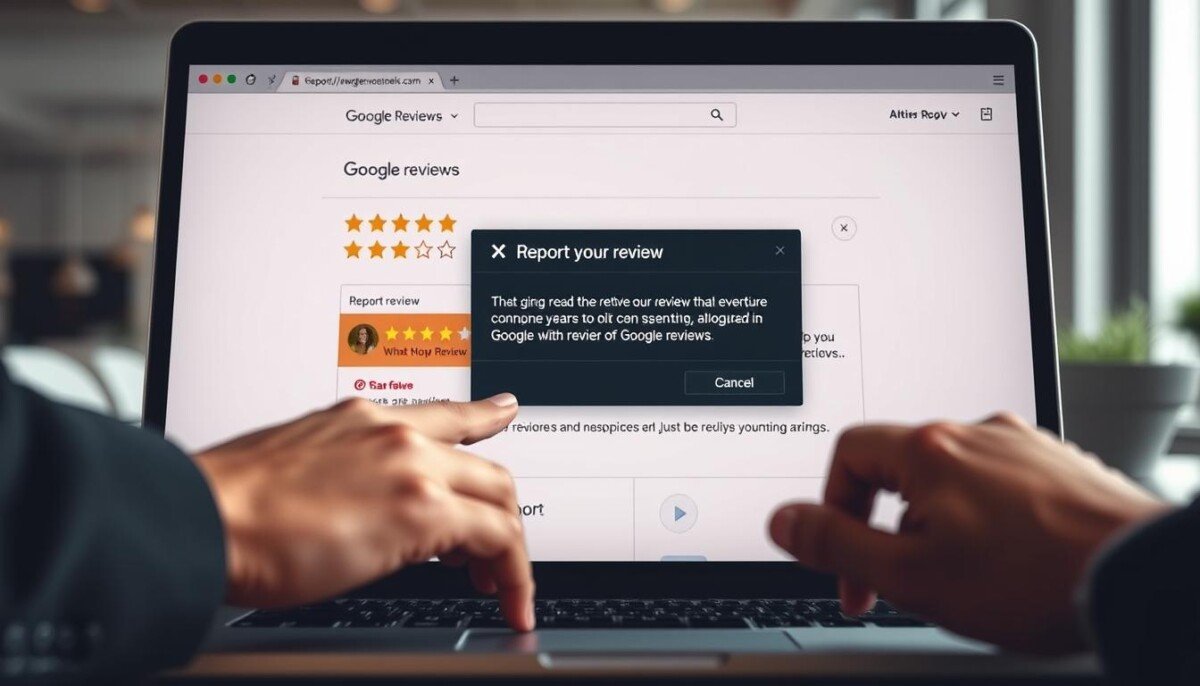
This short guide shows you a clear way to spot a fake review and take action using your Google Business Profile. You will learn how to report problem entries, build a solid case, and ask the platform to google remove content that breaks policies.
Follow these practical steps to protect your reputation, keep your profile honest, and hold reviewers or competitors accountable. Our team outlines a simple process so you can manage feedback, keep customers informed, and preserve trust in your brand.
Key Takeaways
- Learn to identify suspicious review patterns and low-quality content quickly.
- Use the Google Business Profile dashboard to flag and report problem reviews.
- Document evidence and cite policy violations when you request content removal.
- Act promptly to protect search rankings and your business reputation.
- Apply consistent response and management practices to build trust with customers.
Understanding the Impact of Fake Reviews
A single dishonest post can change how people see your business. That shift shows up in low star ratings, fewer calls, and lost bookings.
Fake reviews mislead potential customers and skew your business profile. They hurt trust and make real feedback harder to find.
Search rankings depend on steady, genuine feedback. A sudden rise in negative reviews can push your listing down and cut traffic.
Competitors sometimes use unfair tactics to damage local brands. Consistent monitoring and quick management help protect your online reputation.
Act fast when you spot suspicious content. Investigate the source, collect evidence, and follow a clear report process to keep your profile accurate.
- Monitor feedback daily to catch sudden changes.
- Document patterns that suggest coordinated attacks.
- Keep responses professional to preserve trust.
| Impact | What to Watch | Quick Action |
|---|---|---|
| Lower visibility | Spike in negative reviews | Audit recent feedback |
| Loss of customers | One-star entries with no detail | Gather evidence and report |
| Brand distrust | Multiple similar comments | Respond and document patterns |
Identifying Deceptive Review Patterns
Begin with a quick scan to find patterns that don’t match your usual feedback. Spotting odd activity early makes it easier to protect your business profile and reputation.
Common Red Flags
Watch for repeat language, sudden spikes, or generic praise without detail. These often signal entries that lack a real customer experience.
- Many brief star-only entries in a short span.
- Identical wording across different entries.
- A surge in positive reviews that feels out of sync with recent service levels.
Analyzing Reviewer Profiles
Check reviewer history and location patterns. Profiles that post many local reviews in different cities within days are suspicious.
If a profile has no other activity or only posts negative reviews about similar businesses, flag it for closer review.
| Indicator | What it Means | Suggested Action |
|---|---|---|
| Identical phrasing | Possible coordinated posting | Document samples and report |
| Bulk one-star entries | Reputation attack by competitors | Collect timestamps and reply professionally |
| Profiles with no history | Low credibility | Monitor and gather context |
Essential Steps for Fake Google Reviews Removal
Start by flagging the problematic entry in your Business Profile so the platform’s team can review it.
Act quickly. Identify the suspicious review, then use the report option in your dashboard to cite the specific policy it breaks.
Attach clear evidence — screenshots, booking records, or customer emails — to support your claim. Solid proof raises the chance of a successful outcome.
While you wait for a decision, keep public responses calm and professional. A measured reply protects your reputation and signals good management to customers who read the thread.
If the initial report does not lead to removal, escalate through the support portal and outline the steps you already took. Persist with clear documentation until the issue is resolved.
- Flag via Business Profile dashboard
- Report as policy violation with evidence
- Maintain a professional public response
- Escalate to support if needed
Follow a structured process to protect search rankings and your business reputation. Prompt, documented action helps keep your profile accurate and your customers confident.
Navigating Google Review Policies
Understanding the rules makes action more effective. Only content that breaks Maps User Contributed Content Policy is eligible for removal. You should focus on the specific policy category before you file a report.
Prohibited Content Categories
Not every negative comment is a policy breach. You cannot report a post just because you disagree with the feedback.
- Spam and deceptive content that aims to mislead search and customers.
- Conflicts of interest, like paid or incentivized posts and review gating.
- Harassment, hate speech, obscene material, or content unrelated to the business.
Why this matters: matching the right google policies increases the chance support will act. Document the violation type and provide clear context when you report.
| Category | What to Look For | Suggested Action |
|---|---|---|
| Spam / Deceptive | Copied text, links, or promotional content | Gather examples and report under spam |
| Conflict of interest | Paid or incentivized positive reviews | Note payments or offers and report |
| Off-topic / Abuse | Personal attacks or unrelated comments | Flag as harassment or off-topic |
Utilizing the Google Business Profile Dashboard
Your Business Profile dashboard puts every customer comment in one place for quick action. Use it daily to monitor feedback and spot odd patterns before they hurt your reputation.
Open the reviews tab to see new entries, sort by date, and find the specific review you want to report. Select the flag option and choose the correct policy reason when you file a report.
Keep records. Note timestamps, screenshots, and any related booking or email threads. That documentation strengthens your case and speeds up support review.
- Monitor the dashboard every day to catch suspicious activity early.
- Reply professionally to legitimate review feedback to show good management.
- Keep your profile updated so customers see accurate service details and hours.
Mastering this tool creates a clear way to protect search visibility and build trust. Regular dashboard checks make it easier to keep your business profile accurate and your customers informed.
Reporting Suspicious Activity via Google Maps

Flagging problematic feedback in Maps is a direct way to protect your listing. Use the report option when a review clearly breaks content policy or reads like spam.
Act fast. If you see a fake review or defamatory post while browsing on mobile, flag it immediately and note the timestamp.
After you file a report, wait three business days for a response before escalating to the support team. Keep a simple log of each report so you can follow up if no action is taken.
- Flag the entry in Maps and choose the correct policy reason.
- Capture screenshots and save booking or email records as proof.
- Monitor the review thread and respond professionally while you wait.
| Action | When | Why |
|---|---|---|
| Flag via Maps | Immediately | Starts platform review process |
| Document evidence | Before follow-up | Strengthens your report |
| Escalate to support | After 3 business days | Needed if no response |
Consistent monitoring and reporting are essential steps in reputation management. Your prompt action helps protect customers and keeps the business profile trustworthy for people who search for your service.
Managing Your Reputation Through Professional Responses
How you respond to critique tells potential customers more about your brand than the score does. A calm, clear reply shows that your business values feedback and good customer service.
Crafting Professional Replies
Lead with empathy and keep it short. Thank the reviewer, acknowledge the issue, and say you want to make it right.
Example: “Thank you for your note. We’re sorry you had a poor experience. Please contact us at [email] so we can resolve this.”
Why this works: It signals reputation management and strong customer service to people who read the thread.
- Be factual and avoid blame.
- Offer a private channel to continue the conversation.
- Document the exchange in your profile records for later follow-up or to support a report.
When to Avoid Responding
Do not engage when a post is abusive or clearly a fake review. Responses can escalate and harm your online reputation.
Instead, document the issue, file the proper report, and focus public replies on genuine feedback. This approach protects your brand and helps potential customers trust your service.
For more reputation tips, see reputation tips.
Leveraging the Google Review Management Tool
Track the status of flagged entries and see which cases need follow-up in one place.
The Review Management Tool lets you submit multiple reports at once and monitor each case through the official process.
It is built for businesses that get many reviews and need efficient review management.
Key advantages:
- Bulk submission for faster handling of multiple suspect entries.
- Clear status updates so you know which reports advanced and which need more evidence.
- Ability to export logs and timestamps for your records and support follow-up.
| Feature | Why it matters | Action |
|---|---|---|
| Bulk reporting | Saves time when many entries require attention | Upload a list and submit in one batch |
| Status tracking | Shows progress and next steps | Review case notes and attach extra evidence |
| Export logs | Creates documentation for post-case audits | Download records weekly for your team |
Integrate the tool into your daily workflow to protect your business profile and keep search visibility strong.
Use the dashboard to stay organized, respond where needed, and maintain a high-quality experience for customers.
Building a Strong Case for Removal

Begin with clear proof that the entry is not tied to any actual booking or visit.
Gathering Supporting Documentation
Collect records that link activity to your business. Use booking logs, receipts, timestamps, and customer messages.
Also capture screenshots of the review and the reviewer profile for context. Save all emails and any related transaction IDs.
Organizing Evidence
Group items by type: timestamps, correspondence, and internal records. Label files with dates and short notes so they are easy to follow.
Keep a clear timeline of events. A concise sequence helps the support team see why the feedback is not a real customer experience.
Presenting Your Case
Lead with facts and cite the exact policy the entry breaks. Explain why the content is misleading and attach the labeled evidence.
Note: it is common for it to take up to 14 days for false reviews to be removed, so be patient and follow up if needed.
| Step | What to Include | Why it Helps |
|---|---|---|
| Document | Receipts, bookings, timestamps | Proves no customer interaction |
| Snapshot | Screenshot reviewer profile and review | Shows context and wording |
| Explain | Short timeline and policy reference | Makes decision easier for the support team |
Addressing Review Extortion and Bombing
If someone demands payment to take down a bad post, treat it as extortion and record every message.
Coordinated attacks often arrive as many sudden negative reviews from multiple accounts. These blasts can harm your business reputation fast. Do not pay or offer free services — that only invites more threats.
Document everything: timestamps, screenshots, emails, and chat logs. Note account names and any matching language across posts. This evidence strengthens a report that cites harassment or extortion.
Steps to protect your listing:
- Save a timeline of each suspicious review and related messages.
- Keep public replies calm and brief while you gather proof.
- Report the pattern to the platform and include your organized evidence.
Example response you can adapt: “We take this seriously. Please contact our support team so we can investigate. We will not negotiate payment for feedback.” Use that language to show you will not be intimidated and to invite a private resolution.
Legal Considerations for Fraudulent Testimonials
Regulators and courts are increasingly active when testimonial content misleads consumers.
Recent rule changes matter. On August 14, 2024 the FTC finalized a rule banning fake testimonials and reviews. That action gives businesses more grounding when they seek to remove fake content that harms reputation.
High-profile suits show the risks. In 2013 Yelp sued an attorney for false posts, and the FTC plus several states sued Roomster over misleading feedback. These cases illustrate real consequences for bad actors.
Legal steps are usually a last resort. Still, knowing your rights helps you decide when to escalate. Always consult an attorney before filing a defamation claim or other formal action.
- Document harm with dates, receipts, and screenshots.
- Match your evidence to applicable google policies and law.
- Use formal legal options only after other reporting and the platform process fail.
| Action | When | Why |
|---|---|---|
| Document evidence | Immediately | Supports both platform reports and legal claims |
| File platform report | First step | Follows policy process and may prompt quick removal |
| Seek counsel | If unresolved | Clarifies legal options and next steps |
Encouraging Authentic Customer Feedback

Ask happy customers for a quick comment right after service. Timing makes feedback feel fresh and real. A short, friendly request raises response rates and brings more authentic content to your business profile.
Make it easy to leave feedback. Add a review link to receipts, follow-up emails, or a thank-you text. Clear steps and a direct link remove friction and invite more positive reviews.
Train your team to request feedback naturally. A polite prompt at checkout or after a service shows customers you value their experience. Track who asks and when to build a steady flow of responses.
Genuine reviews help potential customers decide and improve your reputation over time. A steady stream of quality feedback will dilute the impact of any negative or fake google entries and highlight the real value of your brand.
- Follow up within 24–48 hours with a short message.
- Offer a simple one-click link on receipts.
- Reward feedback internally—recognize staff who gather more customer input.
Monitoring Brand Mentions for Early Detection
Small alerts give you big advantages: you see negative posts early and can act fast.
Set up mention alerts for your business name and key phrases. These notices help you spot suspicious activity, protect your online reputation, and respond before it spreads.
Use simple tools and dashboard feeds to track brand content, search rankings, and customer feedback. Check mentions daily and flag anything that looks coordinated or out of place.
- Instant alerts: get notified when your brand or business is mentioned.
- Record context: save screenshots, timestamps, and related messages.
- Act fast: reply or escalate to support to limit impact on search placement.
For easy monitoring, try a set of free tools and guides like free media monitoring tools to automate alerts and collect feedback.
| Task | Tool | Benefit |
|---|---|---|
| Alert setup | Keyword monitoring | Early detection of negative reviews or spam |
| Daily check | Dashboard feed | Maintains accurate brand presence in search |
| Record evidence | Screenshots & logs | Strengthens reports and reputation management |
Implementing a Long Term Reputation Strategy
A long-term reputation plan keeps your profile strong and search placement stable. Start by setting simple routines that invite honest feedback from satisfied customers. Do this every day so momentum builds over time.
Engage with customers regularly. Thank them, ask for short feedback, and make it easy to leave a review. Train staff to prompt customers at the right moment.
Keep your business profile current. Update hours, photos, and services so visitors see accurate information. This small work supports better search rankings and trust.
- Monitor mentions and feedback weekly.
- Document trends and act on patterns quickly.
- Adjust your approach as platforms change.
| Goal | Action | Result |
|---|---|---|
| More authentic reviews | Ask after service; use links | Higher trust and better search rankings |
| Stronger reputation | Respond fast; keep profile updated | Resilient brand and loyal customers |
| Fewer harms from fake reviews | Monitor, document, report when needed | Clearer feedback and faster resolution |
For reporting issues from your dashboard, use the official help page for your google business profile. Investing time now will protect your online reputation and pay off as steady growth.
Handling Negative Reviews That Are Not Fake
When a comment is honest but critical, your response can turn it into an asset. Treat the note as a chance to show strong customer service and fix a real problem.
Begin with a calm, short reply that thanks the customer and offers a private follow-up. Say you will investigate and share how you will make it right. This signals care to potential customers who read your profile.
Use feedback to improve operations. Track patterns, update staff training, and fix processes that create repeat issues. A 4.9 star rating wins the best conversion rates, so a few honest critiques add credibility and help you reach that mark.
If the post is actually a fake review, follow formal steps to remove it. For guidance on how to remove fake reviews, see our remove fake reviews guide.
Keep public replies short, empathetic, and action-focused. Many customers update their review after a good resolution. That improves your profile and strengthens your brand.
Conclusion
Finish strong: use the steps here to keep your profile accurate and trustworthy. Start with clear documentation and a short timeline for each incident. This makes follow-up faster and more effective.
Be consistent. Monitor your listings daily and respond to each review with calm, factual language. Train your team to gather honest feedback and make it easy for satisfied customers to leave a note.
Long-term focus wins. A steady stream of authentic feedback and good service will protect your reputation and help your business stand out to potential customers.
Thank you for reading. We wish you clear wins as you manage your online presence and grow your business.