Surprising statistic: Professionals lose an average of 2.5 hours per day to unmanaged messages — implement a system now.
Declare availability limits. Establish clear professional boundaries using gmail boundary templates to filter incoming email volume in high-pressure work environments.
Create a standardized template that states scope of availability. Specify hours, response priority, and escalation paths. Use a clear name for each response so retrieval is fast when managing high daily email counts.
Provide one concise example for each common scenario. Communicate details of availability and acceptable request types. Protect time—maintain essential business communication without friction.
Key Takeaways
- Implement gmail boundary templates to reduce time lost to messages.
- Standardize a template name for rapid selection under load.
- State availability details—hours, priorities, and escalation steps.
- Use concise email language to protect work time and preserve clarity.
- Provide an example response for common business requests.
Understanding the Value of Gmail Boundary Templates
Adopt a uniform reply format to remove guesswork about response windows. Use concise email phrasing to state work hours, priorities, and escalation steps.
Operational advantages: Standardization enforces consistent business messaging. It reduces time spent composing repetitive emails and lowers cognitive load for staff.
- Ensure every email communicates identical availability and contact paths.
- Provide one clear example of a response so colleagues know expected turnaround.
- Include essential details — hours, scope, and urgency indicators — to prevent follow-ups.
Scalability: A single template supports many team members. Apply the format across accounts to create predictable workflows and measurable gains in response efficiency.
| Benefit | Operational Impact | Example |
|---|---|---|
| Consistency | Reduces variable phrasing; speeds selection | Standard reply stating work hours and escalation contact |
| Clarity | Fewer follow-up emails; clear expectations | One-line availability + alternative contact |
| Scalability | Replicable across teams; measurable SLA improvements | Deploy template set for common request types |
Enabling the Template Feature in Your Account
Activate the saved-response capability to standardize outbound messages.
Accessing advanced settings
Open the account on a computer. Then click compose at the top left to begin the configuration process.
- Click the gear icon at the top right. Select See all settings to expose configuration options.
- Open the Advanced tab. Locate the section labeled options and click Enable.
- Scroll to the bottom of the window and click save changes to apply the change.
These tips ensure the account is configured to create professional email responses. Follow steps exactly to support predictable work flows and fewer manual edits.
Once save changes completes, the system updates account settings. The feature becomes available for creating and managing emails for future work.
Crafting Effective Boundary-Setting Messages
Lead with scope and priority to reduce follow-up questions on availability. State expectations in the first line. Keep the text concise and fact-based.
Defining Your Professional Scope
State the scope of work clearly. Specify active projects, response windows, and alternative contacts.
- When you use email to communicate boundaries, make sure the text lists availability and next steps for people who need urgent action.
- To create new responses, draft a short template that answers common requests and reduces friction for business contacts.
- Each message should include necessary details—project focus, expected turnaround, and escalation path.
Maintaining a Polite Tone
Keep language formal and neutral. Use short sentences and actionable verbs.
Example: “Currently focused on X project; replies limited to critical issues. For all other requests, expect a response within 48 hours.”
Standardize these emails so each reply reinforces the same rules. Consistency makes it easier for people to respect professional limits and reduces repeat inquiries.
Saving Your Drafts as Gmail Boundary Templates
Convert a completed draft into a stored message for rapid future use.
Draft the email in the compose window on a computer. Keep the text concise and factual.
At the bottom of the compose window, click the More options icon. Then select Save draft as template. Next, click Save as new template and assign a clear name.
To create new standard replies, first click compose at the top left. Enter the message that will serve as the business example. Confirm the content reflects expected work hours and escalation steps.
- After naming the template, click save — the item stores in the account.
- Use these saved emails to reduce repetitive composition and sustain professional consistency.
- Retrieve the saved template from the compose window when quick responses are required.
| Action | Location in UI | Result |
|---|---|---|
| Draft message | Compose window — computer | Polished text ready for saving |
| Save as new | More options — bottom | Named template stored for reuse |
| Create new template | Click compose — top left | New standard email available in account |
Inserting and Customizing Your Saved Responses
Insert saved responses to accelerate replies and preserve consistent voice.
Adjusting Text and Formatting
Open the compose window. Click More options. Select the named template from the list to populate the email.
Edit the text and style before sending. Replace generic placeholders with work-specific details. Keep sentences short. Maintain the same business tone and structure.
- Use the compose window to tweak message lines—update the name, timeframes, and action steps.
- If overwriting an existing draft, make sure to click save changes to update the stored example.
- Apply these tips to tailor emails for different audiences while sustaining a consistent format.
| Action | UI Location | Result |
|---|---|---|
| Insert saved response | Compose window → More options | Prefilled email text ready for editing |
| Adjust text & style | Compose window → Edit body | Customized message aligned with business requirements |
| Overwrite draft | More options → Save as existing | Stored template updated; consistent future emails |
Automating Replies with Filters
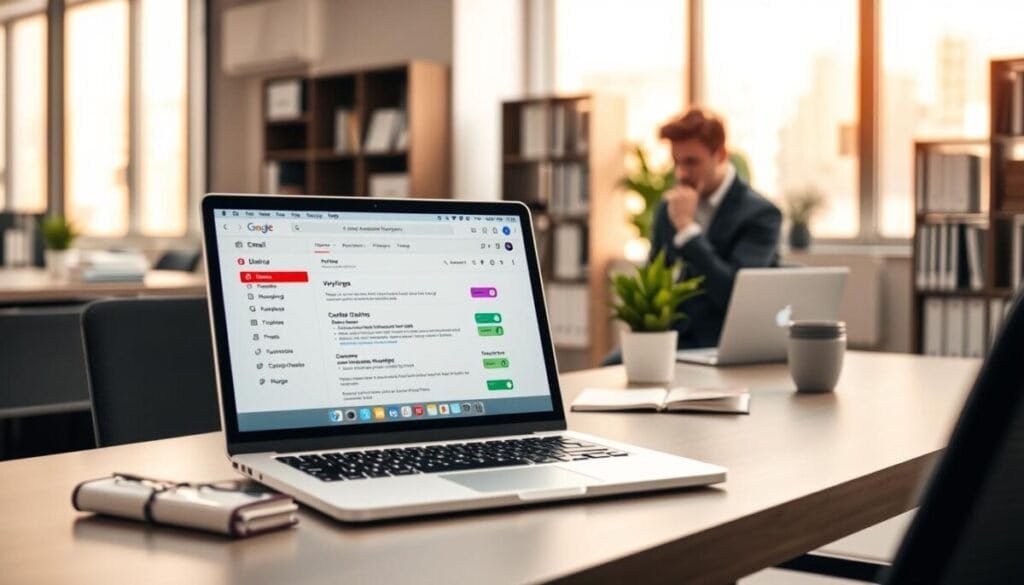
Define precise search parameters to target emails that demand a standardized response. This step removes manual routing and enforces consistent service levels for work communications.
Setting Search Criteria
Open a computer and click the search box at the top. Enter sender addresses, subject words, or phrases that match the incoming emails to automate.
Use keywords that correspond to priority work requests. Test the query until results match expected messages.
Applying the Filter
Click Create filter. Select Send template and choose the appropriate business message from saved options.
The compose window is not required—automated replies attach without manual composition. This method ensures each email receives a prompt, consistent reply.
- Open computer → search box → define criteria.
- Create filter → select Send template → pick saved template.
- Automate high-volume emails to streamline work and reduce manual tasks.
| Action | UI Location | Result |
|---|---|---|
| Define query | Search box | Targeted emails identified |
| Create filter | Filter options | Automated replies applied |
| Select template | Send template | Consistent reply sent |
Managing and Deleting Outdated Templates
Remove obsolete saved responses to reduce selection errors and speed message routing.
Process: Open the compose window. Click More options. Choose the Delete template action to remove the item.
Verify the information in each stored example before any change. Deletion is permanent—do not proceed without confirmation.
- Audit saved items monthly to keep work responses current.
- If a specific message is obsolete, delete it to keep selection options organized.
- Maintain a minimal set of templates so every email aligns with active work priorities.
| Action | Location | Result |
|---|---|---|
| Delete template | Compose window → More options | Removes outdated item |
| Verify content | Edit preview → confirm | Prevents incorrect emails |
| Audit list | Monthly review | Improves selection accuracy |
Follow this regimen to preserve professional standards for email use. For guidance on setting response limits and preserving time, review strategies to set email boundaries.
Advanced Customization with Email Layouts
Configure the message layout to reflect company identity and contact details.
Add branding elements. Click compose at the top left on a computer. Select the desired style. Insert the business name, phone number, and address into the header or footer.
Incorporating Social Media Links
Select the Insert Social links option to add social media icons. Link profiles to ensure people can connect across media platforms.
Previewing Across Devices
Use the preview tab to test layout rendering on mobile and desktop. Verify images, text, and contact details. Confirm the phone number and address remain clickable.
- Create new branded layouts in the editor—adjust logo, style, and footer.
- After edits, click save changes to apply branding to outgoing emails.
- Test changes on multiple devices before wide deployment.
| Action | UI Location | Result |
|---|---|---|
| Access layouts | Click compose — top left | Choose visual style and insert name |
| Add social links | Insert Social links tab | Profiles added — improved reach |
| Finalize layout | Preview tab → bottom | Validated rendering across devices |
Streamlining Your Professional Communication Workflow
Automate repetitive message handling to preserve focus on high-value deliverables. Configure rules that send a preapproved reply when criteria match. This reduces manual work and enforces consistent service levels.
Standardize one clear template for common scenarios. Use the template to state hours, escalation steps, and expected turnaround. Keep each email concise and actionable.
Result: Fewer interruptions. Faster triage. Higher productivity. Monitor performance and refine the template set periodically to align with business objectives.