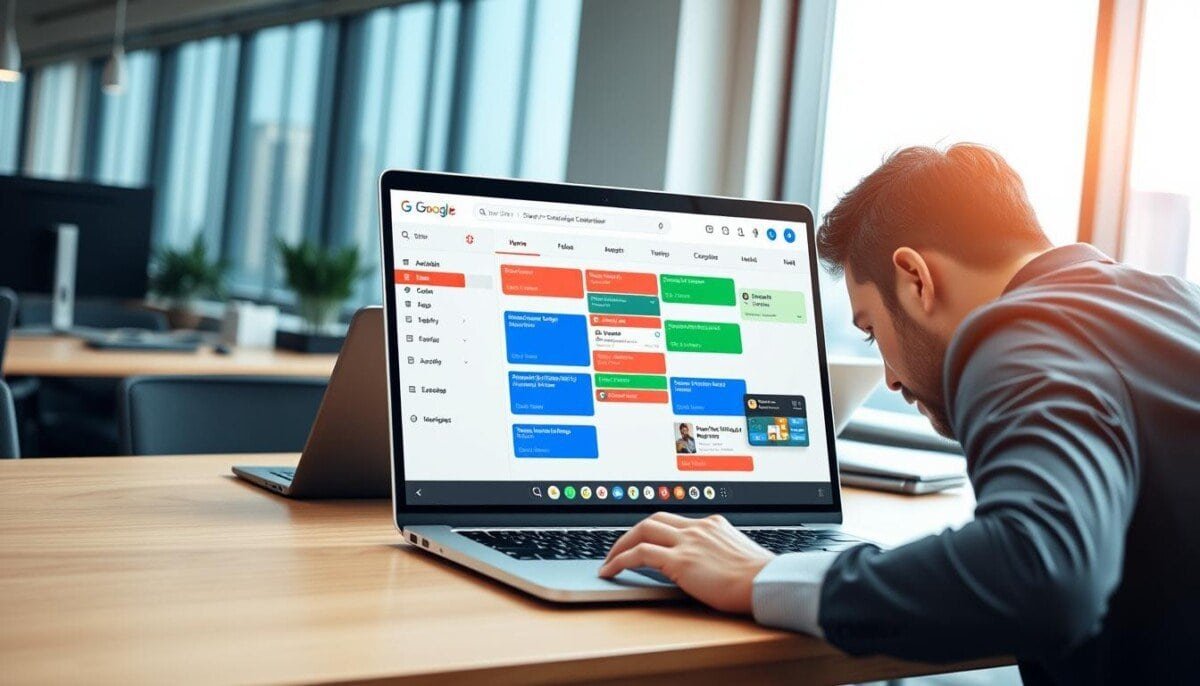
70% of double-bookings occur because availability is scattered across multiple tools. Quantify the problem—lost time, missed meetings, and reduced output. State the objective: consolidate status across accounts and preserve time integrity.
Enforce a single authoritative view. Centralize events, tasks, and appointments under one planner. Require a valid google account for full access and for linking meeting links like google meet.
Implement enterprise-grade controls via google workspace. Require permission checks, publication of working hours, and recurring slot templates. Verify time zones and publish changes to avoid drift.
For stepwise operational routines—use the shared procedures and tools. For scheduling office-hour patterns, see the guide to schedule office hours. Execute verification checks after each change.
Key Takeaways
- Centralize status in one planner to reduce double-booking.
- Require a google account and enable publish settings.
- Embed meeting links—use google meet for hybrid sessions.
- Standardize working hours and recurring slots across calendars.
- Verify time zones, permissions, and post-publication after edits.
Why Your Calendar Needs Better Integration
Eliminate redundant status checks by presenting every commitment in one unified view.
Context switching between an agenda tool and a task manager reduces productivity. It increases the risk of missed appointments and manual errors.
Layering multiple calendars or feeds creates visibility. Users then see meetings, events, and tasks in a single list. This reduces the need to jump between interfaces.
The Cost of Context Switching
Frequent toggles fragment attention and add hidden time costs. Manual entry amplifies the chance of double-booking.
Benefits of Unified Views
- Single source of truth — all appointments reflect changes instantly.
- Improved focus — fewer interruptions preserve energy for deep work.
- Better coordination — teams view availability across month, week, and day.
| Problem | Impact | Integrated Solution |
|---|---|---|
| Context switching | Lost time; missed dates | Consolidated schedule view |
| Manual entry errors | Conflicts; duplicate bookings | Automated event propagation |
| Scattered availability | Poor team coordination | Layered calendars for clear availability |
Top Google Calendar Sync Apps for Productivity
Prioritize solutions that present all calendars and tasks in one unified daily view.
Centralize events. Choose a calendar app that aggregates schedules, appointments, and meetings from multiple accounts. This reduces manual entry and prevents double-booking.
Automate propagation. Connect the primary account to third-party tools to automate calendar events and task updates. Allow iCal subscriptions where needed.
- Visibility — show month, week, and day views in a single list.
- Automation — push new appointments to the main schedule instantly.
- Permissions — enforce read/write controls for team coordination.
| Need | Feature | Outcome |
|---|---|---|
| Multiple calendars | Unified view | Fewer conflicts |
| Recurring tasks | Auto propagation | Saved time |
| Distributed team | Permission controls | Aligned schedules |
Implement one reliable tool. Track tasks, events, and appointments across the month, week, and day. Maintain a single authoritative schedule for all users.
Streamlining Tasks with Todoist
Convert task lists into fixed blocks on your schedule to protect deep work windows.
Time Blocking Strategies
Establish a deterministic routine. Turn todos into scheduled entries so each task occupies a measurable block. Configure durations and priorities in the app to force allocation of time for focused work.
Enable two-way integration so changes to calendar events update the task list. This ensures the plan and the live schedule match. Treat every task as a commitment—start time, end time, and a visible slot in the week.
- Turn daily tasks into calendar events to guarantee dedicated work slots.
- Reserve specific days and hours for high-priority meetings and project appointments.
- Visualize workload across the month or week by viewing tasks alongside events.
| Feature | Action | Outcome |
|---|---|---|
| Task-to-event mapping | Convert tasks into calendar event blocks | Accurate schedule; fewer missed appointments |
| Two-way updates | Edit events to update tasks | Single authoritative view of work and meetings |
| Duration settings | Set task lengths | Better time allocation for the day and week |
Adopt this workflow. Use the tool consistently to keep the calendar aligned with real capacity. Teams gain clarity; users reduce app switching and preserve productive time.
Managing Projects with ClickUp
Convert ClickUp task dates into scheduled entries to protect work blocks and reduce conflicts.
ClickUp provides a two-way sync that maps tasks to events in the google calendar. Tasks with due dates appear as calendar events or time blocks. Updates propagate in real time.
Use the integration to align project deliverables and daily meetings. Visualize the month and week to prevent overlapping appointments. Assign all-day items or specific slots for focused work.
- Two-way synchronization—every calendar event and task updates across both systems.
- Map deadlines to the master schedule to keep the team on track throughout the month.
- Block deep work days by converting task lists into visible appointment blocks.
Availability: Integration exists on every plan, including free tiers—making this tool accessible to any team.
For an overview of planning resources, reference the online planning tools guide to extend project scheduling workflows.
Enhancing Team Visibility with Asana
Ensure task ownership appears in the same timeline as meetings to prevent overlap and missed deadlines.
Enable individual “My Tasks” to publish as a feed to google calendar. This produces a visible list of personal commitments alongside team meetings.
Integrate with google workspace to expose project milestones and dates to stakeholders. Stakeholders gain a unified view of deadlines and appointments.
The Asana calendar widget maps task fields to event fields. Mapping adds context to the daily schedule. Users see priorities, due dates, and related notes in one place.
- Publish personal task lists to a shared schedule view.
- Create project-specific calendars to reduce clutter in the main view.
- Combine deadlines and meetings to manage team workload across the month.
| Feature | Action | Outcome |
|---|---|---|
| My Tasks feed | Publish to google calendar | Clear individual responsibilities |
| Calendar widget | Map task fields to events | Contextual daily view |
| Project calendars | Create per-project views | Organized work week; fewer conflicts |
Visualizing Deadlines via Trello
Map Trello board due dates into a unified schedule to expose project deadlines alongside daily routines.
Use the Trello iCal feed to publish card due dates. Subscribe to the feed inside the google calendar to populate week and month views.
Maintain a one-way view of project tasks. The feed converts card dates into calendar events. This preserves a clear list of commitments without complex two-way configuration.
Visualize deadlines next to meetings and appointments. Seeing tasks in the same schedule reduces overbooking and improves time allocation for focused work.
- Subscribe Trello boards via iCal to show due dates in the main calendar.
- Manage the list of Trello cards from the monthly and day view to plan workload.
- Adopt this tool for Kanban project tracking—teams gain milestone visibility without extra overhead.
| Feature | Outcome | Best use |
|---|---|---|
| iCal feed | Visible calendar events | Deadline tracking |
| One-way publish | Reduced configuration risk | Simple team adoption |
| Kanban board | Clear task list | Month and week planning |
Automating Workflows with Zapier
Automate routine handoffs so every meeting and task updates the master schedule without manual steps.
Zapier connects google calendar to thousands of other apps — no code required. Use simple “if this, then that” logic to trigger actions. Create rules that create, update, or remove events when a related record changes.
No-Code Automation Basics
Design a trigger. Select an action. Test the workflow. Repeat for common patterns.
Focus on high-frequency flows. Automate meeting creation from form submissions. Push task completions into your schedule. Route notifications to team channels.
Managing Task Limits
Monitor monthly task consumption. The free plan imposes a cap on executed tasks per month.
Prioritize critical automations. Batch nonessential triggers. Review the workflow list regularly to avoid overages.
| Use case | Benefit | Action |
|---|---|---|
| New appointment via form | Immediate event creation | Trigger -> create event |
| Task completed in project tool | Schedule update | Trigger -> update event |
| Meeting rescheduled | Team notified; event adjusted | Trigger -> notify + edit event |
Scheduling External Appointments with Calendly

Use a booking layer that reads live availability to prevent external conflicts. Configure the integration to read real-time availability from google calendar. Reserve only approved windows for public booking.
Calendly acts as a digital receptionist — it creates a calendar event in the primary schedule when an appointment is booked. Each created entry can include a google meet link. This eliminates back-and-forth emails and reduces double-booking.
Protect focus blocks by publishing limited availability. Set buffers between meetings. Enforce minimum notice and maximum daily appointments.
- Read live availability from the master calendar to accept or reject requests.
- Auto-create events with meeting links to keep the schedule accurate.
- Manage a single list of availability to protect work and preparation time.
| Feature | Benefit | Best use |
|---|---|---|
| Real-time availability | Prevents double-booking | External client appointments |
| Auto-created events | One authoritative schedule | Daily and month planning |
| Free plan (one calendar) | Low-cost adoption | Single-user professionals |
Integrating Project Context with Notion Calendar
Surface task metadata alongside meeting slots to create a single, referenceable day plan.
Link project pages to time blocks. Notion Calendar syncs directly with google calendar. Link database items to blocks to attach notes, specs, and status to each calendar event.
Drag-and-drop pages onto the schedule to plan the day and week. Manage a list of tasks next to meetings to preserve work continuity across the month.
Use the interface as a project hub. Each calendar event can reference a Notion page. That page contains meeting notes, checklists, and deliverables—no context loss during handoffs.
- See meetings and project timelines in one place.
- Attach documentation to every calendar event for instant context.
- Plan the month visually—reduce switching between tools and task lists.
| Capability | Action | Outcome |
|---|---|---|
| Direct sync | Link Notion pages to google calendar | Unified view of events and project context |
| Drag-and-drop scheduling | Place pages into time blocks | Faster day and week planning |
| Embedded documentation | Attach notes to calendar event | Reduced context switching; aligned teams |
Mindful Planning with Sunsama
Consolidate daily commitments into a single planning session to enforce realistic work expectations.
Sunsama pulls calendars and tasks into one focused view. Use the interface to convert tasks into timed blocks. Validate available slots before assigning work.
The app supports two-way sync with google calendar—ensure every time-blocked task appears as an event in the master schedule. This preserves a single authoritative schedule across profiles.
Adopt daily planning and a shutdown ritual. Plan the day in the morning; close outstanding items at end-of-day. This practice protects capacity and reduces reactive meeting acceptance.
- Drag and drop tasks onto the schedule to visualize weekly workload.
- Manage tasks alongside events to preserve context and prevent overload.
- Coordinate team capacity—respect individual limits while aligning on priorities.
| Feature | Effect | Best use |
|---|---|---|
| Two-way google calendar link | Consistent events across tools | Daily planning and external bookings |
| Task-to-time blocking | Realistic day construction | Protect deep work and prep time |
| Shutdown ritual | Reduced carryover tasks | Maintain work-life balance across the month |
Leveraging AI for Dynamic Scheduling with Motion
Let an automated scheduler allocate the day based on deadlines, priorities, and available slots.
Motion uses advanced AI to place tasks directly into the Google Calendar. The system treats tasks as schedulable items—assigning durations, deadlines, and priority levels. The result: a deterministic daily plan that adapts as conditions change.
Motion dynamically rearranges events when interruptions occur. The algorithm preserves high-priority work and shifts lower-priority items. Team visibility remains intact because availability updates propagate to shared calendars.
- Automatic task-to-event placement for consistent daily structure.
- Real-time schedule adjustment to protect critical work.
- Deadline-aware planning that reduces manual rescheduling.
| Capability | Effect | Best use |
|---|---|---|
| AI task scheduling | Optimized daily agenda | High-volume task lists |
| Dynamic rearrangement | Preserves priorities | Interrupt-prone days |
| Deadline weighting | Meets due dates | Project-heavy workloads |
| Team visibility | Shared availability | Cross-functional coordination |
Essential Features to Look for in Sync Tools
Select tools that remove friction from everyday scheduling tasks to limit manual corrections. Prioritize a predictable interface and fast conflict detection.
Ease of Use
Require minimal menu exploration. Place common actions—create, edit, publish—within two clicks. Ensure templates for recurring entries.
Cross-Platform Availability
Ensure access on desktop, mobile, and web. Verify that a single google account provides consistent access across devices.
Customization Options
Allow view filters, color-coding, and rules for handling overlapping items. Support mapping of tasks into timed blocks and the merging of multiple calendars.
- See events and tasks in one unified view.
- Provide team visibility for google workspace users.
- Offer granular notification and permission controls.
| Feature | Benefit | Outcome |
|---|---|---|
| Simple UI | Faster adoption | Fewer manual edits |
| Cross-platform | Always-on access | Reliable schedule view |
| Custom rules | Adaptable workflow | Consistent work planning |
For tool selection criteria and implementation steps consult the online tools guide.
Best Practices for Maintaining Your Digital Schedule
Establish a weekly audit habit to keep the master schedule accurate and actionable.
Review the schedule at the same time each week. Reconcile conflicts. Remove obsolete entries.
Use a strict color taxonomy to classify events and tasks. Assign one color for deep work. Assign another for meetings. Visual differentiation reduces decision time.
Keep entries current. Update events in real time. Reflect task changes in the primary view so team visibility remains intact.
- Treat the schedule as a time budget—allocate hours deliberately.
- Sync tasks with events to view the full work week at a glance.
- Dedicate a daily planning slot to confirm priorities and capacity.
| Practice | Action | Outcome |
|---|---|---|
| Weekly audit | Review and reconcile entries | Accurate availability |
| Color taxonomy | Label by priority and type | Faster visual parsing |
| Real-time updates | Edit events and tasks immediately | Fewer conflicts; aligned teams |
For detailed setup and folder structure for multiple calendars consult how to organize your digital calendars. For troubleshooting live update issues see troubleshooting cloud storage syncing.
Protecting Your Energy Through Calendar Management
Allocate fixed deep-work windows and treat them as non‑negotiable commitments. Reserve contiguous blocks of time to complete high-value tasks. Mark these slots as busy in the main calendar to prevent meeting requests.
Schedule regular short breaks. Use a single app to show work blocks and rest periods side by side. Breaks restore focus and reduce cumulative fatigue.
Limit meeting volume. Cap daily meetings; prefer asynchronous updates for low-priority items. Reduce transitions—fewer meetings equals more sustained attention for core tasks.
- Block deep work—set duration, repeat pattern, enforce busy status.
- Schedule micro-breaks—10–15 minutes every 90 minutes.
- Map tasks to events—visualize where time goes; adjust capacity.
- Consolidate calendars—create one authoritative view to protect energy.
Adopt a weekly review. Validate that protected blocks persist. Tune meeting limits and break cadence. The goal: a schedule that supports sustained performance and long-term wellbeing.
Troubleshooting Common Syncing Issues
Begin with a network and credentials audit when events fail to appear.
Confirm internet connectivity. Verify the device has an active connection before further diagnostics.
Confirm account identity. Ensure the signed-in account matches the authoritative profile for the google calendar and associated data.
- Force a manual re-sync when data appears stale—this refreshes remote entries and local cache.
- Clear the app cache or storage if updates do not propagate.
- Update the app and operating system to eliminate compatibility issues.
- Monitor sync status indicators to detect recurring failures early.
| Symptom | Primary Action | Fallback |
|---|---|---|
| Missing events | Re-sync immediately | Clear cache and reconnect account |
| Wrong account data | Sign out and sign in to correct profile | Remove and re-add account |
| Delayed updates | Check network and force refresh | Contact vendor support |
Maintain proactive monitoring. Track status daily. Resolve issues promptly so tasks and events reflect true time commitments. Escalate to support if problems persist.
Optimizing Your Workflow for Future Success
Treat the schedule as a tactical instrument for shaping long‑term output and daily priorities.
Commit to using the primary calendar and one reliable app as the single source of truth. Review events weekly. Adjust blocks to reflect real capacity.
Integrate tools where they remove administrative work—automate low‑value updates; preserve focused time. Invest in digital infrastructure now to reduce future overhead. For collaboration storage and version control reference the collaboration cloud storage guide.
Refine processes continuously. Track metrics—meeting load, blocked time, completed events—and iterate. The outcome: improved project handling, less stress, and measurable gains in productive time.