Establish a single control plane for daily work. Integrate planning and execution to prevent context switching. This method forces structure—then measures results.
Capture every to-do. Use a dedicated task capture flow. Assign each task a blocked slot so time becomes a tracked resource, not a guess.
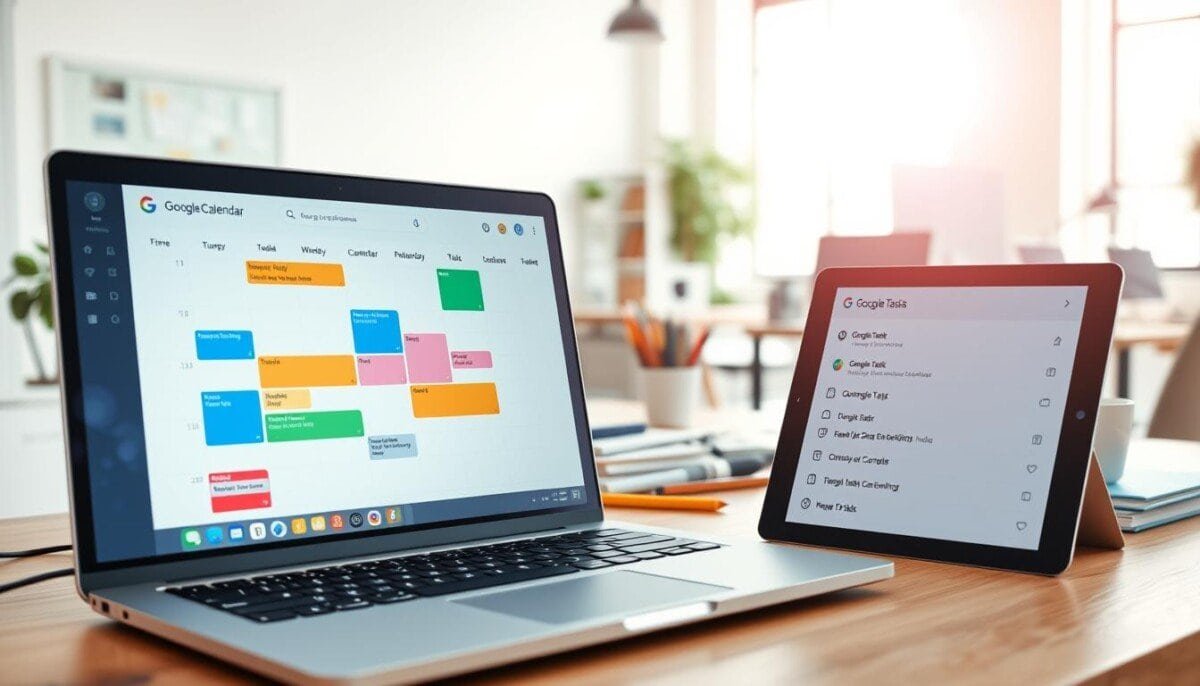
Visualize obligations inside the primary schedule. When tasks google data appears in the main view, priorities remain visible. Apply automated reminders to protect critical blocks.
Key Takeaways
- Centralize daily commitments into one interface for consistent oversight.
- Use google tasks to capture work; place each task into a fixed time block.
- Leverage calendar google visibility to reduce context switching.
- Apply reminders systematically to safeguard high-priority slots.
- Combine these apps to maintain focus and track progress across projects.
Understanding the Benefits of Time Blocking with Tasks
Map every task to a discrete time window to eliminate planning ambiguity and enforce focus.
Time blocking converts lists into schedules—allocate fixed intervals to high-priority work. This forces a realistic assessment of output within an eight-hour day. Measure capacity; adjust estimates accordingly.
Assign items to slots to reduce interruptions. Blocked periods protect deep attention. Meetings become bounded events, not schedule dominators.
Use google tasks as a single-source registry so every objective is visible. Tag and order entries. Link entries to explicit hours to prevent responsibilities from slipping during peak load.
- Transform to-dos into timed commitments.
- Protect deep-work intervals from ad hoc interruptions.
- Assess daily throughput against planned blocks.
How to Perform a Google Tasks Calendar Sync
Enable the sidebar integration first. Activate the right-side panel to expose dated entries as schedule items. This step provides immediate access to task controls inside the primary view.
Enabling the Sidebar Integration
Open the app interface. Locate the side panel toggle in the top-right tools bar and enable it.
Confirm that the google tasks module is visible in the panel. If not, update the app and check settings.
Setting Due Dates for Visibility
Add a due date and a specific time to each task. Items with both date and time automatically appear as events on the primary calendar view.
- Confirm notification settings so alerts appear per user preference.
- Keep apps at the latest versions—updates prevent integration failures.
- Make edits in the sidebar—changes reflect in real time on the calendar.
Result: Dated tasks become timed events; reminders trigger per notification settings. This setup enforces time-bound work and preserves the main schedule for uninterrupted focus.
Organizing Your Task Lists for Maximum Efficiency
Segment task collections into clear categories to streamline execution and reporting. Create separate lists for work, personal, and project-specific items. This separation reduces noise and improves focus.
Prioritizing with Starred Tasks
Star high-impact items. Mark critical entries so they float to the top of the list. Keep starred entries visible on the calendar for immediate recognition.
Break large goals into subtasks. Use list-management tools to decompose objectives into measurable steps. Assign owners when work involves a team. Manual reordering permits dynamic priority shifts during the week.
- Category labels — simplify filtering and reporting.
- Starred items — ensure quick identification and action.
- Subtasks — convert big outcomes into doable steps.
- Manual reorder — adapt priorities in real time.
- Consistent reminders — protect high-priority work.
| Feature | Purpose | Action |
|---|---|---|
| Category lists | Segment workload | Create at least Work/Personal/Project |
| Starred items | Prioritize quickly | Flag and review daily |
| Subtasks | Reduce task size | Break into 1–3 step actions |
Turning Emails into Actionable Calendar Events
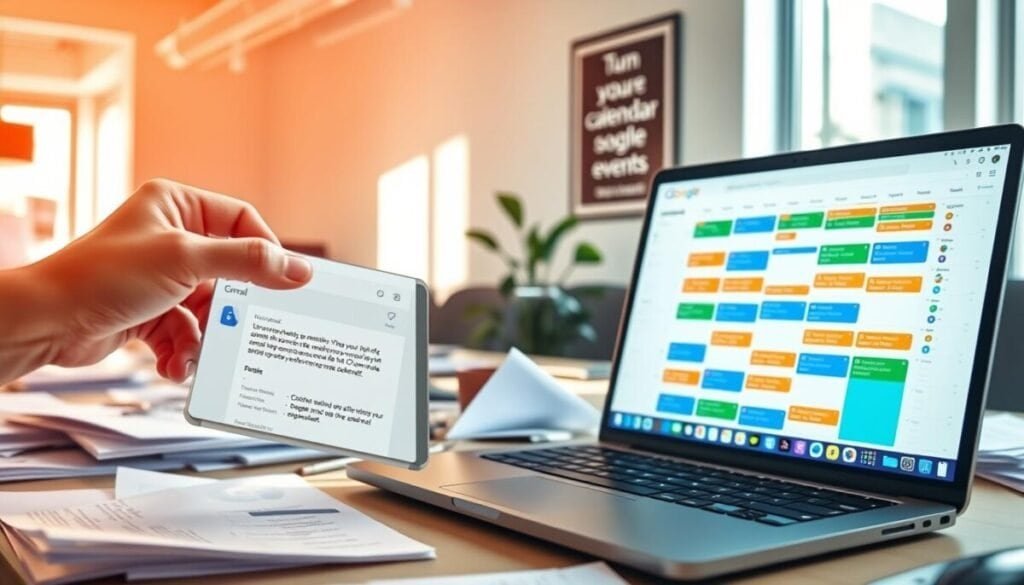
Turn incoming messages into scheduled work items. Convert an email into a task and assign a fixed time slot in the day view.
Use the inbox-to-event integration inside the app to preserve context. Attach the original message to the entry so the user can jump back for details. This eliminates re-reading and reduces follow-up latency.
Schedule converted items as explicit events. Create dedicated blocks that bridge communication and execution. The approach prevents requests from lingering in the inbox and enforces measurable commitments.
- Maintain context: link back to the source message from each entry.
- Protect time: place follow-up work into reserved blocks.
- Unify view: manage all commitments inside the calendar google interface.
Reference implementation details and planning patterns in this guide: online planning tools. Apply systematic rules—convert, schedule, execute—to keep communications actionable.
Leveraging Recurring Tasks for Consistent Workflows
Configure repeat rules so regular obligations appear without manual entry. Set repeats to daily, weekly, monthly, or annually.
Eliminate manual creation. Use recurring setup for weekly recaps, monthly expense reports, and routine maintenance. This enforces consistency across work cycles.
Define a specific date and time for each repeat. Doing so turns repeat items into time-bound commitments. Reminders trigger reliably for assigned owners.
- Automate future entries to reduce administrative overhead.
- Maintain steady workflow by assigning a fixed date for repeats.
- Improve long-term planning—save capacity for high-priority work.
| Repeat Frequency | Use Case | Outcome |
|---|---|---|
| Daily | Stand-up notes; inbox reviews | Consistent daily execution; clear short-term cadence |
| Weekly | Team recaps; backlog grooming | Routine checkpoints; improved team alignment |
| Monthly | Expense reports; performance summaries | Reliable bookkeeping; recurring compliance |
| Annually | Policy reviews; renewals | Long-term governance; scheduled audits |
Enable integration so repeated entries appear in the google calendar view and the google tasks pane. This provides cross-view visibility for the team and preserves reminders.
For techniques to expand automation across systems, consult the productivity apps guide. Apply repeat rules consistently to remove friction and secure predictable delivery.
Utilizing Advanced Tools for Enhanced Scheduling
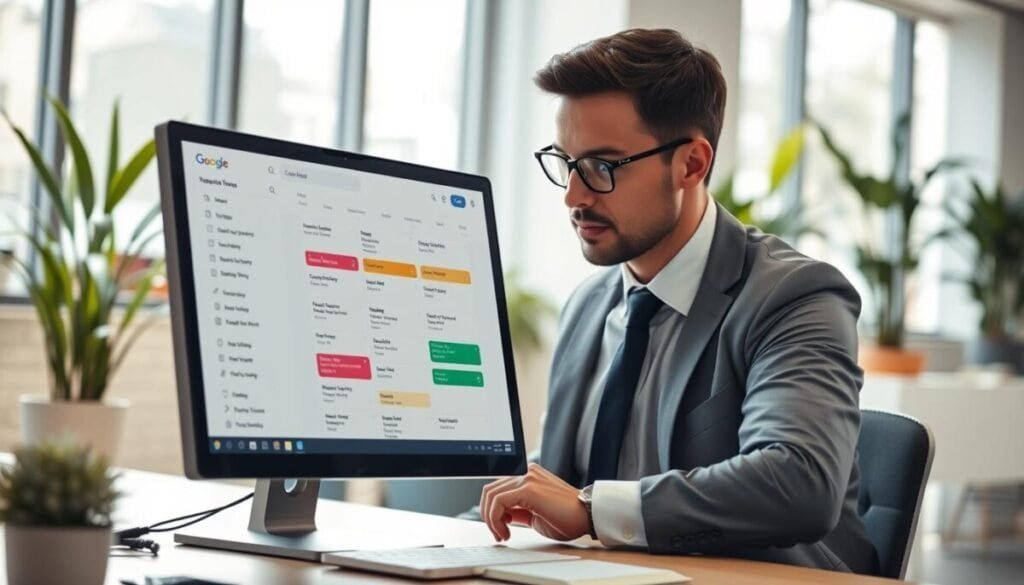
Leverage machine intelligence to place high-impact work into optimal hours. Apply AI recommendations to reduce manual setup and improve throughput.
Morgen AI analyzes existing availability and priorities. It proposes time blocks for google tasks that respect meeting density and user capacity.
Using AI for Optimal Scheduling
Enable algorithmic suggestions to convert a list into timed events. Morgen AI suggests slots that minimize context switching and protect deep work.
Integrating Third-Party Productivity Apps
Use apps that log notes and translate them into actionable items. The Gemini app captures handwritten input and posts entries into google tasks so events appear in the main view.
| Tool | Primary Benefit | Output |
|---|---|---|
| Morgen AI | Optimal slotting | Suggested time blocks |
| Gemini | Handwritten capture | Logged task entries |
| Third-party connectors | Cross-platform flow | Unified events and reminders |
Connecting HubSpot for Sales Tasks
Integrate HubSpot to convert pipeline work into 15-minute events. This enforces short, trackable client follow-ups and preserves the master schedule.
- Balance meetings and work: treat CRM items as fixed slots.
- Improve visibility: unify events and list views.
- Maintain updates: verify settings after each app update.
For setup details, follow the Google Calendar integration guide to complete connections and preserve reminders.
Managing Your Schedule Across Multiple Devices
Lock all endpoints to one account so updates propagate instantly to every interface.
Sign in on each device. Use the same account on desktop, tablet, and phone to preserve the master view.
Transition between desktop and mobile without losing track of task details or due date metadata. Changes on one device appear on others.
Confirm push notifications in mobile settings to receive real-time alerts for events and critical reminders.
- Verify app permission for background updates.
- Set notification priority for high-impact items.
- Use offline mode sparingly—apply when connectivity is unreliable.
| Action | Device | Expected Result |
|---|---|---|
| Sign into same account | Desktop / Mobile / Tablet | Unified master schedule |
| Enable push notifications | Mobile | Real-time alerts for events |
| Adjust settings after updates | All devices | Consistent behavior across apps |
For advanced integration patterns and automations, review the Google Tasks integration and follow linked guides such as schedule text send for notification workflows.
Mastering Your Daily Productivity Routine
Systematically reserve focused slots so every item on a task list becomes actionable.
Use time blocking daily. Assign each high-priority entry to a fixed hour. Review the schedule every morning and adjust as needed.
Combine the google tasks app with the calendar google view for one authoritative schedule and timely reminders.
Maintain a disciplined habit—process the list, place items into the day, then execute without interruption.
For planning frameworks and tool recommendations, consult this guide to online planning tools.