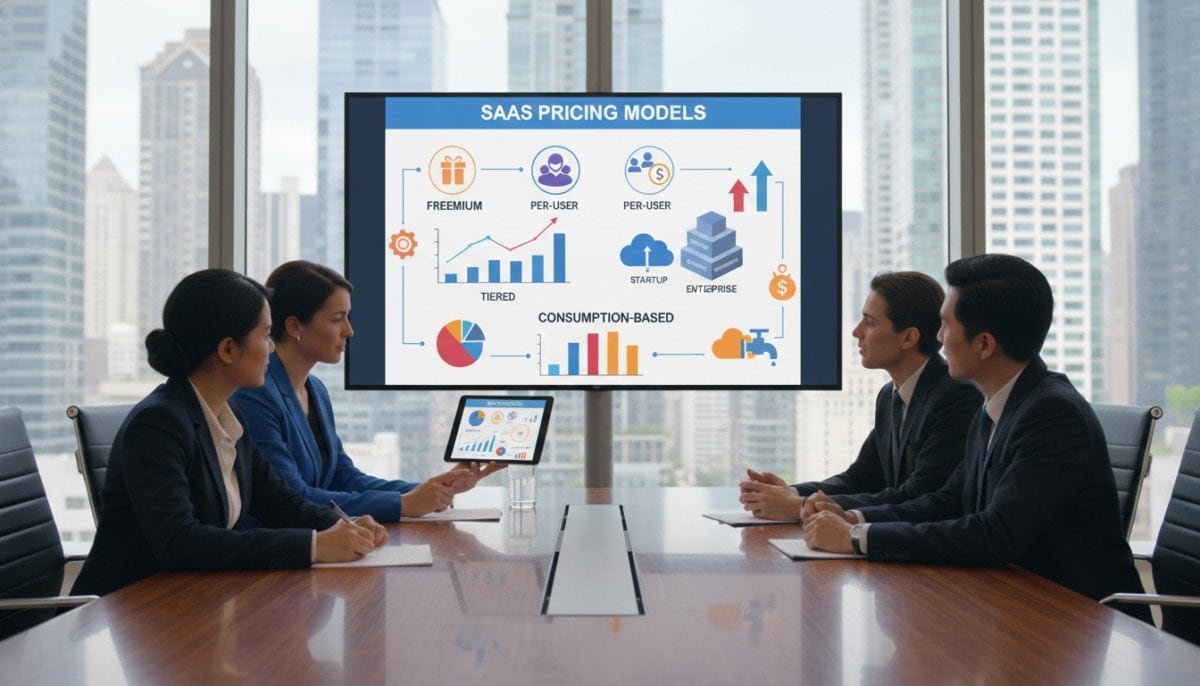
Have you ever wondered how the right pricing model can transform your business? In today’s fast-paced market, making the right choices about pricing is crucial. The 2025 Monetization Monitor reveals that flexibility is becoming increasingly important for providers. This shift is reshaping how we think about our offerings.
We recognize that selecting the appropriate pricing strategy is not just a financial decision; it significantly impacts our long-term revenue and sustainability. As the landscape evolves, we must adapt our approach to reflect the true value of our services while remaining competitive.
Understanding the nuances of modern pricing will help us align our financial goals with the needs of our users. By carefully evaluating our pricing strategy, we can attract new customers and retain our existing ones, ensuring our growth in this dynamic environment.
Key Takeaways
- Choosing the right pricing model is essential for long-term success.
- Flexibility in pricing is increasingly important in today’s market.
- Our pricing strategy should reflect the true value of our offerings.
- Evaluating pricing impacts customer attraction and retention.
- Understanding modern pricing helps align financial goals with user needs.
Overview of SaaS Pricing Fundamentals
Understanding how pricing models can reshape our business is essential in today’s landscape. The world of pricing has evolved significantly, especially when we compare traditional software with modern approaches. SaaS pricing is designed to lower barriers to entry, allowing customers to subscribe monthly or annually rather than facing hefty upfront costs.
We define saas pricing as the strategic methodology that translates the value of our services into a financial metric that resonates with customers. This understanding is crucial for staying competitive in the digital economy.
Key concepts such as recurring revenue and customer lifetime value are vital for our long-term financial health. By mastering these terms, we can ensure our chosen model supports sustainable growth. Additionally, comparing our approach to industry standards helps us align with the evolving expectations of our target audience.
How-To Guide: Implementing a Winning Pricing Model
To thrive in today’s market, we must prioritize understanding what our customers truly value. This understanding is essential for developing a pricing model that aligns with their needs.
First, we need to analyze specific customer needs within our target market. This analysis helps us set rates that resonate with our audience.
Next, we will map our product features to distinct pricing tiers. This ensures that each tier provides clear value to different segments of our customers.
- By observing how our customers interact with our platform, we can refine our tiers to better match the features they value the most.
- Aligning our product development roadmap with feedback from our most active users is vital.
- We aim to create a transparent structure where customers feel they are getting fair value for the specific features they choose to access.
For more insights on pricing strategies, check out our guide on project management pricing models.
Understanding Customer Value and Market Demands
In today’s competitive landscape, grasping the essence of customer value is vital for our success. We must prioritize analyzing user behavior to understand how different segments of our customer base derive value from our core features.
By tracking usage patterns, we can identify which parts of our product are most essential. This insight helps us determine which features might be candidates for premium tiers.
Understanding the market demand for our specific solutions allows us to adjust our pricing. This adjustment ensures we reflect the competitive landscape we face.
We will use data-driven insights to ensure that our value proposition remains strong as we scale our operations in the United States. Our team is committed to monitoring how customer usage evolves over time to ensure our pricing remains both fair and highly profitable.
| Analysis Aspect | Importance | Action Steps |
|---|---|---|
| User Behavior | High | Track and analyze feature usage |
| Usage Patterns | Medium | Identify essential features |
| Market Demand | High | Adjust pricing strategies |
| Data Insights | Critical | Monitor and adapt |
For more insights on pricing strategies, check out our guide on project management pricing models.
Diverse SaaS Pricing Models Explored
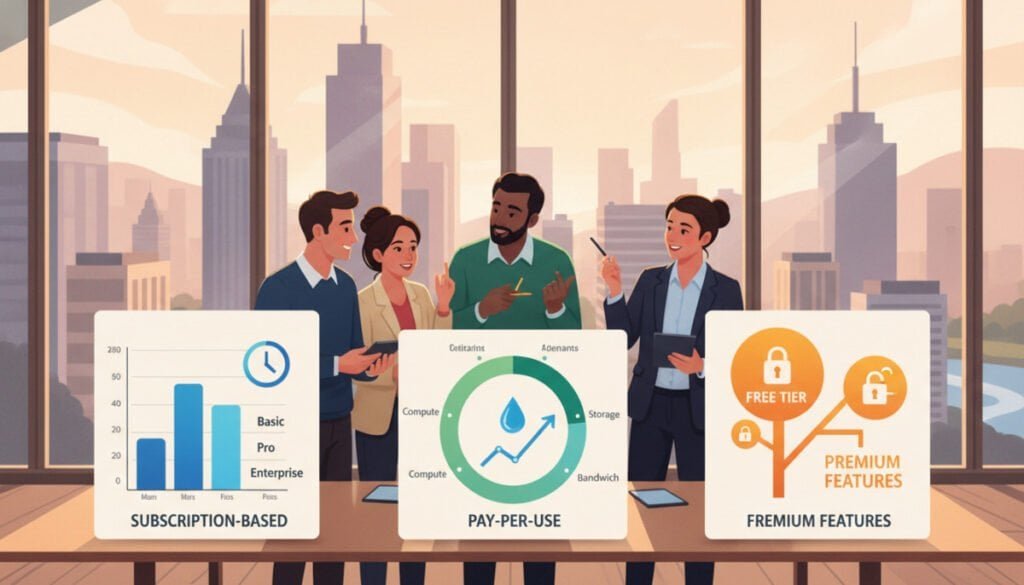
Exploring different pricing models can significantly impact our business trajectory. We are currently evaluating various saas pricing models, including tiered pricing, freemium options, and per-user structures. Each model offers unique advantages that may align with our growth stage.
The 2025 Monetization Monitor indicates that outcome-based and usage-based plans are gaining traction among leading companies in the industry. By offering a freemium model, we can allow new users to experience the value of our product before committing to a paid subscription.
Tiered models enable us to cater to diverse types of users, from small businesses to large enterprises, by providing varying levels of functionality. As we explore these options, we must carefully evaluate how they impact our ability to scale and maintain healthy profit margins in a competitive market.
For further insights, check out our guide on project management for small businesses.
Deep Dive into Tiered and Hybrid Pricing Strategies
Adopting the right pricing strategies can lead to remarkable changes in our business dynamics. Among the most effective approaches is the Good, Better, Best model. This tiered pricing strategy helps guide customers toward the plan that best fits their needs.
According to Paul Bland, Senior Director of Product Management at Revenera, it’s crucial to balance predictable revenue with user flexibility. This insight is key as we explore a hybrid model that combines a standard subscription with usage-based pricing. This allows us to capture revenue from both core and power users.
- By providing tiered access to our features, we ensure that customers only pay for the specific capabilities they use.
- Our strategy focuses on creating a seamless experience, allowing users to easily upgrade their access as their business needs evolve.
Effective saas software pricing Strategies for Growth

A well-crafted pricing strategy serves as a foundation for sustainable business development. By implementing a data-driven approach, we ensure that every adjustment we make is supported by concrete evidence from our user base.
Leveraging advanced analytics allows us to identify new growth opportunities. This insight helps us refine our pricing strategies to maximize long-term revenue potential.
Our team analyzes historical data to predict how changes in our pricing will impact overall business performance and customer retention rates. Continuous testing and iteration are essential for maintaining a competitive edge in the fast-paced market.
By making informed decisions based on real-time usage data, we can optimize our revenue streams while keeping our customers satisfied and engaged.
Aligning Pricing with Business Goals and Revenue Targets
Aligning our pricing strategy with business objectives is crucial for driving sustainable growth. We ensure that our revenue targets are supported by a clear and sustainable strategy. This alignment allows us to navigate the competitive landscape effectively.
According to the 10x rule, we aim to position our products so that customers perceive they are gaining ten times the value of their investment. This perception not only attracts new customers but also retains existing ones.
We carefully monitor our competitors to ensure our price points remain attractive while still reflecting the premium quality of our solutions. Our goal is to build a business that thrives by delivering exceptional value that justifies the cost to our diverse range of customers.
By focusing on revenue growth and market positioning, we can ensure our long-term viability and success in an increasingly crowded landscape.
| Aspect | Importance | Action Steps |
|---|---|---|
| Business Goals | High | Align pricing with objectives |
| Customer Perception | Critical | Implement the 10x rule |
| Competitor Monitoring | Medium | Adjust price points accordingly |
| Value Delivery | High | Enhance product offerings |
For more insights on analytics tools, check out our guide on choosing analytics tools.
Integrating AI and Dynamic Models into Pricing

Incorporating AI into our pricing strategies can revolutionize how we respond to market dynamics. By integrating advanced technologies, we can make real-time adjustments that reflect user demand and market conditions.
Outcome-Based and Usage-Driven AI Pricing
Our new outcome-based pricing for AI features ensures that customers pay based on the measurable results they achieve using our advanced tools. This model not only aligns our pricing with customer success but also enhances their overall experience.
Real-Time Adjustments for Market Shifts
By utilizing usage-driven models, we can account for the high computational costs associated with AI while keeping our core subscription plans affordable. This flexibility allows us to stay competitive in a rapidly changing market.
- We are constantly monitoring how our AI features impact our total revenue to ensure that our pricing remains aligned with our profitability goals.
- Our dynamic approach allows us to stay ahead of the market by offering flexible pricing that scales automatically with the needs of our users.
| Model Type | Features | Benefits |
|---|---|---|
| Outcome-Based | Results-driven | Aligns cost with value |
| Usage-Driven | Scalable | Accommodates varying needs |
| Dynamic Pricing | Real-time adjustments | Responsive to market shifts |
For more insights on AI integration, check out our guide on AI project management tools.
Overcoming Common Challenges in SaaS Pricing
Navigating the complexities of pricing can be a daunting task for many businesses. To succeed, we must actively manage customer perceptions about costs. This means clearly communicating the value of our offerings, ensuring they understand the return on investment.
To reduce confusion, we have simplified our pricing model. This allows customers to easily grasp their costs without needing extensive support from us. By doing so, we can focus on delivering a better experience.
We also recognize that our customers have varying needs. To address this, we offer flexible plans that allow users to scale their usage as their business grows. This adaptability is key to customer satisfaction.
- Our team works diligently to maintain transparency in our pricing. This builds trust and fosters long-term loyalty with our valued customers.
- By proactively identifying potential friction points, we can adjust our model to prevent churn. Keeping our customers happy with our service is our top priority.
For further insights, check out our guide on enterprise pricing strategies.
Additionally, learn more about managing finances in our article on freelancer accounting tools.
Final Thoughts on Strategic SaaS Pricing for Sustainable Growth
Reflecting on our pricing strategies can reveal pathways to sustained growth. We have seen how companies like Slack and Salesforce leverage various models to enhance customer satisfaction and drive revenue. For instance, HubSpot effectively combines freemium and tiered pricing, while AWS employs usage-based pricing to cater to diverse needs.
By learning from these examples, we can refine our own approach to ensure we remain competitive. Continuous testing and data-driven adjustments will keep our pricing models aligned with market demands. Ultimately, our goal is to provide clear, value-based pricing that supports our customers’ success while fostering sustainable growth.
For more insights on effective pricing strategies, explore our guide on project management for small businesses.