
Curious why planning your updates from a phone still feels clunky? Managing a Twitter/X profile needs clear timing and reliable tools. You can draft posts in the native X app, but true auto-posting is limited.
This guide shows you how to plan posts from your phone using X Pro in a mobile browser and trusted third‑party tools. We cover setup, permissions, and a simple content plan that saves time and reduces errors.
You’ll get step‑by‑step actions for X Pro in Safari or Chrome, plus quick workflows with Buffer, Hootsuite, Later, Planable, SocialRails, and MeetEdgar. We explain differences between drafts and true auto-posting, plus timing tips to boost engagement.
For detailed platform steps and extra tips, see this helpful resource: how to schedule posts on Twitter. Additionally, it’s worth noting that you can schedule tweets from your iPhone using various apps designed for social media management. These tools often provide user-friendly interfaces and additional features to optimize your posting strategy. Be sure to explore these options for a more convenient tweeting experience on the go. Additionally, many users find it convenient to use Twitter’s mobile app for managing their posts on the go. You can easily schedule tweets from your mobile device, ensuring that your audience remains engaged even when you’re not online. This feature allows for greater flexibility in planning your social media strategy. Moreover, several third-party applications enable users to schedule tweets on X app, enhancing the overall user experience. By integrating these tools into your routine, you can streamline your social media workflows and maintain a consistent presence. This flexibility permits you to focus on engaging with your audience rather than worrying about the timing of your posts.
Key Takeaways
- Native drafts exist, but auto-posting needs X Pro or third‑party tools.
- Choose a tool that fits your workflow—Buffer and Later offer free tiers.
- Set timezone and calendar details in the mobile browser for accurate timing.
- Mix evergreen and timely content to improve engagement rates.
- Secure accounts with 2FA and manage permissions before connecting tools.
What “schedule tweets on mobile app” really means today
For modern users, composing from a phone means choosing between drafts and real automatic publishing. The native X platform keeps Drafts and thread tools, but it does not auto-post at set times from the official app.
Two practical paths exist for posting:
- Use X Pro in a mobile browser (pro.x.com) to set a future date/time and let the platform publish for you.
- Use third‑party tools such as Buffer, Hootsuite, Later, Planable, SocialRails, or MeetEdgar for queues, calendars, and analytics.
Which option fits you depends on workflow and goals. Browser-based posting is fast for one-off items. Third‑party tools add team approvals, visual calendars, and performance data that improve long-term presence.
Keep your audience in mind: consistent posting builds reach, but live replies keep conversations active. Test both browser-based and tool-driven approaches and use the one that gives predictable reach while preserving real-time engagement.
For a quick comparison of popular choices, see this guide to mobile apps for Twitter scheduling.
Before you start: accounts, permissions, and a basic content plan
Start by verifying account connections and setting a basic calendar so your content runs smoothly. This prevents posting failures and keeps teams aligned.
Connect and confirm access first:
Connect your X/Twitter account and verify access
- Link each account to the scheduler and confirm it can post on your behalf.
- Check roles and permissions for all accounts you manage to avoid blocked posts.
- Set your timezone, then set a preferred posting window before adding any date or time.
Build a simple content calendar for timing and consistency
Draft a one‑page plan that lists goals, themes, frequency, and target time blocks. Use recurring slots: morning tips, midday links, afternoon visuals.
- Create a media folder on your phone for images and short video files used across platforms.
- Add UTM parameters to links so desktop and mobile analytics match later.
- If your tools allow it, set date time presets or a reusable posting queue.
- Use desktop once to complete initial connections and settings; handle daily management from your device after that.
Use the native X/Twitter app on mobile for drafts and prep
Drafting inside X keeps your ideas and assets together so you can post quickly when timing matters. The native compose flow is simple and reliable for preparation. Save copy, attach media, and polish hooks before you go live.
Create and manage Drafts for manual posting
Open the app, tap compose, write your text, then save the draft for later.
- iPhone: tap Cancel → Save Draft.
- Android: tap the back arrow → Save Draft.
- To access drafts: tap compose, then choose Drafts. Edit and post when ready.
Add images, videos, and GIFs for higher engagement
Attach images, gifs, or videos while composing so media is ready at posting time. Name files clearly to speed selection and avoid duplicates.
Understand limitations: no native auto-scheduling
Important: the native app won’t auto-post at a set time. Keep a draft workflow here, then use X Pro or a third-party tool for timed publishing. For deeper tactics, see advanced scheduling strategies.
Keep copy tight. Let the first one or two lines carry the hook, use a clear CTA, and add 2–3 targeted hashtags. Pin a checklist draft with your standard mentions, link style, and final review steps.
Schedule tweets in a mobile browser with X Pro
Use your phone’s Safari or Chrome to open pro.x.com and lock in a posting date and time. This gives you full publishing control from a browser interface that mirrors desktop features.
Access pro.x.com on Safari or Chrome and log in
Open Safari or Chrome, go to pro.x.com, and sign in with the account you want to post from. Tap Post, then compose your copy and add images or video as needed.
Compose, set date and time, and confirm your timezone
Tap the calendar icon to pick a date and time. Double-check the date time picker and confirm your timezone to avoid publish errors.
Tip: zoom or switch to landscape if the UI feels cramped. Small screens can hide controls, so a quick zoom saves mistakes.
View, edit, or delete scheduled tweets in the Scheduled section
Open Scheduled to review upcoming posts. From there you can edit copy, change the time slot, or remove an item before it publishes.
- Confirm the correct account when you manage multiple accounts.
- Save a quick test post 2–3 minutes ahead to verify the workflow.
- Add a home-screen shortcut to pro.x.com for faster access across platforms.
Buffer mobile app workflow for quick scheduling
Buffer streamlines quick post planning from your phone. Install, connect your X/Twitter account, and you get a lean queue with basic analytics and suggested time slots.
- Install Buffer and create an account, then authorize access to your X/Twitter account.
- Tap + to compose, add images or videos, and include 2–3 targeted hashtags.
- Choose Schedule to pick a custom time or a suggested slot for faster posting.
Buffer’s free plan gives you 10 scheduled posts per social account. Drag items in the queue to reorder, edit live, or remove upcoming posts. Use suggested times when you’re short on data to save time.
Practical tips: keep 10–12 evergreen tweets in rotation and save your top-performing formats as quick templates. Track basic performance in the tool to refine your best time windows across platforms.
Hootsuite mobile app for visual calendar and collaboration
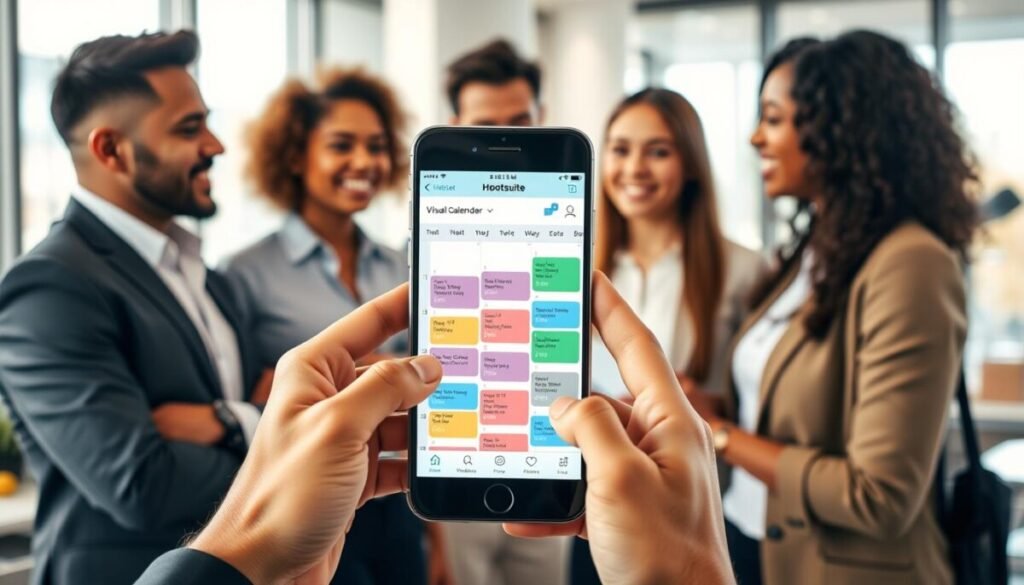
Manage your content calendar with Hootsuite’s drag‑and‑drop view and built‑in collaboration tools. The platform connects multiple accounts and offers a 30‑day free trial with unlimited post scheduling.
Use Hootsuite when you need a shared workflow that keeps teams aligned. Compose posts, attach media, and pick an exact date and time in one screen. Confirm the right profile before you hit publish to avoid mistakes.
Compose, attach media, and set a custom date and time
Write copy, add images or video, and choose the precise date and time for posting. The interface keeps everything on one screen so you move fast.
Use calendar view to drag, drop, and reschedule
The visual calendar makes it simple to reorder content. Drag a post to a new slot and the change syncs across connected accounts.
Leverage team approvals and basic analytics while away from your desk
Assign drafts for review and set approvals to keep quality high. Check basic analytics to see which time slots work best, and export reports later from desktop if you need deeper data.
- Download Hootsuite, start the 30‑day trial, and connect your X/Twitter profile.
- Compose posts with media and set exact date and time in one screen.
- Open the visual calendar to drag, drop, and reschedule posts in seconds.
- Use drafts for team review; assign approvals to keep quality high.
- Check basic analytics to confirm which slots perform best while managing from your device.
- Group posts by campaign color labels to scan your calendar at a glance.
- Verify the correct profile when handling multiple accounts before you schedule.
- Build a shared content bank your team can pull from while traveling.
- Enable notifications for confirmations and failures; export reports from desktop for deep analysis.
| Feature | What it helps with | Best for |
|---|---|---|
| Visual calendar | Quick rescheduling and campaign overview | Teams planning multi‑platform campaigns |
| Drafts & approvals | Quality control and review workflow | Content teams and agencies |
| Basic analytics | Identify strong posting windows | SMB managers and solo marketers |
| Multi‑account support | Manage profiles from one place | Marketers handling several brands |
Later mobile app for visual-first scheduling and media management
Visual calendars simplify how you plan images, videos, and short text across a week. Later centers on media management so you can upload, tag, and group assets quickly. Its free tier gives you 10 posts per month per social profile and a 30-item media library.
Use folders and tags to speed selection. Drag an image from the library to the calendar. Write a short caption and add 2–3 targeted hashtags. Set optimal times suggested by the tool or pick custom slots when needed.
Organize your media library and plan from the calendar
- Upload and tag images and videos for fast retrieval.
- Drag assets to the visual week or month view to balance formats.
- Create campaign folders for approvals and last-minute swaps.
Optimize captions, hashtags, and posting times
Keep text tight and lead with the hook. Save hashtag sets to paste and vary them across posts. Track basic analytics to see which visuals drive engagement, then reuse top formats.
Later’s free plan pairs well with X Pro when you need browser-level control of time details.
Planable, MeetEdgar, and SocialRails: advanced mobile scheduling tools
Advanced schedulers let teams preview posts, bulk-upload CSVs, and move items with a drag-and-drop calendar.
Planable gives you a shared visual calendar and pixel-perfect previews. Use its drag-and-drop view to reorder posts and the CSV bulk upload to fill gaps across multiple accounts. Collaboration features include comment threads and approvals so errors drop before posting. Connect X on desktop first, then run daily workflows from your device.
MeetEdgar: reusable library and evergreen queues
MeetEdgar links to X accounts, stores content in a library, and recycles evergreen posts automatically. Build category queues, add images and gifs from your phone, and let the tool fill open slots so your feed stays active without constant hands‑on work.
SocialRails: AI timing and full thread support
SocialRails offers a mobile‑optimized interface, AI suggestions for best posting times, and native thread scheduling. Try the 14‑day unlimited trial to test bulk scheduling and thread flows before you commit.
- Use Planable for a shared calendar, exact previews, and fast drag-and-drop moves.
- Bulk upload CSVs to schedule posts across accounts quickly — see tips in this guide: bulk schedule tweets efficiently.
- Collaborate with comments and approvals to reduce errors and keep brand voice consistent.
- Save media and gifs to libraries for fast reuse and higher engagement.
- Pick the right platform for team size, posting volume, and approval needs.
schedule tweets on mobile app: timing, frequency, and content mix

Pick a few daily slots that align with your audience’s routine and keep them consistent for two weeks. Start with 3–5 posts per day and space them about 2–3 hours apart. This avoids flooding feeds and keeps your presence steady.
Map time zones. Stack key posts into peak windows where most of your followers are active. Test weekday versus weekend times and track engagement by hour.
- Mix formats: short insights, curated links, and visual posts to keep content fresh.
- Reserve one live slot daily to reply, quote, or join trends.
- Reuse top-performing copy with new visuals or angles to extend reach.
- Align timing with launches, events, or blog releases for momentum.
- Build weekly themes so your calendar shows a consistent rhythm.
Measure and refine. Track which tweet formats win at specific times, then turn winners into templates. Protect your feed by avoiding long gaps; smart scheduling keeps baseline engagement steady.
For tactical guidance about reply planning, see how to schedule replies on Twitter.
Make your posts perform: media, text, and thread strategies for mobile
Make each post count by pairing tight copy with eye‑catching media. Lead with one idea per post. Keep lines short so readers scan quickly.
Keep copy concise, use 2–3 targeted hashtags, and add strong CTAs
Use 2–3 targeted hashtags to reach niche audiences without clutter. Put the hook in the first line.
Write CTAs that ask for replies, clicks, or shares. Be direct: ask a question or offer a quick benefit.
Thread planning and interval best practices
Outline thread copy in Notes, then paste posts into your scheduler in order. Set short intervals — 2–3 minutes — between entries to keep readers engaged.
- Front-load value in the first two posts; many stop reading after that.
- Add images or short clips to lift visibility in fast feeds.
- Use alt text for images to improve accessibility and comprehension.
- Revisit top-performing posts and expand them into mini-threads.
Practical tip: save templates for hooks, CTAs, and hashtag sets to speed posting and keep consistency.
Troubleshoot, secure, and measure: staying consistent from your phone
A short troubleshooting routine solves most posting hiccups without opening desktop tools. Keep this workflow handy so you recover quickly and keep content flowing.
Fix failed posts, media issues, and timezone mismatches
If a post fails, first recheck the date and time, then verify internet and permissions. Re-authorize your scheduling tool after password changes or policy updates.
Use JPG/PNG for images and MP4 for video. Run a quick character count to avoid truncation. Split long ideas into threads when needed.
Enable 2FA, review connected apps, and monitor metrics
Turn on two‑factor authentication and audit connected apps quarterly. Limit which accounts and users have posting rights.
Track likes, retweets, replies, CTR, and follower growth to judge performance. Export deeper reports from desktop for comprehensive analysis.
Balance automation with live replies to boost presence
Automate baseline posts, but reserve time each day for real replies. Live interaction strengthens relationships and lifts engagement for future posts.
- Reschedule failed items after checking timezone and permissions.
- Save a troubleshooting checklist in Notes for quick fixes.
- Compare performance by times and weekday to refine slots.
| Issue | Quick fix | When to use desktop |
|---|---|---|
| Failed post | Recheck date/time & reconnect account | Bulk reauthorization or mass edits |
| Unsupported media | Convert to JPG/PNG or MP4; compress if large | Batch media conversion and tagging |
| Auth loss | Re-authorize scheduling tool and test | Audit app permissions and roles |
Your mobile scheduling roadmap to stronger X/Twitter engagement
Close your workflow loop with a lean toolkit that combines drafts, direct publishing, and one reliable queue manager.
Make a weekly ritual: pick themes, assemble content, and slot posts into a visual calendar. Use reusable templates for copy, media specs, and UTM links to keep quality consistent.
Standardize a 2–3 hashtag strategy and a clear CTA for every post. Test time windows, track a small KPI set (engagement rate, CTR, top post types), and shift to winners.
Keep your presence human: reply daily, join trends, and recycle high performers. Protect accounts with 2FA and regular permission audits. Iterate monthly—prune weak items, scale what works, and refresh your media library for steady social media growth.