23 minutes and 15 seconds. That is the average recovery time after a single interruption — a metric that proves control over notifications is not optional.
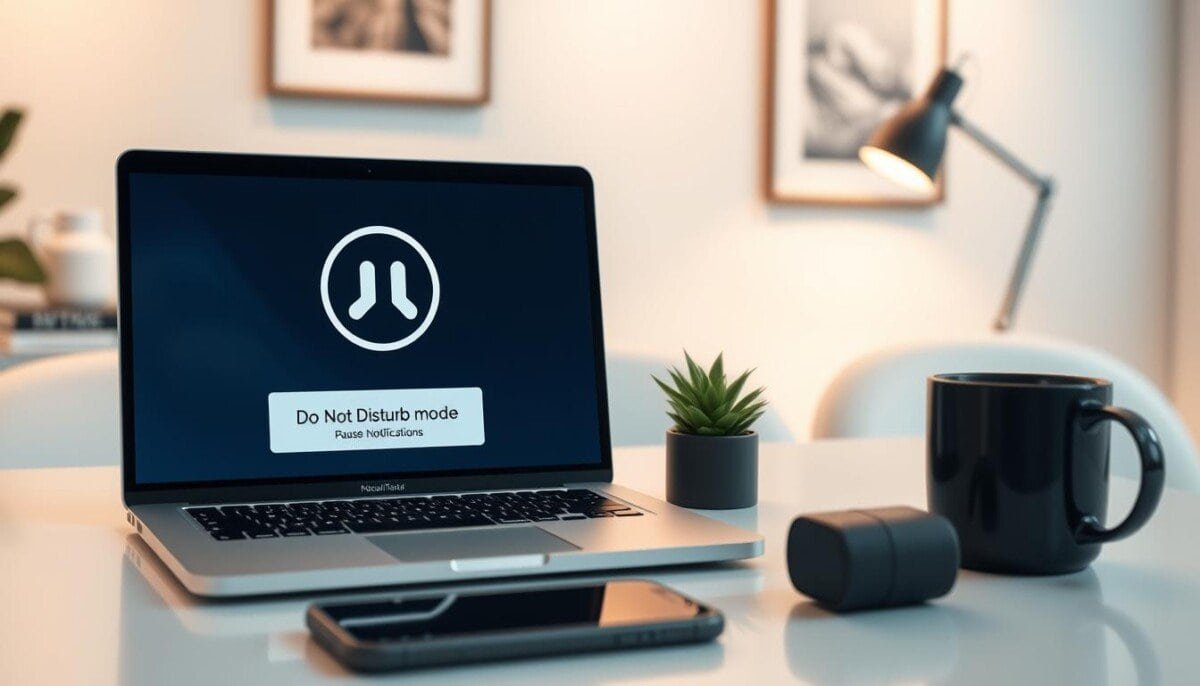
Access the profile menu from the top of the screen or the sidebar. Click the profile picture. Select the option that pauses incoming messages and email alerts.
Pause notifications to maintain focus. A snooze icon appears next to the name — a clear status marker for teammates. Direct messages may still come through if the sender overrides the setting.
Customize a time frame in the desktop app. Configure notification preferences to control channels and apps. Workspace admins may enforce a default notification schedule for consistency.
Get started by reviewing settings and the notification schedule. Set notification windows to match work blocks. Establish a policy that reduces context switching and preserves productive time.
Key Takeaways
- Pausing notifications reduces interruption costs — average recovery is 23 minutes 15 seconds.
- Use the profile menu — top of the screen or sidebar — to access pause options.
- A snooze icon indicates status; direct messages can bypass that status.
- Customize time frame and notification preferences in the desktop app.
- Workspace admins can set a default notification schedule for all members.
Understanding the Benefits of Do Not Disturb Mode
Establishing regular quiet hours reduces reactive work and preserves cognitive bandwidth. Implement a clear notification policy to separate core work from personal hours. This preserves recovery time after interruptions.
Adjust the local profile time zone so teammates know availability across global teams. Correct time settings ensure the notification window aligns with actual hours and prevents misaligned pings.
Mute noisy channels to limit incoming messages without leaving the conversation. Targeted muting reduces mental load and increases focus on priority tasks.
- Balance: Protect personal hours to maintain a healthy boundary between work and rest.
- Profile control: Use profile settings to limit temptation to check work-related email and messages after hours.
- Consistency: Repeat notification rules so peers respect working hours and reduce unnecessary pings.
For a complementary approach on blocking interruptions across apps, reference the guide to schedule focus time. To enhance your focused work sessions, you can also schedule do not disturb settings for apps that frequently cause distractions. This helps to ensure that notifications do not interrupt your concentration, allowing for deeper engagement with your tasks. Additionally, consider setting specific times to check messages and alerts after your focused periods are complete.
How to Set a Slack Do Not Disturb Schedule
Set precise notification windows in the app to protect focus time and limit interruptions. This section explains desktop and mobile configuration steps and quick commands to pause alerts.
Configuring Desktop Preferences
Open the profile menu in the sidebar. Click the profile picture and select Preferences.
Under Allow notifications, choose a recurring option. Select a time frame that matches core work hours. The workspace default remains in effect unless overridden by this personal setting.
Setting Mobile Notification Rules
Tap the profile picture at the top of the screen and open Notifications. Choose Every day, Weekdays, or Custom to define active hours.
Custom hours silence alerts during focus time and ensure direct messages arrive only when the user wants to receive notifications. A snooze icon appears next to the name when alerts are paused.
- Use the /dnd slash command to pause notifications for a specific time frame—e.g., /dnd 15m or /dnd until 5pm.
- Define a custom frame to protect uninterrupted blocks of productive work.
Managing Notifications on Mobile and Desktop
Control mobile and desktop alerts from a single settings panel to keep focus blocks intact. Adjust notification preferences in the app to align alerts with work windows.
Use quick commands for immediate pauses. Enter /dnd with a duration or endpoint—e.g., /dnd 1h or /dnd until tomorrow. Use /dnd off to resume alerts instantly.
Using Slash Commands for Quick Pauses
Apply the slash feature to pause notifications without navigating menus. This is faster on mobile and desktop.
- Right-click a channel name in the sidebar on desktop to select Mute Conversation.
- Workspace admins may set permissions to limit which members can use certain slash commands or send @channel alerts.
- Select an explicit time frame when choosing the option to pause notifications to prevent unintended interruptions.
| Action | Interface | Effect |
|---|---|---|
| /dnd 30m | Any device | Pause notifications for 30 minutes |
| Right-click → Mute | Desktop sidebar | Mute specific channel messages |
| Profile → Preferences | Top of screen menu | Set recurring notification preferences |
Advanced Strategies for Minimizing Distractions
Enforce channel-level muting to prevent high-volume conversations from hijacking work time.
Muting Noisy Channels
Mute high-traffic channels in the sidebar. Limit visible channels to those tied to immediate tasks.
Result: Fewer interruptions; longer uninterrupted focus periods.
Adjusting Local Time Zones
Set the correct local time in your profile. Align working hours so teammates receive notifications during real work hours.
Use custom profile fields on paid plans to display hours and reduce off-hour pings.
Integrating Calendar Apps
Install calendar integrations—Clockwise, Google Calendar for Slack, or Microsoft Outlook Calendar for Slack—to automate status changes and protect focus time. Additionally, set up out of office messages to inform colleagues of your availability. This way, you can ensure clear communication even when you’re away from your desk. Moreover, integrating these practices can significantly enhance your overall productivity while working remotely.
Automated status updates allow the app to pause notifications during meetings and mark availability when free.
- Use integrations to update status and limit incoming messages while in focus time.
- Set a default notification schedule in the slack app to repeat every day for consistency.
- Leverage marketplace apps to automate availability and reduce manual status changes.
| Integration | Effect | Best use |
|---|---|---|
| Clockwise | Auto-updates status to Focus Time | Blocking deep work blocks |
| Google Calendar | Syncs meetings; mutes alerts during events | Managing meetings and tasks |
| Outlook Calendar | Updates availability across workspace | Enterprise calendar coordination |
For protocols on reducing interruptions, review guidance to minimize distraction and refine notification preferences.
Mastering Your Workflow for Better Focus
Treat notification settings as a workflow instrument. Configure controls to preserve uninterrupted focus time for high-value tasks.
Get started by reviewing the profile menu and updating preferences. Set a notification window that matches core work hours.
Pause notifications when deep work begins. Use integrations and productivity apps to automate status updates and task blocking.
Maintain the profile display on the screen so teammates can receive clear availability signals. Apply these steps consistently to master the Slack environment and finish priority tasks with less context switching. In addition to clear availability signals, adhering to optimal slack huddle etiquette fosters better communication among team members. By ensuring that everyone is on the same page and respecting each other’s time, discussions become more efficient and productive. This approach not only enhances collaboration but also contributes to a positive team dynamic.