65% of knowledge workers report daily interruption from messaging tools. This scale of disruption demands methodical control.
Define a clear notification strategy. Explain the platform name—Searchable Log of All Communication and Knowledge—to orient the reader.
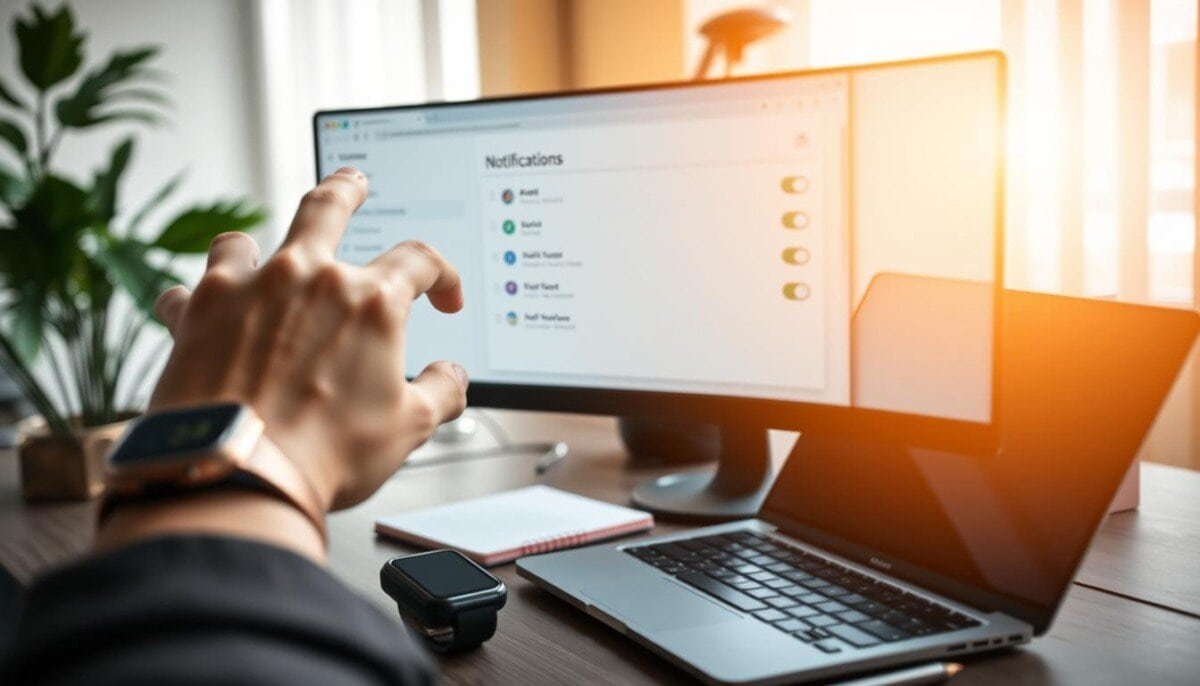
Begin by accessing the profile picture top menu. Use that menu to change desktop and mobile alert behavior. Apply granular settings per channel and direct message. Limit alerts to project-critical mentions and keywords.
Adjusting each notification and notification rule reduces cognitive load. Configure exceptions for high-priority threads. Save configuration as a routine for sustained deep work.
Key Takeaways
- Access settings from the profile picture top menu to start configuration.
- Set per-channel rules to receive only project-relevant alerts.
- Use desktop and mobile controls to align alerts with work hours.
- Prioritize mentions and keywords—minimize low-value pings.
- Document and reuse a notification profile for consistent results.
Understanding the Impact of Slack Notifications on Focus
Calculate the weekly minutes devoted to switching between platforms and alerts. Research shows knowledge workers lose about 30 minutes each week simply by toggling apps and managing incoming messages.
Constant interruptions fragment attention — they reduce capacity for complex problem-solving and creative output. When the profile is set to receive every alert, mental clarity diminishes. Work quality declines.
Protecting focus time requires proactive policy. Limit real-time pings to mission-critical channels. Configure exceptions for high-priority threads. Schedule blocks for uninterrupted execution.
- Estimate lost minutes weekly — track the baseline.
- Set channel rules to reduce reactive behavior.
- Align alert delivery with core work hours.
Control signal flow — regain attention. Effective management of app alerts ensures personnel remain task-driven rather than reactive to every incoming message.
Configuring Slack Notifications Focus Settings
Open the profile menu to apply precise alert rules for desktop and mobile.
Desktop Preferences
Click profile picture top in the sidebar. Select preferences from the preferences menu to open notification settings.
Choose between Everything or Mentions and direct messages. Uncheck box options to disable specific desktop alerts. Set a schedule to limit delivery during nonworking hours.
Mobile Configuration
Access the same preferences on mobile to sync behavior across devices. Click profile picture, then select preferences to change mobile notifications and badge behavior.
Limit receive notifications to mentions direct messages for lower volume. Use the schedule field to align delivery with work time. Configure both desktop and mobile so alerts arrive only when required.
- Start: click profile picture top → select preferences menu.
- Option: Everything or Mentions and direct messages.
- Action: uncheck box items to mute low-value alerts.
- Schedule: set defined hours to protect deep work blocks.
Result: Proper settings reduce interruptions and preserve focus time. For additional step-by-step guidance on preference customization, consult the notification preferences guide.
Managing Channel and Direct Message Alerts
Declare which channels and direct messages warrant immediate attention and which should remain muted.
Apply per-channel rules — set a default to receive mentions direct messages only. Use exceptions to notify about everything in selected channels or DMs.
Use threads to contain side discussions. Threads reduce the number of individual message alerts. This preserves uninterrupted work time.
Leverage the Activity feed. DMs, mentions, reactions, and thread replies appear there. Review the feed at scheduled intervals to avoid reactive behavior.
- Mute high-volume channels. Route updates to a review cadence.
- Mark critical channels as exceptions so urgent items always surface.
- Adjust DM rules to separate urgent vendor or stakeholder messages from routine chatter.
| Setting | Use Case | Result |
|---|---|---|
| Mentions & DMs | Core project threads | Fewer interruptions; essential alerts only |
| All messages (exception) | On-call or executive channels | Immediate awareness for critical updates |
| Muted | Social or high-volume streams | Reduced noise; review on schedule |
Setting Up Keyword Notifications for Critical Updates
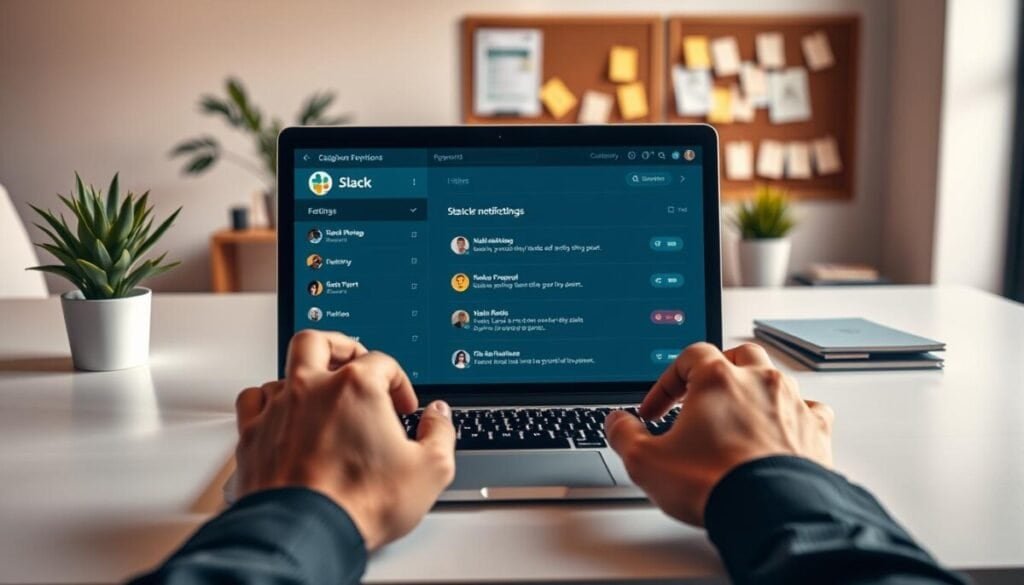
Create targeted keyword rules to surface only mission-critical updates.
Define exact terms to track projects, incidents, or client names. Keywords are not case-sensitive; they must match exact phrases to trigger alerts. Keywords used inside threads will not generate an alert.
Use concise keyword lists. Limit entries to high-value items. This reduces noise and preserves focus time.
Filtering Important Topics
Add keywords under notification settings. Configure terms per workspace and per channel. Expect highlighted text when a match occurs. You can also set up keyword alerts in Slack to stay informed about specific topics relevant to your projects. This ensures that all team members receive real-time updates, enhancing collaboration and response times. Additionally, consider adjusting the alert frequency to manage notifications effectively without overwhelming the team’s workflow.
- Track only joined channels to avoid irrelevant hits.
- Choose unique phrases to prevent false positives.
- Review and prune keywords weekly to match current work.
For tools that augment keyword tracking and broader media monitoring, consult the free media monitoring tools list.
Customizing Sound and Appearance Preferences
Adjust audible signals and visual banners to match operational priorities and privacy requirements.
Access the appearance and sound controls by clicking the profile picture top in the sidebar and selecting preferences from the preferences menu. Open the sound settings to view tone and banner options.
Change banner content by unchecking box options to disable message previews. Disable previews to protect sensitive text and reduce visual distraction while working.
- Select distinct sounds for new messages, direct messages, and huddles—to encode importance via audio.
- Uncheck the preview box to hide message text in banners and preserve privacy.
- Mute all sounds if a silent environment is required; this removes audible pings entirely.
- Save a profile-level appearance and sound set to maintain consistent behavior across sessions.
Result: A tailored sound and appearance setup reduces interruptions and preserves task continuity. Apply these preferences to ensure visual and auditory cues are meaningful and unobtrusive.
Adjusting Badge Notifications and Taskbar Behavior
Control desktop badge behavior to make unread activity visible only when it matters. Apply targeted settings so the icon signals work that requires action. Keep visual cues subtle—avoid constant checks.
Windows Taskbar Settings
On Windows, open the app and click profile picture top. Select preferences from the preferences menu. Locate badge options under settings.
By default the icon flashes once after 10 seconds of idle. Select “Always” to flash when active. Uncheck box items to exclude thread replies that do not mention you.
Mac Badge Preferences
On Mac, open preferences and review badge behavior. Set badges to show unread counts only. Disable flash if the desktop requires silence.
- Use badge counts to scan pending tasks without opening the app.
- Tune desktop and taskbar settings to reduce visual clutter.
- Review keywords and exceptions monthly to keep indicators relevant.
Optimizing Mobile Notification Timing
Control mobile delivery options to reduce redundant alerts across devices. Choose between immediate delivery, delivery when the user becomes inactive, or delivery after a set delay.
By default, mobile alerts appear one minute after locking the desktop screen or ten minutes after the system stops detecting cursor activity. Change this within preferences to match the user’s work rhythm.
Recommended settings:
- Set a short delay—3 to 10 minutes—to allow handling on the primary desktop before mobile devices chime.
- Enable immediate delivery only for on-call channels or critical roles that must receive notifications instantly.
- Use a clear schedule to block mobile alerts during deep work hours.
Document the chosen timing as a workspace standard. For technical background on delivery mechanics, review how the system rebuilt notification delivery at their engineering post.
Configuring Email Notifications for Off-Hours
Define email cadence for after-hours alerts to balance responsiveness and downtime.
Access procedure: click profile picture top in the sidebar. Select preferences from the preferences menu. Open the email settings to view delivery options.
Bundling Email Alerts
Enable bundled delivery to reduce interruptions. Choose delivery every 15 minutes or once an hour. This creates predictable windows for review.
When to use email delivery: receive email for mentions direct and for direct messages when the desktop is inactive. This preserves a professional presence without keeping the app open.
- Uncheck box options to disable email alerts entirely for nonessential threads.
- Specify which message types trigger an email—mentions direct messages or only mentions.
- Use bundled cadence—15 minutes or 60 minutes—to reduce context switching.
| Setting | Use Case | Outcome |
|---|---|---|
| Every 15 minutes | High responsiveness off-hours | Frequent summaries; limited real-time pings |
| Once an hour | Preserve personal time | Low interruption; timely awareness |
| Disabled (uncheck box) | No email fallback | No off-hour delivery; full silence |
Leveraging Do Not Disturb and Custom Statuses
Activate a temporary DND period via the sidebar click bell icon or the /dnd command to protect uninterrupted work time.
Use the /dnd shortcut for a quick set—example: type /dnd until 3pm. This pauses all incoming notifications and mutes banner and sound alerts across channels and direct messages.
Pair DND with a concise custom status. A status such as Focus mode – back at 2 PM signals availability to people and reduces ad hoc messages. Set recurring quiet hours in the notification settings so the status updates automatically each day.
Apply this workflow across desktop and mobile. Enable DND on Windows and mobile to avoid duplicate interruptions. Combine DND, status text, and a visible icon to normalize respect for blocked time.
| Method | Trigger | Ideal Use | Result |
|---|---|---|---|
| Sidebar bell /click bell icon | Manual enable | Short deep work blocks | Immediate silence of message banners |
| /dnd command | Time-bound input | Quick setup—until specific time | Automated end; restores alerts |
| Recurring schedule | Set in preferences menu | Daily focus hours | Status updates; predictable quiet periods |
Establishing Team Norms for Deep Work
Agree on a common work block. Example: 10 AM to 12 PM daily. Set this as the standard window for uninterrupted time.
Shared Expectations
Define what constitutes heads-down work. Specify which channels and dms qualify as urgent. Create rules for when a direct message is permissible.
- Schedule: publish team-wide time blocks and calendar events.
- Response protocol: require async updates in project channels unless an emergency message is needed.
- Access: provide emergency contact paths and a clear escalation process.
Normalizing Status Updates
Standardize status usage so people signal availability. Use short statuses and set recurring times via the profile picture top menu.
Encourage scheduled messages and concise channel updates. Reduce direct message volume. Use email only for off-hour escalation.
Leading by Example
Leaders must respect the team cadence. Avoid sending non-urgent messages during protected time. Use scheduled posts and the click bell icon or /dnd when necessary.
Enforce async-first behavior. Track adherence. Iterate norms based on team metrics and people feedback.
Building a Sustainable Culture of Focus
Adopt organization-level habits that respect individual boundaries and enable asynchronous collaboration.
Standardize work windows. Publish protected hours and escalation rules. Treat those windows as operational requirements.
Require ownership. Instruct every person to configure their profile and set a clear picture and status. Define which channel types demand immediate attention.
Review communication patterns monthly. Iterate ways to reduce context switching. Lead by example—senior staff must honor quiet blocks and model the behavior expected across the team.
For guidance on building respectful team norms, consult this ways to foster a positive work.