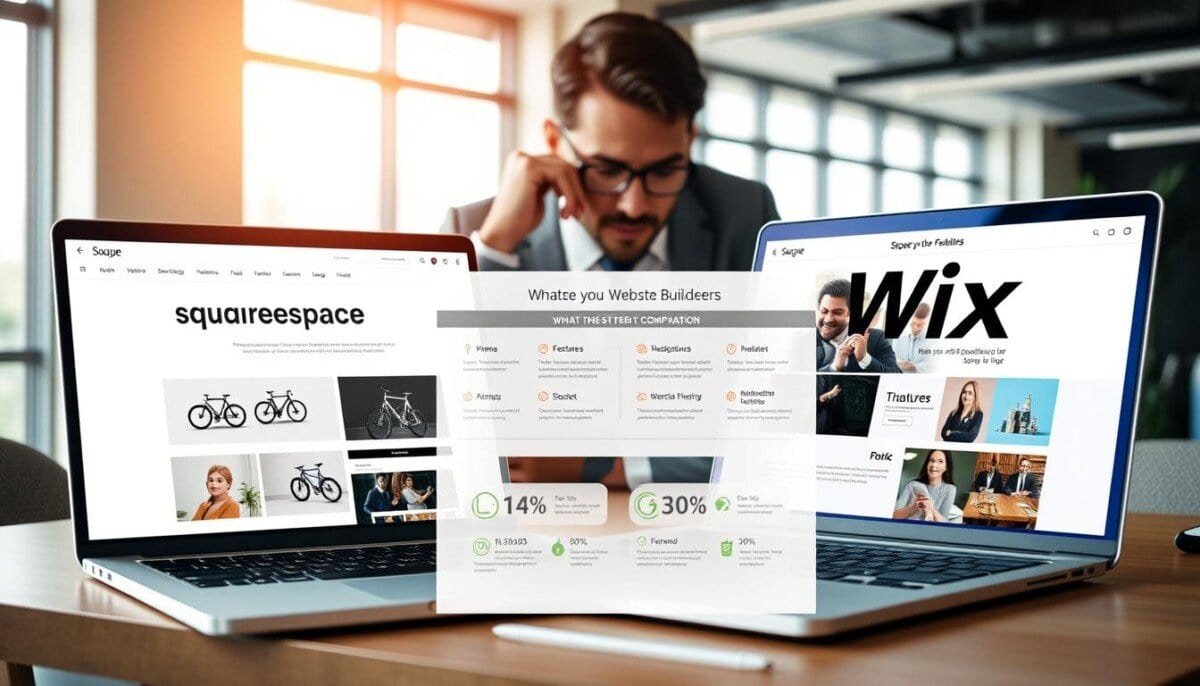
Which tool will actually give your business an edge online this year? The right choice matters more now that mobile traffic and AI shape how sites perform. You need clear facts fast.
We compare the two leading builders, look at their evolution, and note that one is traded on NASDAQ while the other went private in 2024. This context shows how each platform invests in features and stability.
This brief comparison evaluates design flexibility, e-commerce, AI tools, and SEO so you can pick the winner for your project. Whether you need a simple personal site or a full storefront, the right platform saves time and cost.
For a deeper look at other website building platforms and how trends like AI and mobile-first design affect choices, see this guide: website building platforms.
Key Takeaways
- Pick a builder that matches your business goals and technical needs.
- Design, e-commerce, and AI features determine speed to market.
- Market structure (public vs private) can signal investment direction.
- Mobile-first performance and built-in SEO are essential in 2026.
- This comparison highlights strengths to help you choose the winner for your project.
Understanding the Squarespace vs Wix Landscape
The rivalry has pushed steady innovation in drag-and-drop editors and AI-assisted layouts.
Both platforms started in the 2000s and grew into full-featured website builders. They now power simple portfolios and large online stores with equal confidence.
One platform leans toward a vast template library and extreme customization. The other favors a curated aesthetic and tight visual control. That core difference guides many design choices.
In a direct comparison, consider what you value: broad template options or a streamlined, designer-led look. Your choice will reveal the practical winner for your goals.
- Both added AI tools to speed setup and refine design.
- Each ecosystem supports growth from a single page to a high-traffic website.
- Pick the builder that fits your workflow, not the trend.
Ease of Use and User Experience
How a builder handles drag-and-drop and AI can cut setup time in half for busy teams.
Drag and Drop Editor
Fluid, visual editing speeds layout work. The Fluid Engine provides flexible placement so professional pages feel intentional without coding.
The other editor is highly visual and full of features. Some users say the interface can feel crowded when learning many options.
AI Website Building
Beginner-friendly AI saves time. The AI Website Builder uses a virtual assistant to guide setup and reduce manual choices.
Both platforms offer tools that let you build a polished website without writing code. The ease use of these tools matters for busy professionals who manage sites themselves.
- The AI assistant speeds initial setup and reduces time on configuration.
- Fluid Engine makes precise drag and drop easier for design-focused work.
- Powerful features let users scale from simple pages to full websites.
Design Flexibility and Template Quality
Design starts with a template, but customization decides whether your brand stands out.
Template Customization
Template counts and quality matter. One major builder offers over 900 templates so you can match almost any niche.
By contrast, squarespace offers about 150 highly polished templates that lean on a clean, professional aesthetic.
The grid-based system squarespace offers helps you align elements precisely. That makes it easier to keep a cohesive look across every page.
The wix editor allows freer placement of elements. That gives creative control but it asks for more attention to spacing and alignment.
- Large template library means more niche options.
- Curated templates prioritize a refined, designer-first look.
- Grid alignment helps maintain consistent design across a website.
Choose the path that fits your workflow: broad options for variety, or curated templates for a tight, high-end finish.
Ecommerce Capabilities for Online Stores

Ecommerce setups differ in inventory limits, fees, and checkout flexibility — pick what fits your catalog.
Selling Physical Goods
Inventory and product scale matter. One builder lets you list up to 50,000 products. The other gives unlimited product listings, which helps large catalogs avoid migration later.
Digital Products and Courses
Both support digital goods and subscriptions. Creators get built-in options for course delivery, downloads, and membership gating. Choose the platform whose features map to your content format and delivery cadence.
Payment Gateways
Fees and integrations affect margins. One platform charges 0% transaction fees on all plans, saving money as sales scale. The other charges a 2% fee on its entry-level plan.
Both platforms support major payment gateways. One also offers broader third-party integrations for complex checkouts and shipping rules.
- Pick a plan that matches your business needs and product categories.
- Consider long-term costs: transaction fees and app integrations matter over time.
| Capability | Product Limit | Transaction Fees | Checkout Integrations |
|---|---|---|---|
| Builder A | Up to 50,000 products | 0% on all plans | Wide range of third-party options |
| Builder B | Unlimited products | 2% on entry plan | Built-in gateways and targeted integrations |
| Best for | Mid to large product catalogs | High-volume sellers | Stores needing custom checkout workflows |
Deciding the winner depends on your core needs. If you want zero transaction fees and broad integrations, the first option may win. If unlimited product listings and polished templates matter more, consider the second. For a broader look at other website building platforms, see our guide.
SEO Performance and Search Visibility
Good SEO now starts with a solid foundation from your chosen site builder.
Both platforms give the core tools you need to edit page titles, meta descriptions, and URLs so search engines can index your content. You get built-in SSL and mobile-responsive templates that search engines favor, which helps every website from portfolios to stores.
One builder (wix) offers a guided, step-by-step SEO setup that makes on-page optimization easy for busy teams. The other (squarespace) has upgraded technical features and now competes strongly for businesses that must rank well.
Use the available tools to audit pages, add structured data, and improve load time. Small changes to metadata, headings, and image alt text add up fast and lift visibility.
The SEO category often ends in a draw. Both website builders now supply the features and technical foundation you need to compete. If you want help picking the best content workflow, see our best blogging platforms.
- Customize titles and meta on every page.
- Use built-in SSL and mobile-first templates.
- Audit speed and structured data regularly.
Blogging Tools and Content Management

Publishing tools matter: they define how easily you turn ideas into searchable pages.
wix offers a clean blogging interface that makes adding images, tables, and social links quick and visual.
Many writers prefer squarespace for advanced features like post scheduling, categories, and built-in podcast hosting.
When you manage regular content, a professional editor helps keep tone and brand consistent.
Both builders include SEO controls so every page can be optimized for search and reach more readers.
Their templates are built to highlight writing and media so your posts look polished on desktop and mobile.
Use these tools to turn your website into a hub for insights and thought leadership.
| Feature | Editor | Scheduling | Media Support |
|---|---|---|---|
| Post blocks | Drag-and-drop editor | Yes | Images, video, audio |
| SEO tools | Meta tags & alt text | Yes | Auto image optimization |
| Creator options | Categories & tags | Yes | Podcast hosting |
Membership Areas and Monetization
Membership features let you monetize content and build an engaged community around your work.
wix offers a free membership area that helps you create customer accounts, manage appointments, and gate exclusive pages on your website.
squarespace offers a dedicated Member Areas add-on built for subscriptions and paywalls. It integrates cleanly with your design and existing products.
Both platforms let you charge users for access, which is ideal for online classes, workshops, and premium downloads. Use these tools to add a steady revenue stream to your business plan.
The flexibility of membership plans lets you scale as your audience grows. You can start small with a simple gated post and expand to recurring subscriptions and bundled products.
- Fast setup: create accounts and lock pages without code.
- Monetize: subscriptions and one-off purchases for content.
- Scale: tiered plans and product bundles for loyal users.
Multilingual Website Support

Serving multiple languages starts with the right tool. A multilingual setup affects content, links, and search visibility for your website.
wix offers a built-in multilingual tool that lets you translate pages inside the editor. You keep all content in one dashboard, which simplifies updates and workflow.
If you prefer a dedicated service, squarespace commonly pairs with Weglot or similar integrations. That gives advanced translation controls but keeps language management separate from the site editor.
URL structure matters for international SEO. Flexible URL options help you set country folders or subdomains so search engines index each language version correctly.
- Built-in tools: faster edits and unified content control.
- Third-party integrations: richer translation options and automation.
- Correct URLs and hreflang tags: improved global search performance.
Choose the approach that fits your team and budget. For more on platforms that support content creators and global sites, see our best blogging platforms.
Marketing Features and Automation
A unified marketing suite reduces the number of tools you juggle daily.
Email marketing is built into both builders so you can create campaigns without exporting lists. One option gives a full dashboard with automation, templates, and AI copy suggestions right in your admin. The other offers similar email features but often requires an add-on subscription for the full toolkit.
Social media integration connects feeds, schedules posts, and tracks ad performance from the same place you edit pages. This keeps your website and social channels in sync and saves hours each week.
The platforms include AI-driven assistants that help write subject lines, design email templates, and suggest targeting. These tools boost open rates and reduce design time for small teams.
Practical benefits:
- Manage email and social campaigns in one dashboard.
- Use templates and AI to speed campaign creation.
- Embed social elements and chat widgets to capture leads on your website.
| Feature | Availability | Best for |
|---|---|---|
| Email automation | Built-in on higher plans; add-on on some tiers | Lead nurturing and promos |
| Social scheduling | Native scheduling tools and feed embeds | Consistent posting and ad management |
| AI copy & templates | Included with marketing suites | Small teams and solo owners |
Want a deeper comparison of marketing workflows and platform trade-offs? See this practical breakdown on Zapier: builder comparison. For complementary marketing tools and options, check this curated list: online marketing tools.
Customer Support and Help Resources
Fast, reliable help keeps your site running and your team focused.
wix squarespace both invest in support so you can fix problems quickly and move on. If you prefer a phone call or live help, wix offers phone support, live chat, and a large library of guides. That mix helps teams get an urgent fix or follow a step-by-step tutorial.
squarespace offers dependable email support and live chat for timely answers. Both builders provide deep knowledge bases, searchable guides, and short video tutorials you can watch on demand. These self-help tools make routine tasks faster and reduce hold times.
- Customer teams handle technical setup and marketing guidance.
- Live chat and tutorials speed troubleshooting for your website.
- Clear support features protect uptime and site performance.
When you need help, choose the channel that fits your workflow: chat for quick fixes, email for detailed issues, or the knowledge base for how-to steps. Good support lets your website stay functional and focused on business results.
Pricing Plans and Value for Money
Budget and long-term costs often decide the winner more than templates or design tools.
Wix offers a forever-free option for personal sites so you can test the editor and templates without risk.
Squarespace provides a 14-day free trial that unlocks premium features so you can evaluate ecommerce, analytics, and design before buying a plan.
Compare core pricing and ask what you need now and next year. A low entry price can rise once you add email, social media tools, or ecommerce features.
- Wix plans: broader built-in tools on some tiers; good for users who want many features out of the box.
- Squarespace plans: often more affordable for clean, professional templates and steady design value.
- Consider long-term costs for products, transaction fees, and analytics when choosing a plan.
| Plan Type | Best for | Cost Drivers |
|---|---|---|
| Free / Trial | Testing editor and templates | Limited features, branding |
| Business / Ecommerce | Stores and paid products | Transaction fees, shipping, analytics |
| Marketing / Advanced | Teams needing email & social media | Automations, advanced tools |
There is no single winner here; pick the plan that matches your product mix, time to market, and expected growth. Evaluate pricing, then test the editor and features to confirm value for your business in 2026.
Integrations and App Marketplaces
App marketplaces turn a simple site into a business-ready platform.
Wix features a massive App Market with hundreds of add-ons that extend what a website can do. These apps add booking, inventory, and marketing workflows without coding.
Squarespace also provides a curated set of Extensions that link your site to services like Mailchimp, shipping providers, and payment partners. This keeps integrations tidy and reliable.
Both builders support Zapier, which unlocks thousands of extra connections. Use Zapier to sync email lists, automate orders, or push leads into your CRM.
- Add live chat to capture visitors in real time.
- Install advanced seo tools and analytics for performance gains.
- Embed social media feeds and email signup forms without heavy custom work.
These integrations let you tailor templates and features to match your operations. They also affect long-term pricing and the options you choose as your business grows.
| Integration Type | Common Uses | Best for |
|---|---|---|
| Marketing | Email sync, automation, analytics | Growing shops and content sites |
| Commerce | Shipping, payments, inventory | Stores with complex logistics |
| Engagement | Live chat, reviews, social embeds | Service providers and creators |
| Automation | CRM sync, Zapier workflows | Teams that need process efficiency |
Choosing the Right Platform for Your Business
Decide based on whether your priority is polished visual design or a built-in marketing stack.
Start by listing your goals: sell products, showcase work, or run campaigns. That view makes it easier to compare each website builder against real needs.
If design and curated templates matter most, pick the platform with tighter visual control and refined template choices. It helps creatives and brands present a high-end portfolio with less tweaking.
If marketing, ecommerce, and social media tools matter more, choose the builder that bundles email, ads, and customer tools into one admin. Small businesses benefit from fewer integrations and faster setup.
Compare plans by cost and included features. Look at transaction fees, template access, and support levels to find the best plan for your growth stage.
- Match templates and design to your brand identity.
- Pick a plan that fits current needs and next-step growth.
- Prioritize options that reduce ongoing maintenance and tool sprawl.
Conclusion
Your final pick should map to revenue goals, design needs, and the time you have to manage a site.
, Both website builders remain strong choices in 2026. If you need an all-in-one marketing and ecommerce solution, pick the builder that bundles email, ads, and checkout tools into one plan.
If polished templates and tight visual control matter more, choose the platform that prioritizes design and a refined editor. Test free plans or trials to feel the editor, check templates, and compare pricing before you commit.
Both options now include AI, solid SEO basics, and analytics, so the right choice comes down to your business goals and workflow. Pick the option that saves you time and helps sell more products.