60% of missed meetings trace back to mismatched availability between apps. Resolve the root cause rapidly. Present the scope — business operations rely on accurate presence data across platforms.
Follow a methodical, technical workflow. Verify account connection and permissions first. Check cache and app updates next.
Apply Microsoft 365 controls to restore synchronization. Use diagnostic logs to locate conflicts. Reconcile event details to remove duplicates.
Adopt repeatable steps for calendar management — automate background updates where possible. Maintain a single source of truth for meeting data. This prevents missed deadlines and reduces support overhead. To enhance scheduling efficiency, leverage tools that allow you to integrate zoom with google calendar effectively. This seamless integration enables you to schedule meetings directly from your calendar, ensuring that all participants receive updated invites and reminders automatically. By utilizing these features, you can streamline communication and focus on delivering value in your meetings.
Key Takeaways
- Validate account permissions and connection before other fixes.
- Clear cache and apply app updates to eliminate transient issues.
- Use Microsoft 365 diagnostic tools to identify synchronization faults.
- Standardize calendars and event details to prevent conflicts.
- Automate background updates to keep team status accurate.
Understanding the Default Integration
Clarify the built-in connection that makes events visible across both apps by default.
The microsoft teams calendar and the outlook platform share event data natively. Any event created in one service appears in the other without manual steps.
This native integration streamlines collaboration — but technical faults can interrupt synchronization. Verify account credentials and authentication tokens in microsoft 365 to rule out identity conflicts.
When discrepancies arise, check that the same account is active on both platforms. Matching credentials prevents duplicate entries and access issues that affect daily management.
- Default behavior: shared events across linked accounts.
- Common cause: mismatched authentication tokens or permissions.
- First diagnostic step: confirm identical account credentials.
| Aspect | Default State | Action if Disrupted |
|---|---|---|
| Event visibility | Shared between services | Confirm account identity |
| Authentication | Microsoft 365 tokens | Re-authenticate session |
| Permissions | Inherited from account | Review app permissions |
For scheduling nuances and practical steps, consult the guide to schedule office hours in Teams.
How to Sync Outlook Calendar Teams Effectively
Begin by identifying whether the desktop client or the web service fails to propagate event updates. Isolate the source—local application or cloud platform—before remediation.
Desktop App Testing
Open the desktop client. Create or modify a meeting entry. Observe whether the entry appears in the local view within minutes.
If the entry is missing, clear local cache and verify app update status. Check account authentication and roaming settings. Persistent absence indicates a client-side issue.
Browser-Based Verification
Open the web mail interface. Create a short test appointment. Confirm that the new event surfaces in the microsoft teams calendar online view.
Microsoft 365 users should perform this step to confirm cloud-state accuracy. If the web shows the event but the desktop does not, prioritize cache and local sync settings.
| Check | Web Result | Desktop Result |
|---|---|---|
| Test event creation | Visible | Not visible |
| Likely cause | Cloud OK | Local cache or settings |
| Next step | Record evidence | Clear cache; update app |
Verifying Account Credentials and Permissions
Check that the same sign-in identity is active in each application — this prevents cross-account conflicts.
Make sure the primary account matches on both services. If different accounts are active, events will not propagate and data will diverge.
Sign out of each app and sign back to refresh authentication tokens. This action often restores the connection and clears transient permission errors. once you’ve re-established the connection, you can proceed to automate tasks with zapier integrations to streamline your workflow. this not only saves time but also enhances productivity by allowing multiple applications to communicate seamlessly. by setting up triggers and actions, you can ensure that repetitive tasks are handled automatically, freeing you up for more critical work.
- Confirm view and edit rights for shared or group calendars in both services.
- Ask an administrator to verify permissions in microsoft 365 when organization policies restrict access.
- Record the active account name and tenant ID before performing changes.
| Check | Expected | Action if different |
|---|---|---|
| Active account | Same on both apps | Sign out and sign back |
| Permissions | View/Edit as required | Request admin update |
| Authentication tokens | Valid and current | Re-authenticate; clear cache |
Troubleshooting Desktop Application Cache

Investigate local application caches before changing account settings or server controls.
Clearing Teams Cache
Stop the app. Close all child processes. Remove corrupted files to force a fresh state.
Mac command—execute in Terminal:
rm -rf ~/Library/Group Containers/UBF8T346G9.com.microsoft.teams
Also remove the secondary container if present:
Clearing Outlook RoamCache
Exit the mail client. Open the RoamCache folder in the local profile. Delete all files to force a reload of calendars and events.
Result: Corrupted cache files clear. Desktop presence and synchronization often restore.
- Corrupted cache causes most syncing issues between microsoft teams and outlook.
- Regular maintenance reduces recurring connection problems on microsoft 365 platforms.
| Aspect | Action | Expected outcome |
|---|---|---|
| Teams cache | Delete Group Containers and containers | App rebuilds fresh cache |
| RoamCache | Clear files in local profile | Calendars refresh; events update |
| Follow-up | Restart app and verify account | Resolved synchronization or file-based issues |
Running Outlook in Safe Mode
Launch Outlook in safe mode to isolate third‑party add-ins that may block event propagation. Use the Windows + R shortcut. Type Outlook.exe /safe and click OK.
Safe mode disables all non‑native extensions and custom profiles. Observe whether events appear in the outlook calendar view while in this mode.
If events display correctly, conclude that an add‑in causes the issue. Record the add‑in list and disable suspects one by one. Restart the app normally after each change to verify results.
This diagnostic step is essential for Microsoft 365 accounts that require isolation of software conflicts. Once the faulty add‑in is identified, disable it to restore normal synchronization of the teams calendar and reduce recurring issues.
| Action | Safe Mode Result | Next Step |
|---|---|---|
| Start with command | Outlook.exe /safe | Observe events |
| Events visible | Add‑in interference | Disable add‑ins sequentially |
| Events absent | Check cache and account | Proceed to cache clearing |
Managing Add-ins and Extensions
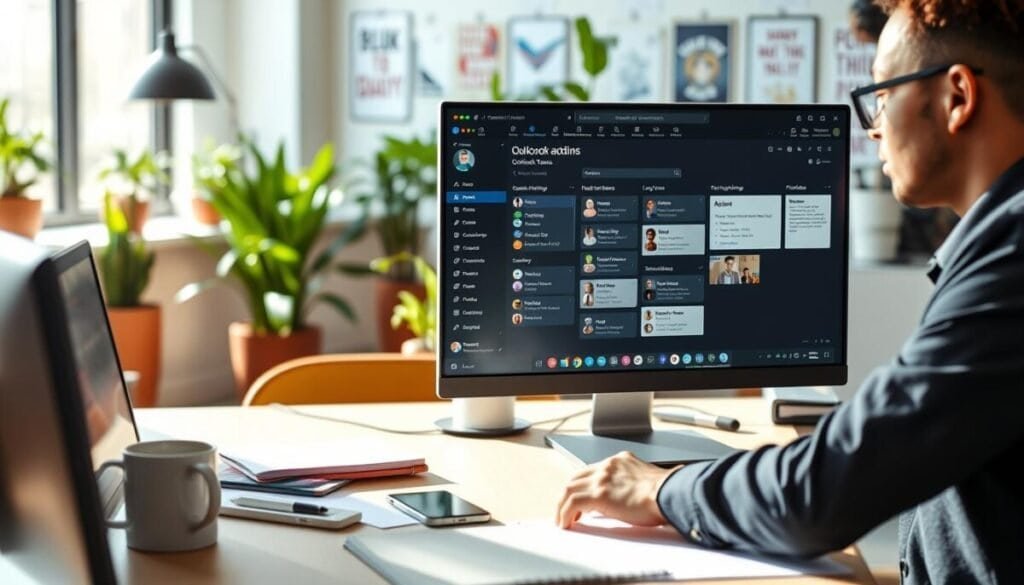
Validate installed COM add-ins to ensure Microsoft meeting features load correctly.
Open the mail client. Select File > Options > Add-ins. Inspect the COM Add-ins list.
Enabling the Meeting Add-in
Locate Microsoft Teams Meeting Add-in for Microsoft Office. Check the box. Click OK. Restart the app.
If the add-in is missing, confirm Microsoft 365 policies do not block extensions. Verify permissions and update the app if required.
If events still fail to propagate, disable all add-ins. Then enable them one by one. Observe which extension causes the issue. Record the faulty add-in for remediation.
| Condition | Action | Expected Result |
|---|---|---|
| Add-in disabled | Enable via File > Options > Add-ins | Meeting option appears in compose window |
| Add-in missing | Check admin policies; reinstall add-in | Add-in reappears; events create link between apps |
| Conflicting extension | Disable all; enable sequentially | Identify conflict; restore reliable synchronization |
Updating Microsoft 365 Software
Confirm that all Microsoft 365 components run the latest builds before changing configuration.
Keep both microsoft teams and outlook current. Outdated app builds cause many synchronization failures. Apply vendor updates on desktop and web clients. Restart devices after installs to complete background configuration changes.
If updates do not resolve the issue, uninstall the affected Microsoft 365 suite components to repair corrupted files. Reinstall using the organization’s deployment method or the official installer. After reinstall, sign back to re-establish the secure connection for calendars and events.
- Verify version numbers across workstations and mobile devices.
- Apply cumulative updates and security patches promptly.
- Reinstall when files remain corrupted after repair attempts.
Maintain an update cadence to reduce repeated issues. For guidance on scheduling in the app environment, review this short guide to schedule team messages.
Checking Internet Connectivity and Network Stability
Confirm that the local network delivers consistent bandwidth for real‑time presence and event updates.
Test basic reachability—open several websites and run a speed test. Verify download/upload rates and latency. Record packet loss if present.
Validate that Microsoft 365 services respond from the workstation. If web mail and online portals load slowly, the issue likely resides in the network layer.
Assess firewall and proxy rules. Ensure ports and endpoints required by microsoft teams and the mail service are not blocked or throttled. Check Quality of Service (QoS) policies for voice and meeting traffic.
- Run ping and traceroute to major service endpoints.
- Compare results on wired and wireless interfaces.
- Test another account or device to isolate account-level issues.
| Check | Expected | Action if abnormal |
|---|---|---|
| Latency | <100 ms | Investigate ISP or Wi‑Fi interference |
| Packet loss | 0% | Replace faulty links; contact network admin |
| Throughput | Meets app requirements | Prioritize traffic; adjust QoS |
If connectivity proves stable, rule out network factors and proceed to app‑level checks—cache, permissions, and updates—for resolution.
Exploring Third-Party Automation Tools
Leverage form-driven automation to reduce manual scheduling and ensure consistent event data.
Jotform integrates with microsoft teams to create meetings automatically from form submissions. Configure the integration in Jotform’s settings—select Microsoft Teams and choose the create meeting action.
Leveraging Jotform Integrations
Enable the connector. Map form fields to meeting fields—title, time, participants, and description. Use microsoft 365 authentication to permit creation of events in both the app and the outlook calendar.
Benefits: automate scheduling, reduce manual entry, and improve calendar management across group accounts.
- Streamline meeting creation from submissions—reduce administrative overhead.
- Ensure event details propagate to both teams and outlook instances.
- Test with a sample submission—verify that events appear in both calendars.
| Action | Expected Result | Verification |
|---|---|---|
| Enable Jotform integration | Automatic meeting creation | Submit test form; confirm event |
| Map fields | Correct event metadata | Inspect event details in both apps |
| Use microsoft 365 auth | Authorized creation | Check account connection and permissions |
Recommendation: implement in a test tenant first. Monitor for permission issues, cache-related delays, or data mismatches after changes.
Addressing Channel Calendar Limitations
Channel event lists operate on a team context and do not map to individual personal views automatically.
Known constraint: there is no direct way to connect a channel schedule to a personal outlook view. Create meetings inside a channel — those events remain in the team scope.
Mobile limitation: the mobile app does not expose channel schedules. Manage channel events on a computer to ensure full control.
- Channel invites appear in a default blue color — no color customization available.
- Manual creation in a channel does not populate a personal calendar view automatically.
- When team availability must be visible, share a read-only view rather than granting edit rights.
| Restriction | Effect | Recommended Action |
|---|---|---|
| Channel events isolated | Personal schedule does not list those events | Keep a mirrored personal event or share read-only access |
| Mobile app limits | Cannot manage channel events on phone | Use desktop client for channel management |
| Visual uniformity | All invites use default blue | Document color limitation in team guide |
For feature requests and community guidance consult the vendor thread on channel behavior: channel calendar limitation.
Final Thoughts on Maintaining Seamless Synchronization
Establish a short, repeatable maintenance cycle to keep presence and event data consistent.
Follow a compact checklist—verify account permissions, confirm application versions, and clear local caches when needed. Perform these steps on a scheduled cadence to prevent drift.
Use lightweight monitoring to detect propagation failures early. Document incidents and escalate persistent faults to the IT team for Microsoft 365 configuration review.
Maintain clear rules for calendar management and enforce update policies. Regular checks preserve synchronization and reduce missed meetings across the environment.