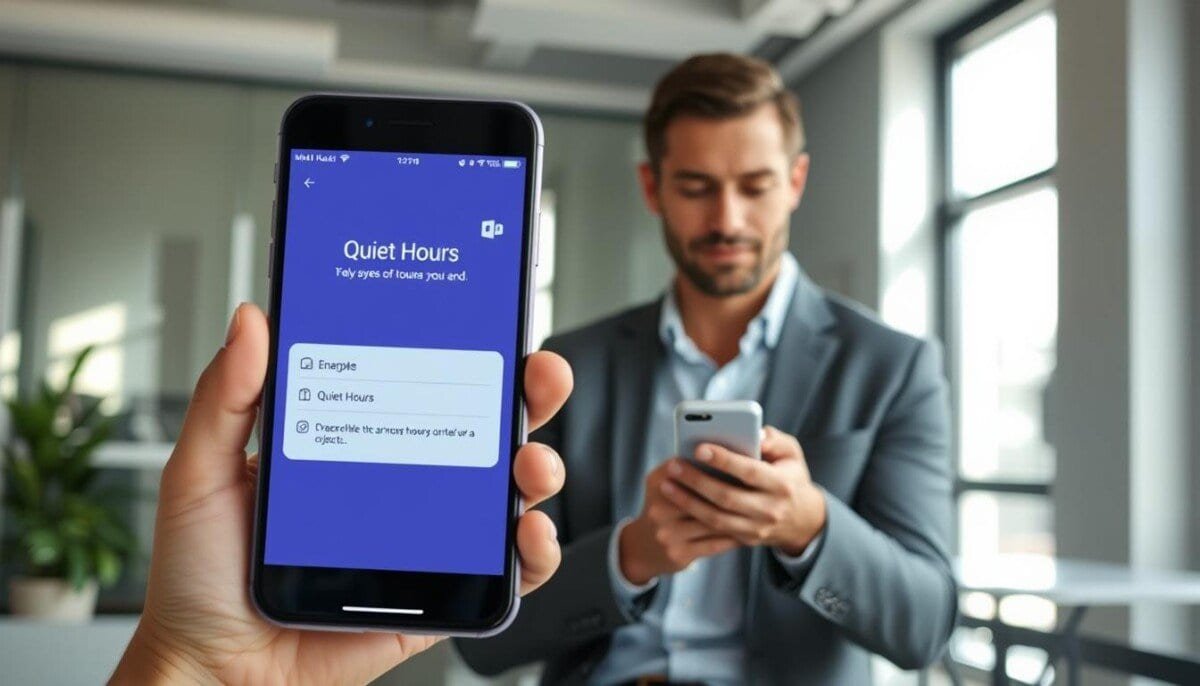
57% of professionals report fewer interruptions after enabling scheduled downtime. Implement the feature to reclaim personal time and enforce boundaries.
Apply precise configuration steps. UIS Communications published guidance on November 15, 2021—follow that baseline.
Open the teams app on the phone. Access the menu at the top of the screen. Navigate to settings and notification sections.
Define a window—e.g., 5 p.m. to 7 a.m.—to silence work notification delivery. Confirm the version on the device syncs across platforms.
Use these controls to prevent work messages from encroaching on personal time. The app ensures consistent behavior across device and screen contexts.
Key Takeaways
- Enable scheduled downtime to reduce interruptions from notifications.
- Locate the menu at the top of the screen to access settings swiftly.
- Set a clear window—such as 5 p.m. to 7 a.m.—to enforce boundaries.
- Verify the app version so the feature syncs on each device.
- Apply configuration consistently to control when notification delivery occurs.
Why You Should Use Teams Quiet Hours Mobile Features
Configure notification windows to separate work messages from personal time. Implement the feature to limit interruptions and reinforce boundaries.
Use the setting when away from a primary desktop. Many professionals monitor messages on Android devices. The app ensures continuous presence but can flood the phone with alerts.
- Activate scheduled downtime to receive notifications only during business periods.
- Expect calls and chats to be silenced outside designated windows.
- Recognize that whitelisting specific people or channels is not supported in the current architecture.
| Client | Sync Behavior | Whitelist Support |
|---|---|---|
| Teams mobile | Receives presence updates; separate delivery rules from desktop | No per-person or per-channel whitelist |
| Desktop | Primary availability source; different sync cadence | Whitelist controls limited by server policy |
| Outcome | Manage notifications via settings on each device | Rely on schedule—cannot exempt individual chats |
Confirm settings on all devices to maintain consistent availability state.
Accessing Notification Settings in the Teams App
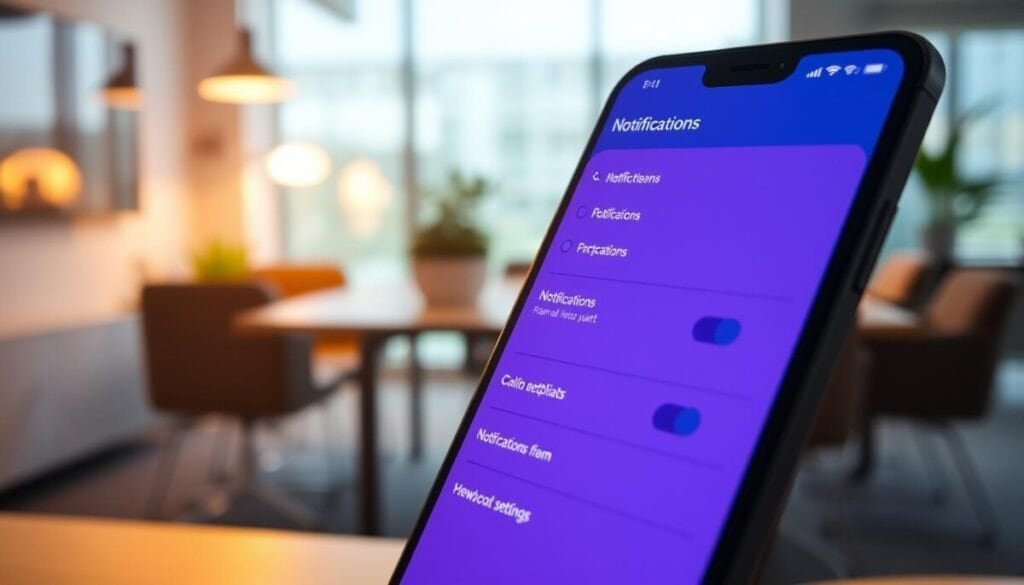
Locate and open the notification controls to take immediate control of alert delivery.
Navigating to the Menu
Tap the profile avatar in the top-left corner to open the Settings menu. View the list of preference categories. Choose Settings to enter the central control panel.
Locating the Notification Bell
Within Settings, find the notification settings pane. Look for the bell icon or the Block notifications section. These controls manage daily quiet hours and quiet days.
- Open the app and tap the profile picture at the top left.
- Use the menu to access Settings that govern chat, channels, and calls.
- In notification settings, toggle scheduled downtime to reduce unwanted notifications from people or chats.
Confirm the app version before saving changes. Validate that notification behavior aligns with the displayed information.
Configuring Your Custom Quiet Hours Schedule
Define precise time ranges and days to control notification delivery. Use the notification settings to set start and end times and to choose specific days for silence.
Setting Specific Days for Quiet Time
Enable the Block during quiet hours toggle to specify daily windows. Select weekdays or weekend blocks. Choose the All Day option to keep notifications off for 24 hours.
- Open notification controls from the menu and toggle the desired time ranges you want receive notifications.
- Set days to silence the teams app on weekends or designated off-days.
- Manage notifications for individual chats, channels, and people to prevent messages and calls from interrupting work-life boundaries.
- The screen displays options for turning on quiet hours and quiet days for granular control.
- Confirm settings so the application will block notifications during the defined hours and preserve personal time.
| Option | Behavior | Use Case |
|---|---|---|
| Block toggle | Silences notifications during set time ranges | Daily nonwork windows |
| All Day | Disables notifications for 24 hours | Vacation or rest days |
| Per-chat/channel | Adjusts delivery for chats, channels, people | Mute noisy channels without full silence |
For guidance on aligning focus scheduling with calendars, follow the recommended steps to schedule focus time.
Syncing Quiet Time Across Your Mobile Devices
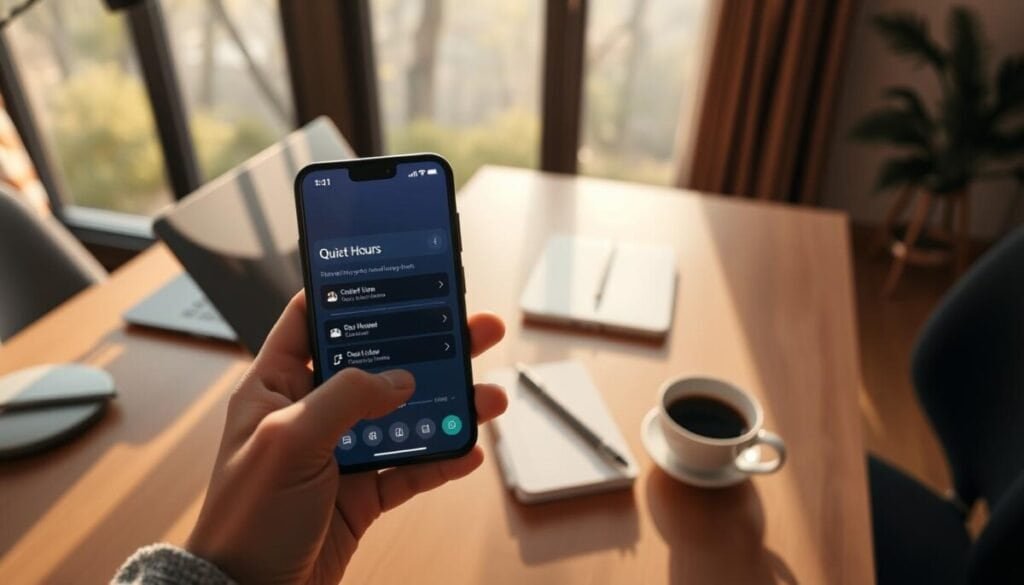
Toggle the Set on Teams and Outlook option to propagate the scheduled downtime across every device signed into the same account.
Enable one source of truth for availability.
Use the control at the top of the menu in settings. This action ensures the same quiet time applies on each phone and tablet. The app then enforces uniform notification delivery.
- Toggle the Set on Teams and Outlook option to sync schedules across devices.
- Maintain consistent notification behavior when signed in to the app on multiple devices.
- Share availability settings from the top of the menu to reduce missed alerts and accidental interruptions.
| Sync Option | Effect | Primary Use Case |
|---|---|---|
| Set on Teams and Outlook | Applies same schedule across apps | Consistent work time boundaries on all devices |
| Local Device Settings | Controls notifications per device | Temporary override for single phone |
| Account-Level Sync | Shares availability across signed-in apps | Unified notification policy for professionals |
Best practice: Enable sync and verify on each device. Confirm notification behavior during the scheduled time window to preserve focus and limit interruptions.
Managing Notifications on Desktop Versus Mobile
Manage desktop alert behavior independently to avoid unexpected pop-ups during focus periods.
Understanding desktop availability status
Set the desktop client to Do not disturb to block incoming notifications and calls. This action prevents chat banners and sound alerts from appearing on the computer.
Desktop software does not inherit scheduled downtime from other devices. Update the status manually before leaving the workstation to maintain silence.
The current version of the app does not support whitelisting specific chats, channels, or people while silent windows are active. All chats and channels remain blocked when Do not disturb or scheduled rules apply.
- Manually set Do not disturb on the desktop to stop notifications immediately.
- Do not rely on cross-device sync—verify settings on each device and client.
- Expect no per-person whitelist—prepare escalation plans for critical calls or chats.
- Consult official support documentation for authoritative information and updates.
Action: Implement status changes on the desktop and use the linked guide to schedule offline status for coordinated availability control.
Achieving Better Work-Life Balance with Scheduled Alerts
Adopt a scheduled alert policy to enforce predictable downtime and reduce context switching. Establish a consistent schedule for quiet hours as a foundational step toward healthier work-life balance.
Set clear time and settings to block noncritical notifications during personal periods. Use automated rules to protect off-duty intervals and to share availability with colleagues.
Review notification settings regularly—next review recommended by August 22, 2025. Combine schedule send with these controls for disciplined delivery; see the guide on schedule send for implementation options.
Outcome: Reduced interruptions, improved focus, and lower stress—measurable benefits from a repeatable process.