65% of deep-work blocks fail within the first 15 minutes due to unwanted alerts. This metric underscores the scale of interruption that degrades productivity.
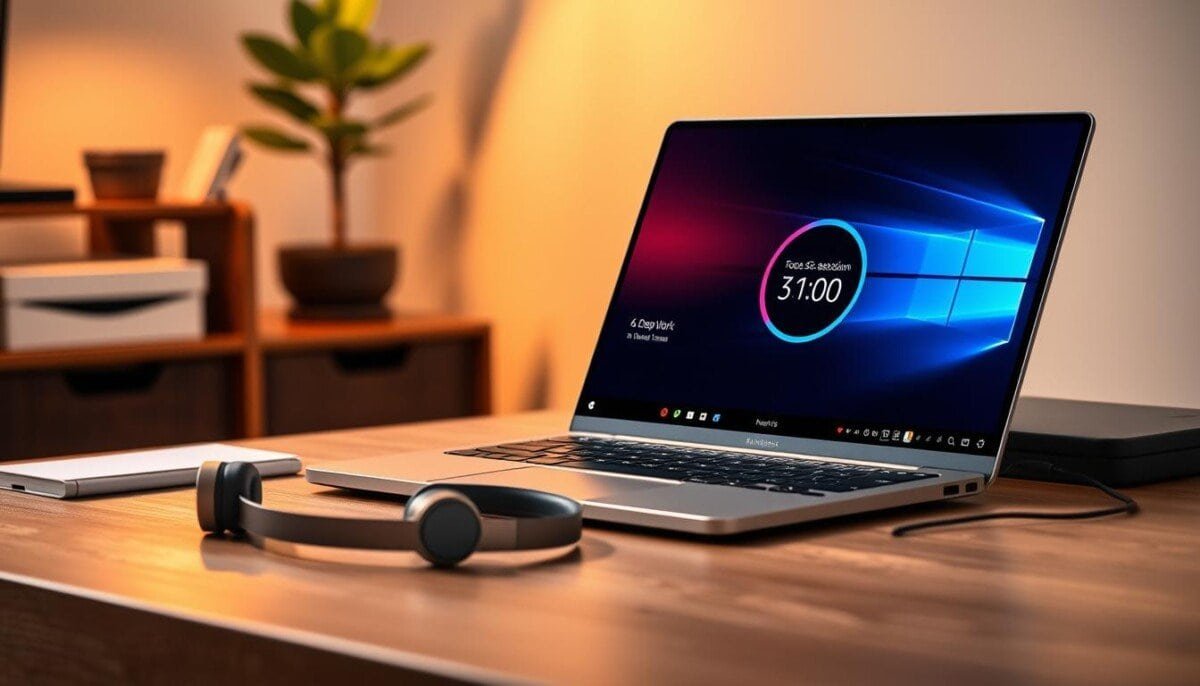
Implement a systematic method to minimize distractions during high‑intensity work. Use the system feature tied to the clock app to start a timed session. The tool silences banners and clears taskbar signals—preserve uninterrupted work time.
Configure priority rules in settings. Allow essential contacts; block the rest. Use the built‑in timer to track remaining minutes and add short extensions when workflows change.
When a session ends, the system issues a clear notification. That notification marks the transition back to normal operations—retain status and resume notifications without data loss.
For scheduling that integrates calendar and chat tools, consult the guide on how to schedule focus time in.
Key Takeaways
- Start a session via the clock app to block distractions and manage time.
- Set priority rules to permit essential communications only.
- Use the timer to monitor progress and extend or end a session early.
- System notifications announce when a session ends—plan transitions.
- Integrate calendar tools to protect recurring deep‑work blocks.
Understanding the Purpose of Focus Sessions
Activate the timer to suspend nonessential notifications and clear taskbar badges.
The primary purpose of a focus session is to minimize distractions by enabling focus assist automatically. In this context, utilizing zoom focus mode features for presentations can enhance clarity and engagement. By eliminating unnecessary elements from the screen, presenters can keep their audience focused on the key points. This tool becomes essential for effective communication in settings where attention spans may be limited.
Use the clock app to divide work into timed blocks. Each session hides banner alerts and removes badge counts from the taskbar.
Configure settings to match workflow needs. Select allowed contacts, adjust automatic end rules, and set repeat options for routine tasks.
- Silence banners and mute incoming notifications.
- Structure time with the clock app for measurable productivity gains.
- Hide badge indicators on the taskbar to remove visual noise.
| Capability | Action | Benefit |
|---|---|---|
| Focus assist | Auto-enable during a session | Reduce auditory and visual interruptions |
| Clock app timer | Set duration and repeat | Enforce disciplined work blocks |
| Taskbar badges | Hide while active | Maintain a clean workspace |
| Settings and options | Customize allowed apps and contacts | Align system behavior with tasks |
Result: Implement these tools to enforce concentrated work. The session environment preserves focus and improves measurable productivity.
How to Access Windows 11 Focus Sessions
Access the system timer from two entry points—use the notification area or open the clock app. This enables rapid deployment of a timed work interval and immediate suppression of nonessential alerts.
Launching from the Notification Center
Open notification center by clicking the time and date display at the bottom‑right of the taskbar.
Select the desired amount time. Then click the start focus button to initiate the timer and activate focus assist.
To check status or end the session early, reopen the notification area and click the end control on the notification.
Using the Clock App
Open the clock app from the Start menu to configure timers and link daily tasks.
The clock interface exposes a dedicated icon to start focus and to adjust the timer length. Use app settings to permit specific apps or contacts.
- Quick actions: open notification center → set time → click start focus.
- Or open clock → select timer → use start focus icon.
- End any session from the taskbar notification if interruptions are required.
| Action | Control | Result |
|---|---|---|
| Open notification center | Time/date click | Start timer and mute notifications |
| Launch clock app | Start focus icon | Configure duration and allowed apps |
| End session | Taskbar notification | Restore normal alerts |
Configuring Your Session Preferences
Adjust session duration and interruption rules to match the task at hand.
Navigate: Start → Settings → System → Focus. Open the settings panel. Set the session duration and related options.
Define the amount time for each session. Use the timer and the clock app to align intervals with productivity targets. Set short breaks between sessions to sustain momentum.
Customize notification behavior. Choose which apps and contacts may interrupt. Hide taskbar badges to reduce visual distractions.
Manage allowed apps by clicking the settings icon. Enable or disable specific tools. Use the start focus icon to begin a session after configuration.
| Control | Action | Benefit |
|---|---|---|
| Settings → Focus | Set session duration | Consistent timeboxing |
| Allowed apps | Grant interruptions | Essential alerts only |
| End control | End session early | Immediate restore of notifications |
Use focus assist and timer tools systematically—verify session duration values before each start. This enforces disciplined work and improves measurable productivity.
Integrating Microsoft To Do for Task Management
Enable task synchronization so the active timer shows a live task list for work blocks.
Syncing Your Task List
Open the clock app and select the task list panel to link Microsoft To Do. This sync injects the daily agenda into the timer interface.
Select a specific task from the task list before the session start. That selection pins one item to the timer view—stay task oriented during the interval.
The system updates tasks in real time. Add new tasks directly in the app while the timer runs—no context switch required.
- Open clock → open task list panel → sign into Microsoft To Do.
- Choose one task to pin at start—maintain a single work target.
- Manage and complete tasks inside the timer interface—end the session with objectives logged.
| Action | Control | Result |
|---|---|---|
| Link To Do | Open clock app → task list | Daily tasks displayed in timer |
| Pin task | Select item → start | Single-task focus until end |
| Add task | Create in app | Real-time sync to list |
Connecting Spotify for Flow State Audio
Authorize Spotify within the clock app to align playlist playback with a timed work interval.
Link the streaming account from the app settings. Grant playback permission—allow the interface to control audio during a session.
The integration surfaces playlists and podcasts directly in the timer view. Control playback without switching windows.
When the user triggers a start command, the selected track list begins automatically. The timer runs while audio plays—notifications remain governed by session settings.
- Link account—open clock → settings → connect Spotify.
- Control playback—use on-screen controls to pause, skip, or change volume.
- Stop audio—end playback without ending the active timer.
| Action | Control | Result |
|---|---|---|
| Link Spotify | Clock app → Settings → Connect | Playlists available in timer interface |
| Start session | Start button on timer | Selected music auto‑plays with timer |
| Audio control | On-screen playback controls | Adjust music without leaving the app |
| End playback | Pause or stop in timer | Audio stops—timer continues |
Result: Combine curated music with the timer to sustain long-term productivity. Use the integrated controls to keep attention on tasks and reduce context switching.
Managing Priority Notifications and Interruptions

Prioritize communications to prevent noncritical interruptions during a concentrated work block.
Access the settings menu to define allowed callers and app exceptions before a session starts. Configure priority rules to silence notifications while preserving critical channels.
Setting Priority Calls
Open Settings → Focus to toggle call options. Allow specific contacts or mute all but starred numbers.
Use the settings icon in the clock app to link permitted contacts. This ensures urgent voice alerts override silence rules when required.
Managing Reminders
Open the notification center to adjust which apps can interrupt the screen. Add apps to an exclusion list when a task requires real‑time input.
- Use the notification center to end a session early—click the end control to restore standard notifications.
- Add or remove apps from the allow list via Settings → Focus → Allowed apps.
- Toggle reminders and calls with the on‑screen button inside the clock app before start.
| Control | Action | Result |
|---|---|---|
| Settings → Focus | Set priority callers | Critical calls allowed |
| Notification center | Configure app interrupts | Only essential alerts reach the screen |
| Clock app icon | Toggle reminders | Reminders either silenced or delivered |
For full setup steps and integration tips, review the guide on how to start and use focus.
Customizing App Behavior During Focus
Define app-level interruption rules to prevent nonessential alerts during timed work.
Open Settings and select the Focus panel. Choose the apps to manage. Assign allow or block states for each app.
Use the options button beside any app to remove it from the interruption list. That action stops badge alerts and clears taskbar flashing for the chosen app.
When a user starts a start focus session from the clock, the timer enforces the selected rules. The system silences notifications per app while the timer runs.
If an end command is issued, settings revert to defaults automatically. Normal notification behavior restores without user reconfiguration.
| Control | Action | Result |
|---|---|---|
| Settings → Focus | Select apps to manage | Granular interruption policy |
| Options button | Remove app from list | Silence notifications and remove badges |
| Clock → Start | Start focus / start focus session | Timer enforces app rules |
| End button | End session | Restore default notification state |
Utilizing the Clock App Interface
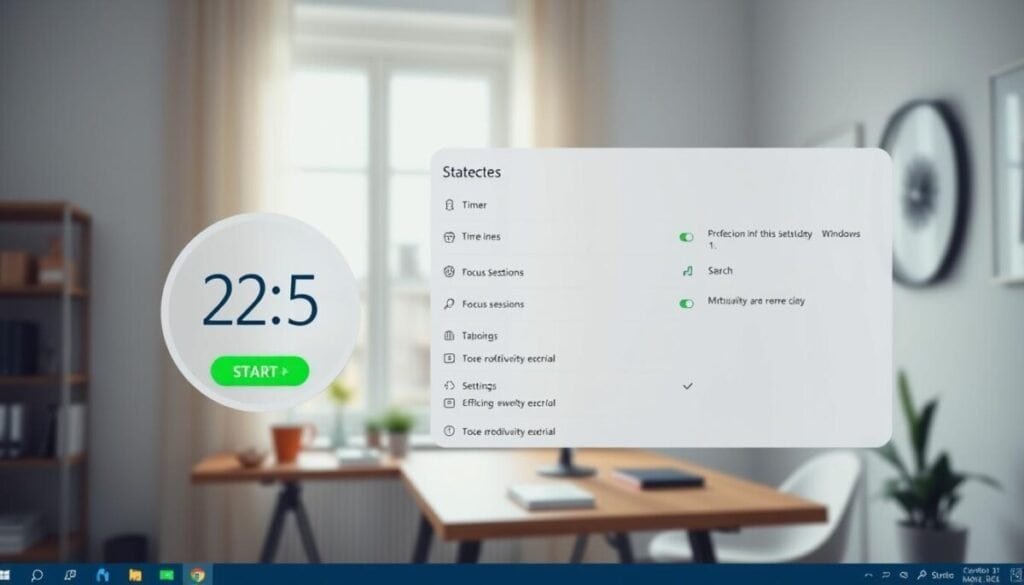
Display the dedicated timer window on-screen to track duration and manage active tasks precisely.
Popping Out the Timer
Open the clock app and locate the timer view. Use the pop-out control to detach the timer into its own window.
The pop-out timer remains visible on the screen. Monitor remaining time without switching tabs or windows.
Start a start focus session directly from the pop-out. The interface shows the active task and playback controls for music.
Keep the clock icon on the taskbar to return to controls quickly. Use the end button in the pop-out to restore normal notifications and end the session.
- Visible timer: maintain temporal awareness on every screen.
- Task alignment: pin the active task so work stays single‑targeted.
- Control access: start focus, adjust settings, or stop music without context switching.
| Action | Control | Result |
|---|---|---|
| Open clock | Pop-out icon | Timer visible on screen |
| Start focus session | Start button | Mute notifications and run timer |
| End | End button | Restore normal alerts |
Troubleshooting Common Setup Issues
Verify system permissions when the timer will not engage.
If unable to start focus session features, confirm that the device is not managed by an IT administrator. Managed policies often lock settings and block the clock app controls.
Ensure correct access to the notification center. Incorrect access prevents the notification mute tools from activating. Use the proper sequence to open notification center before attempting to start.
- If settings are greyed out—check system permissions or contact organizational IT for policy changes.
- If the start focus session button fails—restart the clock app and retry the start control.
- If a session becomes unresponsive—use the end option in the notification or reboot to restore notifications.
| Issue | Check | Action |
|---|---|---|
| Start command fails | App permissions | Restart app; verify settings and retry |
| Settings greyed out | Managed policy | Contact IT or update local policy |
| Notifications unblocked | Notification center access | Open notification center → use end button to restore |
For further assistance, call the AbilityNet helpline at 0300 180 0028. Use the line to resolve configuration issues with the clock app and related apps.
Best Practices for Maintaining Productivity
Adopt timed work cycles to enforce discipline and limit interruptions during deep tasks.
Implementing Pomodoro Intervals
Use a 25/5 rhythm. Set the clock timer for 25 minutes of concentrated work, then take a five‑minute break. Repeat four times, then take a longer break.
Setting Daily Goals
Use the clock app to set measurable daily goals. Pin one primary task to the timer. Track completion and preserve streaks to sustain momentum.
Combining with Viva Insights
Integrate Viva Insights to plan deep work and recovery. Use the tool to schedule protected blocks and to analyze interruption patterns.
When a focus session ends, review the task list. Mark progress. Adjust the next session duration to match task complexity.
| Practice | Action | Benefit |
|---|---|---|
| Pomodoro | 25 min work / 5 min break | Reduced distractions; sustained attention |
| Daily goals | Pin primary task in clock app | Higher task completion rate |
| Viva Insights | Link planning and recovery | Balanced workload; measurable trends |
Final Thoughts on Mastering Your Workflow
Use the system timer and task alignment to convert intentions into measurable output.
Apply a repeatable routine. Start a focus session with a pinned task and controlled audio. End each interval with a short review.
Integrate task lists and playlists to create a tailored environment. Link with productivity tools and productivity enhancement apps to streamline planning and execution.
Practice regularly. Small, consistent sessions build durable habits. Track results; adjust durations to improve throughput and reduce context switching.
Result: A disciplined workflow that leverages Windows 11 timing features to increase focus and overall productivity.