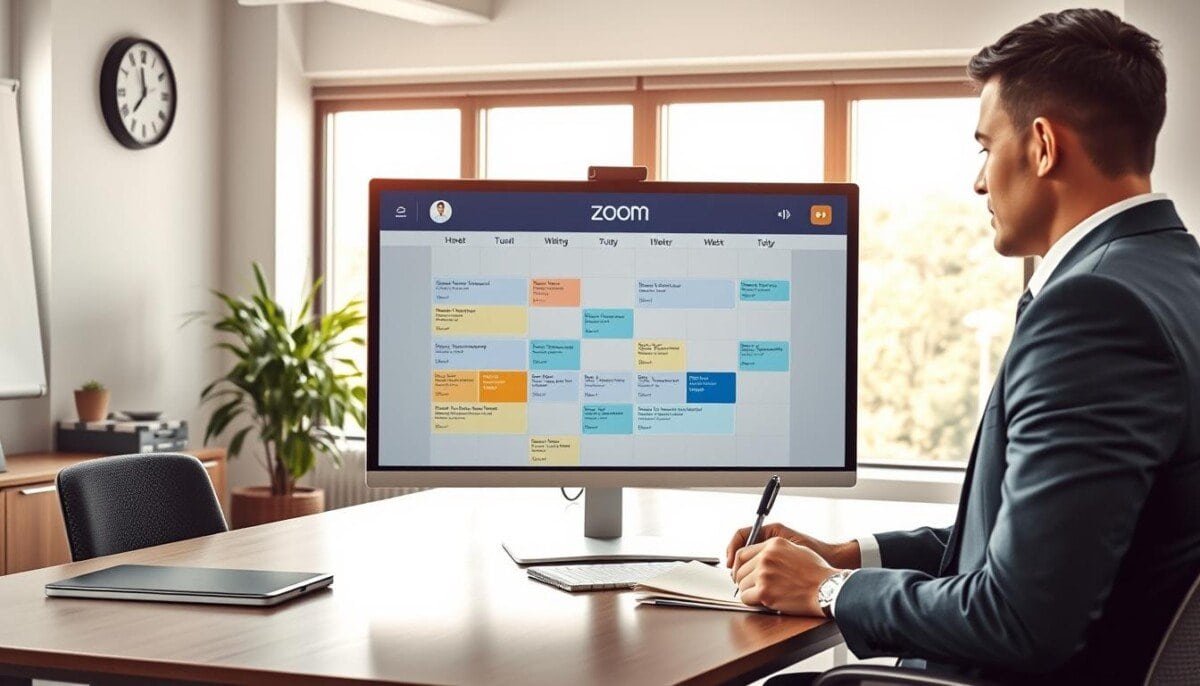
Can a single, disciplined process eliminate double-booked events and chaotic calendars? Enforce a clear protocol—define each event, assign the date and time, and require attendees to confirm availability before finalizing the entry.
Use the primary calendar tab to view all scheduled items at a glance. Maintain a central note for each meeting—include duration, agenda, and participant list. Monitor the calendar daily to prevent overlapping time slots.
Standardize event creation: set the date precisely, lock the time, and notify attendees with a single authoritative update. Track changes in one place to reduce confusion and improve meeting efficiency.
Key Takeaways
- Centralize control—use one calendar tab to manage all events.
- Require attendee confirmation to avoid double bookings.
- Record a concise note for each meeting—duration and agenda only.
- Lock date and time entries before sending notices.
- Audit the calendar daily to maintain a clean event roster.
Getting Started with Your Zoom Recurring Meetings Schedule
Begin by defining the repeat frequency for each event in the dashboard interface. Select a clear date and time for every meeting. Record a concise note that states objective and duration.
Review the calendar tab to inspect available options. Use the view to detect clustering and to balance daily load. Align attendees by confirming the chosen date and time before publishing the event.
Audit each zoom event entry to avoid conflicts. Adjust frequency or duration when overlap appears. Prioritize the calendar view to visualize distribution across the work week.
| Action | Where | Outcome |
|---|---|---|
| Define frequency | Dashboard interface | Predictable event cadence |
| Set date & time | Meeting form | Attendee alignment |
| Review options | Calendar tab | Customized participant experience |
| Add admin note | Event details | Clear organizer instructions |
For an alternate approach to office-hour integration, consult the guide on scheduling office hours—adapt its calendar-first principles to this process.
Navigating the Zoom Web Portal for Event Creation
Authenticate to the web portal to reveal the main navigation menu in the top-right corner. Sign zoom web to open account controls and primary menu.
Access flow:
- Click home tab to display the dashboard. Review calendar load and priorities.
- Then click meetings tab to initiate a new event.
- Use the navigation menu to access account options and the create form.
Locate the click create event control or icon. Select date and time parameters. Add a concise note describing objective and duration.
Open the registration window. Confirm the registration list displays the name of each attendee. Record the list in a central note for auditing.
Use the navigation options to set calendar preferences and timezone. Repeat the process—click create event—to add successive events. Maintain the dashboard view to prevent overlap.
Configuring Date and Time Settings for Accuracy
Set the date and time parameters precisely before finalizing any event entry. Sign zoom to open the settings menu and access the date time controls. Verify timezone and account preferences first.
Selecting the Following Options
Open the configuration box. Select following options that define start time, end time, repeat pattern, and registration requirements.
- Use the navigation icon to access the tab for event options.
- Confirm the end time in the box; then click save to record the entry in the calendar.
- Add a concise note to the registration window—include the number of attendees and the date for clarity.
- Select following options carefully to ensure account defaults and registration rules apply to every event.
| Field | Action | Outcome |
|---|---|---|
| Timezone | Select in settings menu | Consistent start/end across account |
| End time | Verify in configuration box | Accurate calendar allocation |
| Registration note | Enter attendee number and date | Clear reporting and audit trail |
For an alternate approach to publishing events and confirming attendee lists, review the guide on how to schedule on Twitch—adapt its procedural checklist to this settings workflow.
Managing Registrants and Attendee Options

Control the registrant list from the account menu before finalizing attendee access. Administrators must sign zoom to open the registration window and to verify each name on the list.
Open the navigation menu. Inspect the registrants box. Confirm the number of attendees and the exact date and time for the event.
Selecting the Following Options
- Require users to register choose one option when signing up — this updates the registration count automatically.
- Use the settings box to limit the attendee number per meeting — record the restriction in a short note.
- Adjust attendee permissions from the account menu — ensure each attendee has correct access before publishing the event.
- After edits, click save to lock the list and to keep calendar data consistent across the tab.
| Task | Control | Outcome |
|---|---|---|
| Verify names | Registration list | Accurate attendee list |
| Limit attendees | Settings box | Controlled capacity |
| Save changes | Account menu | Consistent calendar entries |
Utilizing Calendar Contacts Integration to Prevent Conflicts
Link the primary contact calendar to the account to enforce single-source availability across every event. Click add on the account integrations tab to connect calendars. The system then reflects each event in the central date time view.
Enable conflict checks. The calendar contacts integration scans existing entries and blocks overlapping time slots in the navigation menu before finalizing an event. This prevents double bookings and reduces manual audits.
Record a short registration note. Add a note to the registration list so the organizer sees the name and the number of registrants. The list becomes the authoritative record for attendees and registrants.
- Click add to link primary calendar — syncs external date and time items.
- Use options in the settings window to limit conflicts — set rules for time and date ranges.
- Verify the tab and account menu for synced entries — confirm each event appears in the calendar.
| Action | Control | Outcome |
|---|---|---|
| Click add | Account integrations tab | Calendar synced to account |
| Enable options | Settings window | Automated conflict checks |
| Add note | Registration list | Visible name and number |
Editing Existing Occurrences via the Desktop App

Open the desktop client to locate an existing series entry and prepare to edit a single session. Use the calendar view to find the target event. Confirm the date and tab context before editing.
Using the Pencil Icon
In the zoom desktop app, select the series entry. Then click pencil icon to open the edit window. The interface displays the event details and the registration list.
Adjusting One Occurrence
When the intent is to modify only one session, choose the option to choose one occurrences. Update the meeting name or the registrants list directly in the edit window.
- Modify the name field to reflect the new topic.
- Adjust the number of attendees in the registrants list.
- Change meeting options as needed — host controls, audio, or chat.
Add a short note to the registration window if the change affects account-level settings. Any edit to one occurrences attend can alter registration behavior for the series.
After changes, ensure to click save. Confirm the calendar shows the updated date and time for that one event. The zoom desktop app streamlines edits and reduces manual reconciliation.
Ensuring Browser Compatibility for Seamless Access
Standardize browser requirements so the event list renders and participant controls function predictably.
Enforce supported builds. Use Chrome — latest version or two prior releases. Maintain Firefox — latest version or two prior releases. Note: Firefox is not supported on iOS for the service.
Require Microsoft Edge Chromium — latest version or two prior releases. Require Safari 12.0 or higher to view the event list and to manage meeting options in the browser window.
For mobile access, require the latest iOS Safari or Chrome, or Android Firefox or Chrome. Instruct participants to sign zoom mobile before joining to ensure credentials load correctly. Advise users to sign zoom mobile when using mobile browsers for best stability. Recommend that hosts sign zoom mobile to confirm host controls appear in the app.
- Check versions — update browsers before each event.
- Test controls — validate meeting options in the target browser.
- Use a single source — publish the list in one central place.
| Platform | Requirement | Outcome |
|---|---|---|
| Chrome | Latest or two prior releases | Reliable event load |
| Firefox | Latest or two prior releases; no iOS | Stable controls |
| Safari | 12.0 or higher | Full option visibility |
Mastering Your Workflow for Stress-Free Scheduling
Adopt a single, repeatable workflow to keep every event on the calendar conflict-free.
Use the calendar tab to verify each event date and time before publishing. Keep a short note in the event window that records objective and expected duration.
Maintain the registration list. Limit the number of attendees and confirm each name in the registrants box. Verify the end time in settings to prevent overlap.
Place a persistent note on the navigation menu for quick access to account controls. For implementation details, consult the advanced scheduling guide.