Curious which platform will reveal exactly where your visitors get stuck and why?
If you want clear, actionable data, this guide cuts through the noise.
Top analytics platforms capture clicks, scrolls, and session recordings so you can map real user behavior. Mouseflow and Crazy Egg offer varied maps and trials. Hotjar highlights rage clicks to flag frustration. FullStory records every interaction across web and mobile. Microsoft Clarity gives free recordings and heatmaps for lower traffic sites.
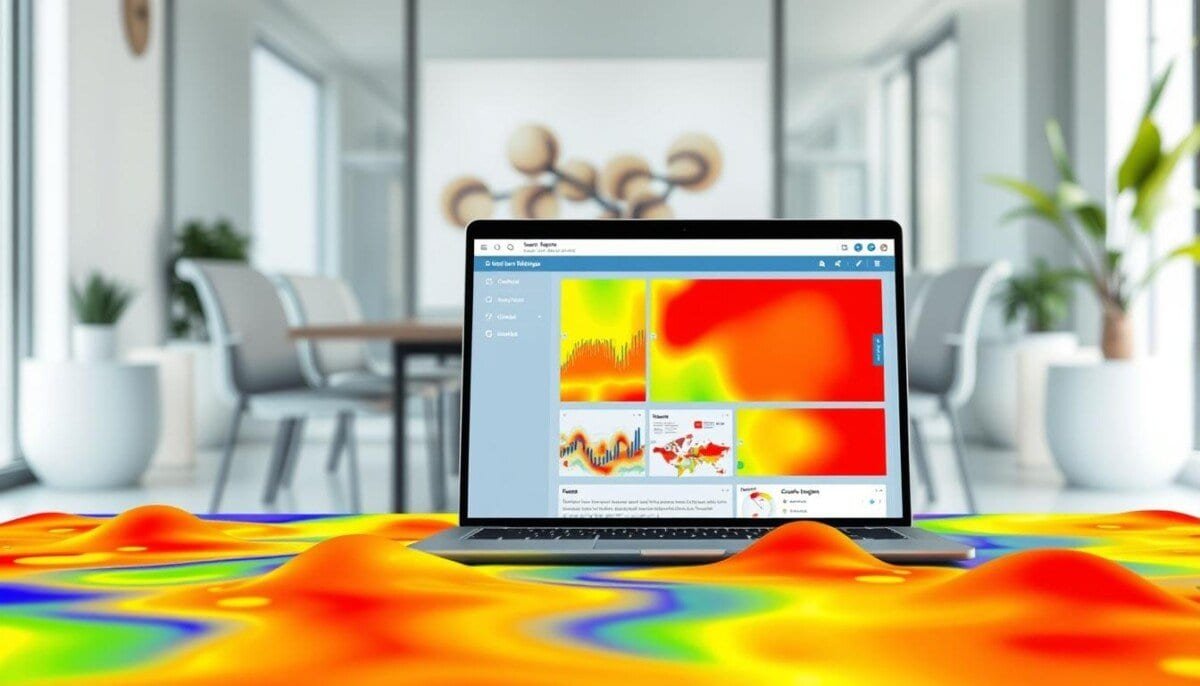
Use a heatmap tool to spot dead zones, test CTA placement, and prioritize fixes that boost conversion. A solid plan pairs maps with funnels, tracking, and surveys. That way you move from guesswork to measurable improvement.
Key Takeaways
- Visual data like maps and recordings show where users click and scroll.
- Free options exist for small sites; trials help you test features before buying a plan.
- Combine maps with funnels and tracking for better conversion insights.
- Identify rage clicks and dead clicks to fix usability issues fast.
- Choose a platform that fits your traffic, pricing, and technical needs.
Understanding the Value of Heatmap Analytics
A visual view of engagement exposes which on-page elements earn clicks and which get ignored. These visualizations add context that standard page metrics cannot.
Heatmap analytics provide a clear picture of user behavior. Click maps show where users tap or click most. Scroll maps reveal how far visitors move down a page and where attention drops.
The difference is simple: traditional analytics report page views and averages. Heatmap data highlights interactions with specific elements like images, forms, and CTAs during each session.
Use these insights to test placement and design quickly. Segment traffic by source or device to see how different users behave. Combine maps with funnel tracking and surveys for a full conversion view.
- Visual representation: see which areas attract attention at a glance.
- Optimization focus: move CTAs and forms to hotspots to lift conversion.
- Session context: identify usability issues that cause drop-offs.
Why You Need the Best Website Heatmap Tools
Click and scroll visualizations show precise interaction points so you can prioritize changes.
Click Maps
Click maps show where users click and how often they interact with page elements. You see if visitors click non-clickable text or miss your CTA.
That visibility reduces guesswork. Use a heatmap tool to target fixes that lift conversion and improve funnels.
Scroll Maps
Scroll maps tell you what percentage of users reach each section of a page. They reveal where attention drops and where content needs to move up or compress.
Combine scroll data with session recordings and surveys to test placement and timing across traffic and apps.
- Actionable insights: prioritize changes that affect conversion fast.
- Cross-check: pair click maps with scroll maps and tracking for clear UX direction.
| Map Type | What it shows | When to use |
|---|---|---|
| Click maps | Where clicks cluster and mis-clicks occur | CTA placement and element testing |
| Scroll maps | Percentage of users who reach each section | Content layout and long-form pages |
| Mouse movement maps | Cursor paths indicating attention | Feature discoverability and Crazy Egg-style analysis |
Deep Dive into Hotjar for UX Designers
Designers use Hotjar to match quantitative maps with qualitative responses and pinpoint friction fast.
Hotjar combines click, scroll, and move maps with rage click maps to reveal problem areas.
The platform gives you session recordings so you can watch how users navigate pages. You can pair those recordings with feedback surveys to learn the “why” behind the behavior.
- 15-day free trial lets teams test funnels, tracking, and a/b testing workflows without commitment.
- Plans start at $39 per month for a mix of quantitative and qualitative data collection.
- Hotjar tracks clicks on dynamic elements like pop-ups and dropdowns and highlights rage clicks for quick fixes.
| Feature | What it shows | When to use |
|---|---|---|
| Click map | Click concentration and mis-clicks | CTA placement and element testing |
| Scroll & move maps | Attention depth and cursor paths | Content layout and long pages |
| Session recordings + surveys | Full session playback with user feedback | Qualitative insights to explain data trends |
To compare Hotjar with other platforms, see our curated list of recommended tools. Use that alongside Hotjar’s analytics to prioritize fixes that lift conversion.
Microsoft Clarity as a Free Analytics Powerhouse
Microsoft Clarity gives you a zero-cost way to watch real users interact with your pages.
It combines heatmaps, scroll tracking, and click tracking without a subscription. Clarity records every session automatically and surfaces clear metrics you can act on.
Identifying Rage Clicks
Clarity flags repeated clicks—so-called rage clicks—that point to broken links or confusing elements. You can spot dead clicks where users tap non-interactive text or images.
- No monthly fees: the free plan gives scroll depth, maps, and session recordings at scale.
- Automatic tracking: every session is captured, helping you find underused elements and attention drops.
- Actionable signals: rage and dead clicks reveal UX fixes that improve conversion.
- Integrations: connect Clarity with Google Analytics to centralize data and funnels for testing and a/b testing work.
For a feature-by-feature comparison, see our heatmap and user behavior analysis tools guide to decide which plan or paid plans fit your traffic and pricing needs.
FullStory for Enterprise-Level Data Analysis
FullStory records complete user journeys and makes every session searchable and replayable. The platform captures clicks, scrolls, and page transitions automatically so you can see exact behavior without manual tagging.
Use its journey mapping to trace paths across pages and sessions. That reveals where users drop from funnels and which elements steal or lose attention.
- Scales to high traffic and mobile apps with pricing tied to session volume and retention.
- Offers a free plan with limited sessions; advanced paid plans give longer retention and deeper analysis.
- Powerful search lets teams run retroactive queries to answer questions after the fact.
- Collaboration features help product, design, and engineering fix issues faster and boost conversion.
| Focus | Why it matters | Ideal for |
|---|---|---|
| Session recordings | Replay exact user flows | Enterprises analyzing complex funnels |
| Journey mapping | Visualize multi-page paths | Cross-page conversion analysis |
| Scalable retention | Keep historical data for trends | Teams needing long-term insights |
If you run high-volume traffic or need granular analytics, FullStory is a platform that delivers enterprise-grade recordings, maps, and search to help you prioritize fixes and improve user satisfaction.
Mouseflow and Advanced Funnel Tracking
Mouseflow layers session data and visual maps so you can trace drop-offs across conversion paths. The platform combines six map types with funnel tracking and form analytics to expose where users lose interest.
Friction Scoring
Automatic friction scoring flags sessions with repeated clicks, long hesitation, or rapid form corrections. This helps you spot unhappy users fast and prioritize fixes that lift conversion.
Use the score to filter sessions by traffic source or device, so A/B testing and redesigns target the right audience and pages.
Session Replays
Session recordings let you watch exact user journeys. Playbacks show where clicks miss, where forms fail, and how users move between elements.
This context pairs with maps and scores so teams can replicate issues, run a/b testing, and verify fixes quickly.
- Six map types: click, scroll, movement, attention, live, geo.
- Free plan: available for small sites; paid plans start at $39/month with annual savings up to 20%.
- Form analytics: reveals abandonment points and field friction for faster optimization.
| Feature | What it shows | When to use |
|---|---|---|
| Friction scoring | Sessions with struggle signals | Prioritize UX fixes |
| Session recordings | Exact user paths and clicks | Troubleshoot funnels and forms |
| Attention maps | Combined click + scroll focus | Optimize page layout and CTAs |
Plerdy for SEO and Conversion Optimization
Plerdy blends on-page interaction data with SEO checks to help you act on visitor signals fast.
Use it when you want combined SEO and conversion insights in one dashboard.
Plerdy offers advanced segmentation so you can view maps for traffic from Google Ads, organic search, or other sources. That makes it easy to compare behavior across pages and campaigns.
The platform includes an SEO checker and built-in a/b testing, plus form analytics to reveal where users abandon fields. These features let you test changes and measure conversion impact quickly.
Plans start at $32 per month, with annual pricing that lowers the effective rate. There is also a free plan so teams can trial maps and sessions before committing to paid plans.
- Track click sequences to map typical journeys and spot funnel leaks.
- Segment by traffic to see how paid ads versus organic behave on the same page.
- Test variations with A/B testing and validate changes with session recordings.
| Feature | What it shows | When to use |
|---|---|---|
| Advanced segmentation | Heatmaps filtered by traffic source | Compare ad vs organic behavior |
| SEO checker | On-page SEO issues and suggestions | Fix ranking signals alongside UX |
| Form analytics & A/B testing | Field drop-offs and variant performance | Improve lead capture and conversion |
Lucky Orange and Real-Time Behavioral Insights
Lucky Orange streams interactions in real time so you can spot friction as it happens. The platform layers live maps with session recordings and live chat so your team can watch and act on user behavior instantly.
Live Chat Integration
Use live chat while viewing a session to resolve confusion in the moment. Agents can see clicks and scrolls before they message, which shortens resolution time and reduces abandonment in funnels.
- Real-time tracking: live heatmap maps and recordings show how users move across pages and elements.
- Session recordings: replay journeys to find bugs, UX gaps, or drop-off points.
- Form analytics: pinpoints fields that prompt abandonment so you can simplify forms and lift conversion.
- No sampling: every session contributes to your maps, giving accurate data for analysis.
- Plans and pricing: a free plan is available; paid plans start at $39 per month with annual billing options to save.
| Feature | What it shows | When to use | Benefit |
|---|---|---|---|
| Real-time maps | Live clicks and scroll density | Monitor campaigns and spikes | Immediate visibility into behavior |
| Session recordings | Full user journeys | Troubleshoot funnels and bugs | Replicate and fix issues faster |
| Live chat integration | Agent view of current session | Rescue stuck users during checkout | Reduce drop-offs and support time |
| Form analytics | Field-level abandonment | Optimize lead capture pages | Higher completion rates |
For a deeper walkthrough of map types and implementation, check the complete Lucky Orange guide to learn setup tips and use cases.
Crazy Egg for Beginner-Friendly Visualizations

Crazy Egg simplifies visual analysis so teams see where visitors focus and where they get stuck. The platform offers five Snapshot types, including standard heatmaps, scrollmaps, and the unique Confetti report that segments clicks by source or device.
Use the 30-day free trial to test A/B testing and session recordings before you commit. Plans start at $99 per month, which fits teams focused on layout optimization and conversion lifts.
The Confetti view helps you isolate where users click and why segments behave differently. Built-in recordings and overlays make it easy to spot rage clicks or dead clicks and to prioritize quick fixes.
Who it suits: marketers and UX designers who want clean navigation, clear visual data, and fast insights without steep setup.
- Clear overlays show click percentages per element.
- Segmented reports tie clicks to traffic sources and devices.
- A/B testing and recordings let you verify changes and improve funnels.
| Snapshot | What it shows | When to use |
|---|---|---|
| Heatmap | Click density and hotspots | Optimize CTA placement and layout |
| Scrollmap | How far users scroll | Decide content length and placement |
| Confetti | Segmented clicks by source/device | Compare campaigns and traffic segments |
| Overlay | Percentage breakdown per element | Analyze individual element performance |
For more on integrating Crazy Egg with analytics stacks, check recommended analytics plugins that speed setup and tracking.
Inspectlet and Predictive Eye-Tracking
Inspectlet pairs cursor behavior with eye-movement models to predict where attention lands on a page. This predictive eye-tracking gives you attention maps that add depth to traditional click overlays.
The platform bundles predictive maps with session recordings and A/B testing so you can both see and validate user flows. Recordings let you replay exact sessions and tag individual users for follow-up.
- Predictive maps: mouse movements mapped to visual attention.
- Session recordings: replay behavior to find where clicks and friction occur.
- A/B testing & surveys: compare page variations and gather qualitative insights.
- Error logging & tagging: spot technical faults and flag key sessions for your team.
Inspectlet offers a free plan for small sites and paid plans that begin at $39 per month. A 15-day trial helps you test tracking, analytics, and pricing before you commit.
| Feature | Why it matters | When to use |
|---|---|---|
| Predictive eye-tracking | Estimates visual attention beyond raw clicks | Prioritize layout and content placement |
| Session recordings | See exact user navigation and issues | Troubleshoot funnels and form drop-offs |
| A/B testing & surveys | Validate changes with data and feedback | Improve conversions and UX iteratively |
Zoho PageSense for Personalization and Testing
With consolidated maps and layered testing, Zoho PageSense helps you tailor content to real visitor segments.
PageSense combines consolidated heatmaps that track elements that stay the same across many pages with advanced personalization and A/B testing. That makes it easier to measure changes across a site and spot consistent friction.
Use its session recordings and form analytics to watch how users interact with forms and flows. Recordings reveal where visitors hesitate and which fields cause abandonment.
- Consolidated heatmaps track headers, footers, and recurring elements across pages.
- A/B testing lets you duplicate a page and test headlines, layouts, or offers.
- Content personalization serves different images or copy depending on referral source.
- Plans start at $20/month and include a 15-day free trial to explore funnels and recordings.
| Feature | What it shows | When to use |
|---|---|---|
| Consolidated heatmaps | Interaction patterns across multiple pages | Optimize recurring elements like headers and CTAs |
| A/B testing | Performance of variants vs original | Validate design and copy changes with real users |
| Session recordings & form analytics | Exact user paths and drop-off fields | Troubleshoot funnels and improve conversions |
Zoho PageSense is a strong option if you want unified analytics, personalization, and testing in one platform. Use the free trial to gather initial insights and prove lift before choosing a paid plan.
Comparing Features Across Top Platforms

Choose a platform by weighing pricing tiers, mobile coverage, and how fast your team can get running.
Pricing Models
Pricing shapes what you can collect and keep. Small teams benefit from a generous free plan while enterprises will evaluate paid plans for retention and volume.
Hotjar offers a large free plan for up to 20,000 sessions per month. Mouseflow records 100% of traffic and groups six heatmap types under paid tiers. VWO targets enterprise customers with higher pricing for dynamic maps and cross-device tracking.
Mobile App Support
Not every platform covers native apps. VWO supports both pages and mobile apps with dynamic maps and cross-device tracking.
If you need app-level tracking, confirm SDK availability and whether the tool captures gestures and in-app sessions.
Ease of Setup
Install time matters. Many modern tools offer codeless script installs so you can start session recordings and tracking without a developer.
Lucky Orange stands out by pairing real-time tracking with live chat, so teams can engage users while watching behavior unfold.
| Platform | Pricing highlight | Mobile app support | Setup |
|---|---|---|---|
| Hotjar | Generous free plan; paid plans add retention | No native SDK; focused on pages | Simple script install, quick start |
| Mouseflow | Paid plans scale by sessions; records 100% traffic | Limited native app support | Codeless setup; advanced options need dev |
| VWO | Enterprise pricing; advanced features | Full mobile app support via SDKs | Requires configuration; enterprise onboarding |
| Lucky Orange | Real-time plans; affordable tiers | Primarily page tracking | Fast install, integrates live chat |
Key Factors to Consider Before You Buy
Evaluate whether a candidate can capture dynamic elements and complex single-page flows before you commit. If pop-ups, dropdowns, or lazy-loaded content matter, the tool must record those interactions reliably.
Check retention and privacy early. Some vendors store session recordings for days, not months. That limits trend analysis and retrospective troubleshooting.
Also verify compliance. Choose platforms that support GDPR and CCPA so your data collection stays legal and your users retain trust.
- Feature fit: confirm session recordings, funnel tracking, and single-page app tracking work on your site.
- Ease of use: pick a tool that matches your team’s skill—Crazy Egg suits beginners; some options need developer support.
- Segmentation: tools like Lucky Orange offer filters to analyze specific audiences and campaigns.
- Pricing & retention: ensure plans scale with sessions and keep data long enough for trends.
- Try before buying: use free trials to validate tracking, recordings, and reports on your pages.
| Factor | Why it matters | Quick check |
|---|---|---|
| Dynamic element support | Captures real interactions | Test pop-ups and SPA flows |
| Data retention | Enables trend analysis | Ask retention days/months |
| Privacy compliance | Protects users and risk | Request GDPR/CCPA docs |
Final Thoughts on Selecting Your Optimization Software
Opt for an analytics solution that turns raw sessions into concrete action items. Pick a platform that surfaces friction quickly and lets your team test fixes with real data.
Start by defining goals. Decide whether you need simple click tracking or multi-page funnel analysis. Match feature access to traffic and budget so the chosen plan grows with you.
Use heatmap tools to spot attention gaps and validate layout changes. Review sessions regularly and prioritize fixes that move conversion metrics. Keep the interface intuitive so teams use it often.
Change tools if your current stack no longer delivers value. Invest in the right setup now and you’ll see higher engagement and clearer ROI on your site over time.