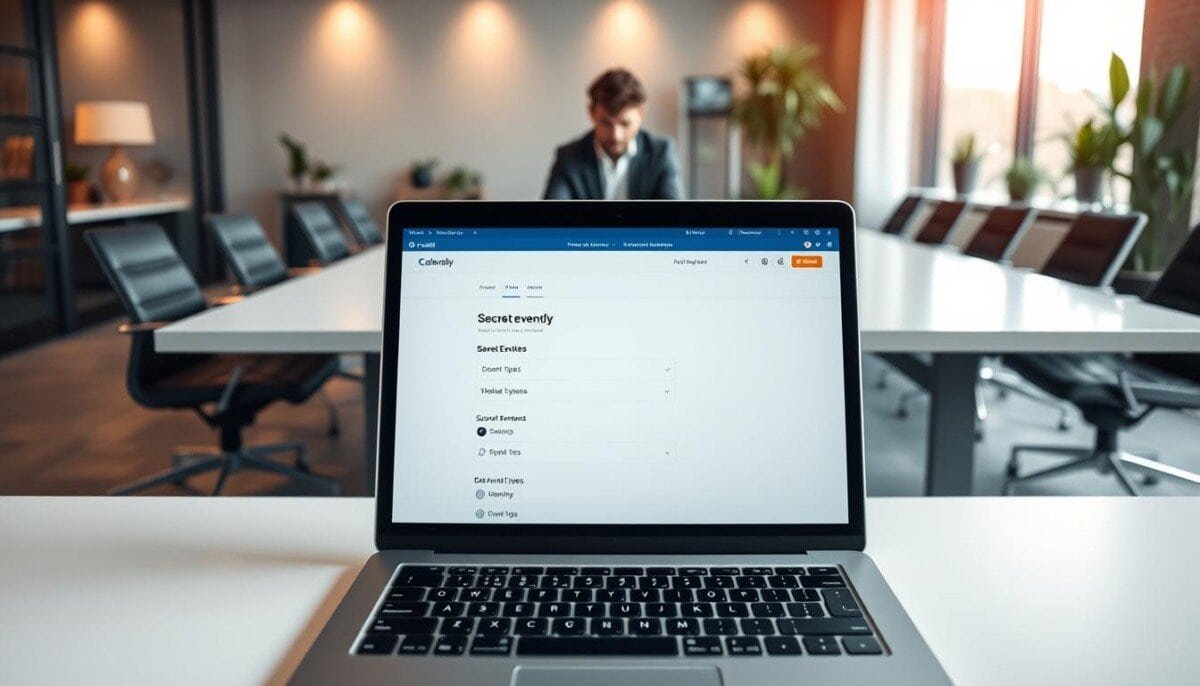
42% of professionals report fewer scheduling conflicts after hiding select meeting links — a direct win for controlled availability and cleaner workflows.
Implement a hidden meeting link to preserve a professional scheduling experience. Restrict access to specific event types — keep them off the public page. This prevents unwanted discovery and reduces interruptions. To maintain efficiency while managing your time, you may consider how to set up out of office in ClickUp. This feature allows for automated responses, ensuring that inquiries are handled promptly even in your absence. Additionally, it can help streamline communication by informing colleagues of your availability and directing them to alternative resources if needed.
Each event functions as an independent booking portal. Manage event setup to control who can see and reserve time. Assign unique links to invitees only. To enhance organization, consider how to integrate Microsoft To Do effectively within your workflow. This will allow you to streamline tasks and ensure that all event-related activities are easily tracked. With proper integration, you can keep team members aligned and maximize productivity during the planning process.
Ensure the hidden entry does not appear on the main scheduling page. Verify permissions before sharing the link. This secures calendar access and preserves professional boundaries. Implementing notion integration techniques for productivity can streamline your workflow further, allowing for seamless communication across teams. By utilizing these techniques, you can enhance collaboration and ensure that all members are aligned with project timelines and objectives. This approach not only improves efficiency but also fosters a more organized environment for everyone’s tasks.
Key Takeaways
- Limit public exposure by creating a hidden event link.
- Treat every event as a unique booking portal to control access.
- Confirm that the event type is not listed on the scheduling page.
- Share the private link only with invited participants.
- Use hidden links to protect time and improve scheduling experience.
Understanding the Purpose of Calendly Secret Events
Clarify why hiding a booking link matters for calendar control and professional boundaries.
Define the objective: restrict public exposure of a specific event type to control who can view and reserve time. Use the hidden option when invitations must remain limited.
Support documentation confirms the standard method: click the gear icon in the editor. Kelsi — a support representative — states this as the primary way to hide an event link.
The community validates the workflow. Jacob11514 noted this is the best way to remove a link from the home page. Multiple replies year ago and community member2 replies year ago february show repeated user interest.
- Follow cookie policy and privacy policy when changing settings.
- Admin guidance from emeritus 1549 replies year ago confirms the feature is standard.
- Use the gear icon for the fastest, most reliable method.
Outcome: secure booking types — reduce unwanted discovery. The team provides clear answers; new community member2 replies year ago february confirms the interface is intuitive and the process works.
How to Configure Calendly Secret Events in Your Dashboard

Locate the editor gear to change visibility and restrict a booking link immediately.
Navigate to the dashboard. Open the event editor for the type that requires restricted access.
Locating the Gear Icon
Find the gear icon in the top-right corner of the editor. Click it to reveal visibility and privacy options.
Hiding Events from Your Main Page
Select the make secret option in the settings menu. The event will be removed from the main scheduling page.
- Community member2 replies year ago february confirm this is the fastest way.
- Community member1 reply year ago and emeritus 1549 replies year ago both recommend this method to secure a link.
- If questions remain, contact the support team for a direct answer.
| Step | Action | Outcome |
|---|---|---|
| 1 | Open dashboard → edit event type | Editor loads |
| 2 | Click gear icon (top-right) | Visibility options display |
| 3 | Select make secret option | Link removed from public page |
Enhancing Security with Single Use Links

Generate a one-time access link to enforce single booking per recipient. Single-use links expire after the first reservation. This prevents reuse and unwanted repeat bookings.
- Implement single-use links — the URL becomes invalid immediately after a booking.
- Generate a UUID4 locally for every link to ensure unpredictability and resist brute-force discovery, as advised by Jacob11514 in community replies year ago.
- Rely on system-managed expiration — the backend enforces one-time use and removes the link from the scheduling page.
Operational benefits
Protect time — one-use links stop multiple people from occupying the same slot. This option limits access to selected people and maintains control over event types.
Recommended way: automate UUID4 generation and issue a unique link per invite. Monitor link consumption logs. Thanks to this workflow, sharing private links remains secure and auditable.
Advanced Strategies for Customizing Your Booking URL
Customize the booking URL to convert default identifiers into non-guessable strings.
Open Edit → More Options → Booking Page Options. Locate the field labeled URL or slug. Replace the generated value with a concise, unique token.
The platform generates links from duration labels — for example “30m” or “30-minutes” — and increments duplicates automatically. Override that pattern to prevent predictable discovery.
- Use a random alphanumeric string per event type — avoid dictionary words.
- Leverage admin settings to assign a distinct URL for every booking type.
- Regenerate a link after an unwanted access attempt — treat URLs as revocable credentials.
Operational note: Edit the URL in the editor, save, and test access. Monitor logs for replies year ago or any suspicious reply. Repeat this process yearly to maintain privacy and protect time.
Final Thoughts on Managing Your Scheduling Experience
Wrap up with actionable controls that protect availability and streamline booking.
Implement hidden types, single-use links, and custom URL tokens as the core safeguards. Use the settings option to revoke or rotate a link when needed.
Rely on documented community guidance — community member2 replies year ago february and community member1 reply year ago — plus emeritus 1549 replies year for practical confirmation.
Follow the cookie policy and privacy policy to keep invitee data secure. Contact the admin or support team for any question — the team provides definitive answers.
For a comparative review of platform pros and cons, see this detailed platform review.