What if a single design platform could cut your production time in half and still protect your brand?
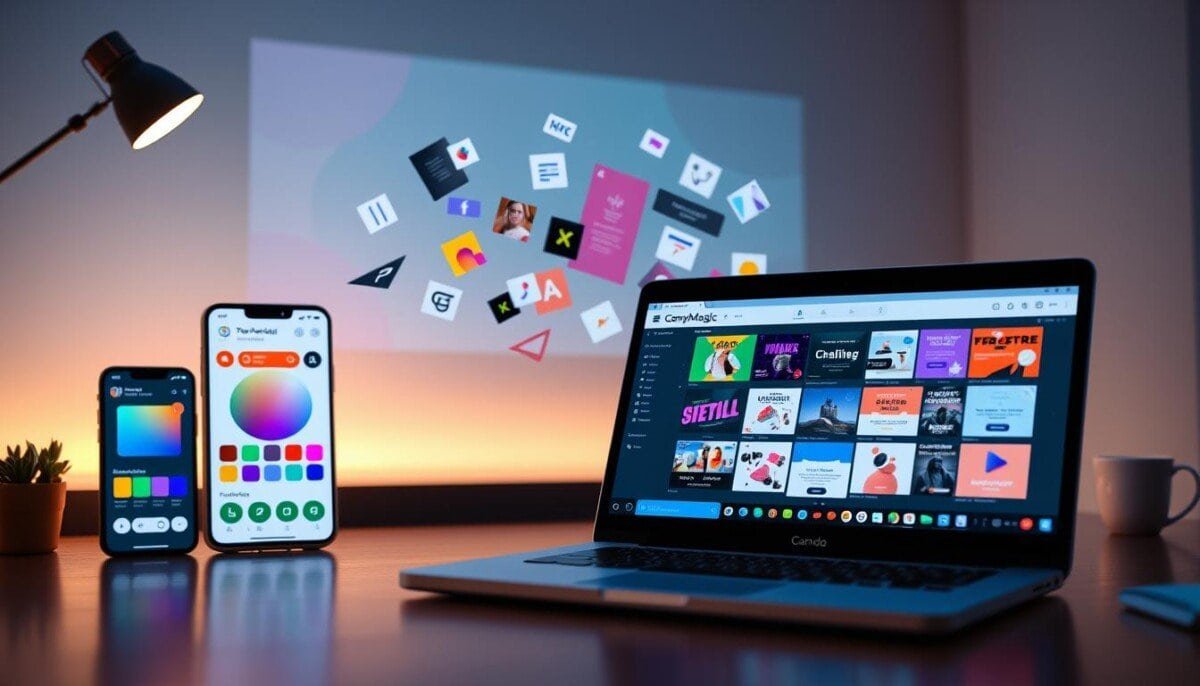
This guide shows exactly how the Canvas latest design ecosystem works. Launched in October 2023, the update turned the editor into an AI-first environment that blends tools for images, text, and media into one workspace.
You will learn how each tool—from the magic switch to Magic Media—helps you generate or refine a photo, keep consistent designs, and speed up content creation.
The goal is simple: give you clear steps to use these upgrades so your team keeps strong brand output with less effort.
Key Takeaways
- Magic Studio unifies images, text, and media inside one editor.
- Built-in tools streamline design work for beginners and pros.
- You can maintain brand consistency across all designs.
- Access to high-quality assets speeds content production.
- Understanding each tool saves time and boosts output.
Understanding the Power of Canva Magic Studio AI Features
In October 2023, an update added more than twenty built-in tools that changed how people approach design.
Those additions move the editor from template work into an intelligent assistant you can use every day.
The suite helps people who lack formal skills produce professional visuals in minutes. It automates repetitive layout and formatting tasks so you can reclaim valuable time.
For small teams, that matters: you no longer need complex software or an immediate hire to meet most design needs.
- Over 20 distinct tools work together to speed social posts, presentations, and marketing docs.
- Each tool supports your creative idea and keeps output polished and consistent.
- The technology gives a simpler way to build projects without a steep learning curve.
We will next show how these capabilities transform your workflow and let you execute with greater speed and precision.
Transforming Your Creative Workflow with Automation
Automation now lets you turn one design into dozens of ready-to-publish assets in minutes. This reduces manual resizing and keeps your brand intact across channels.
Magic Switch for Format Adaptation
The magic switch converts a single layout into multiple sizes, formats, or languages with a few clicks. It repurposes a poster into social posts, banners, and headers without extra layout work.
Use this when you need consistent visuals fast. The switch automates resizing so your designs keep their look on LinkedIn, Instagram, email, and display ads.
Magic Animate for Dynamic Visuals
Magic Animate applies motion styles to static elements automatically. You save time by avoiding frame-by-frame animation and get share-ready media in seconds.
- Faster output: less manual work, more strategic planning.
- Better consistency: animations match your existing design choices.
- Integrated text: magic write can supply supportive copy that fits each motion.
Generating Visuals and Media from Text Prompts
Type a clear description and get a custom image or clip that matches your brand needs.
Magic Media and Dream Lab
Magic Media (formerly Text to Image) uses Stable Diffusion plus proprietary tech to turn your text into a finished visual. The generator produces images and short video clips from a single prompt, so you avoid long stock searches.
Use Dream Lab when you need tighter style control. It gives photorealism and 3D rendering options for higher-end projects and brand work.
- Provide a clear idea and style notes to guide output.
- Adjust aspect ratio and tone so the image fits your designs.
- Experiment with several prompts to refine the final video or photo.
| Use case | Best pick | Result speed |
|---|---|---|
| Simple icons | Magic Media | Seconds |
| Photorealistic hero image | Dream Lab | Fast (with iterations) |
| Short social clip | Magic Media | Seconds to minutes |
Mastering prompts is the shortcut to better results. With clear text and a practiced approach, these tools let you generate tailored content that slots into your existing design workflow.
Tip: keep prompts concise, name the style, and state the final use case for best output.
Advanced Photo Editing and Object Manipulation
Advanced photo tools let you fix composition, remove distractions, and move subjects without leaving the editor. These tools speed common editing tasks so your design work stays on deadline.
Magic Edit for Element Replacement
Mark the area you want to change, type a short text prompt, and replace elements in seconds. This makes it simple to swap logos, props, or small objects inside a photo.
Magic Eraser for Background Cleanup
Use the eraser to remove unwanted items or blemishes. The tool reconstructs the background so product photos look clean and ready for marketing in seconds.
Magic Grab for Subject Repositioning
Grab detects people or objects and treats them like stickers. You can move or resize a subject to tweak your layout without advanced editing skills.
- Combine tools to replace elements, clear backgrounds, then reposition subjects for a polished final image.
- These editing tools are designed to be intuitive, saving time compared with traditional software like Photoshop.
- Use them to create on-brand photos and videos that fit your layouts and product pages.
Streamlining Design Layouts and Formatting
Turn one idea into several ready-to-edit templates so you spend less time building structure and more time refining content.
Magic Design works as a layout generator that creates multiple design proposals from a single text prompt or an uploaded product image.
In a few seconds you get varied templates for presentations, social posts, flyers, or videos. Each option is a clean starting point so you can edit copy, swap an image, or tweak elements fast.
- Save time: automated layouts cut the hours usually spent on setup.
- Stay consistent: templates keep designs aligned across media and presentations.
- Customize easily: change colors, text, or layout to match your product or idea.
Use the generator to turn rough ideas into polished designs. The tool handles format and spacing so your team focuses on content and strategy.
| Use case | Best outcome | Turnaround |
|---|---|---|
| Social post series | Multiple templates with consistent branding | Seconds |
| Product flyer | Printable layout and web version | Seconds |
| Investor presentation | Polished slides with uniform elements | Seconds to minutes |
Enhancing Written Content with AI Assistance

A fast, built-in writing assistant can turn a rough note into polished copy inside your design.
Magic Write helps you produce slogans, product descriptions, and captions without leaving the editor.
You can use this tool to outline a presentation or expand initial ideas. It speeds drafting and keeps your message clear and professional.
The writer lets you change tone and length so all content matches your brand voice. This keeps written content and visual designs aligned for better impact.
- Faster drafts: overcome writer’s block with instant suggestions.
- One workflow: combine text and visuals in the same place.
- Consistent voice: adjust tone for ads, posts, or presentations.
| Use case | Best result | Why it helps |
|---|---|---|
| Social caption | Short, on-brand copy | Saves time and keeps tone consistent |
| Product page | Polished description | Improves clarity and conversion |
| Slide deck | Structured outline | Speeds production of presentations |
Using these writing tools inside magic studio or alongside magic design features cuts app switching. The result: better content and faster delivery with the same design quality.
Maintaining Brand Consistency Across All Projects
Centralize your visual rules so every team member uses the same assets. The Brand Kit stores your logos, colors, and fonts in one place. That helps your designs stay consistent across campaigns and channels.
Brand Kit Integration
The Brand Kit is an essential tool for business teams. It applies your style automatically when a template is generated by magic design.
Use the Pro plan to gain tighter control over asset libraries, locked palettes, and shared fonts. This reduces rework and speeds approvals.
- Centralized colors and logos ensure visual consistency.
- Automated application saves time and cuts human errors.
- Teams deliver on-brand content at higher volume.
| Need | Brand Kit capability | Benefit |
|---|---|---|
| Consistent social posts | Locked color palette | Brand-aligned feeds |
| Product marketing | Shared logos & fonts | Faster production |
| Cross-team work | Central asset library | Fewer design errors |
Practical Use Cases for Small Business Teams

When time is tight, a few smart tools turn rough ideas into polished posts and presentations.
Small business teams save about 3 to 4 hours per week by using magic design and the magic switch to repurpose a single asset across channels.
Use templates to produce social content fast, then apply the brand kit so colors and logos stay consistent across every design and presentation.
Magic Write helps you create product descriptions and email text quickly, so copy and image work ship together.
- Create social posts and ads in minutes with ready templates and saved brand colors.
- Adapt one layout for stories, posts, and web headers with the magic switch to cut turnaround time.
- Produce pro-grade photos and graphics without hiring an in-house designer.
These workflows make collaborative work simple: everyone can add ideas, edit templates, and move a draft to final in less time.
For a deeper look at scheduling and publishing, see our social media scheduling guide.
Comparing Free and Pro Plan Capabilities
Which plan you pick affects access to advanced editing, brand control, and unlimited content generation.
The free plan gives basic access to many tools so you can try the editor and generate single images, templates, and short videos. It is fine for occasional posts or hobby projects.
The Pro plan costs $15/month or $120/year and unlocks the full range of Studio tools. With Pro you get unlimited use of many generators, advanced edit tools like Magic Edit and Magic Eraser, and higher output credits for fast image and video creation.
For teams, Pro adds the Brand Kit so colors, fonts, and logos apply automatically across designs. You also gain unlimited Magic Write text generations, full access to Magic Design and Magic Switch, and collaboration controls that speed approvals.
- Free: good for simple edits, few exports, and testing templates.
- Pro: essential for businesses that need unlimited generations, advanced photo editing, and consistent brand assets.
- Pro saves time by unlocking faster workflows for images, videos, and presentations.
| Capability | Free Plan | Pro Plan |
|---|---|---|
| Monthly cost | $0 | $15 / month or $120 / year |
| Advanced editing (Erase, Edit) | Limited | Full access |
| Brand Kit and locked colors | Not included | Included |
| Magic Write and generator use | Limited generations | Unlimited generations |
| Magic Design / Magic Switch | Partial access | Fully unlocked |
If you want a deeper look at whether the Pro plan is worth the cost for your team, see Is Pro worth it?
Navigating the Limitations of AI Design Tools

Expect speed, but also expect to check results—some outputs need manual refinement. Quick generations help produce content fast, yet they can miss fine detail or stylistic nuance that your brand requires.
Quality Constraints
Automatic generators may create a usable photo or image, but complex scenes often need extra editing. Specialized services like Midjourney or Adobe Firefly sometimes deliver deeper detail for high-stakes campaigns.
In practice: use automatic output as a draft. Then apply manual edits to raise quality to your business standard.
Creative Limitations
These tools speed routine work but do not replace professional skills. Your teams still provide direction, approve text, and refine designs to keep originals fresh and effective.
- Be aware of access limits on large projects or across many users on a pro plan.
- Balance technology and human review to get consistent, high-quality content.
Conclusion
The right toolkit lets you move from idea to publish-ready asset in a fraction of the usual time.
These tools cut routine work and free you to focus on strategy. Use magic write when you need fast text and the generator to produce an initial image or layout.
Combine a quick edit, tidy brand rules, and the layout options to keep content consistent across media. The magic design path speeds repeatable tasks while letting you control quality.
Pro users get fuller control and higher throughput, so teams scale output without extra hires. Try the tools in low-risk projects to learn what saves the most time for your process.
Start small, iterate, and let the system handle the technical steps so you can lead on strategy.