Can one version really cover every stage of your video workflow, or will you quickly hit limits?
You need clear facts to choose the right video editing software for your work. Blackmagic Design rebuilt this tool after acquiring it in 2009 so creators could finish projects from edit to delivery.
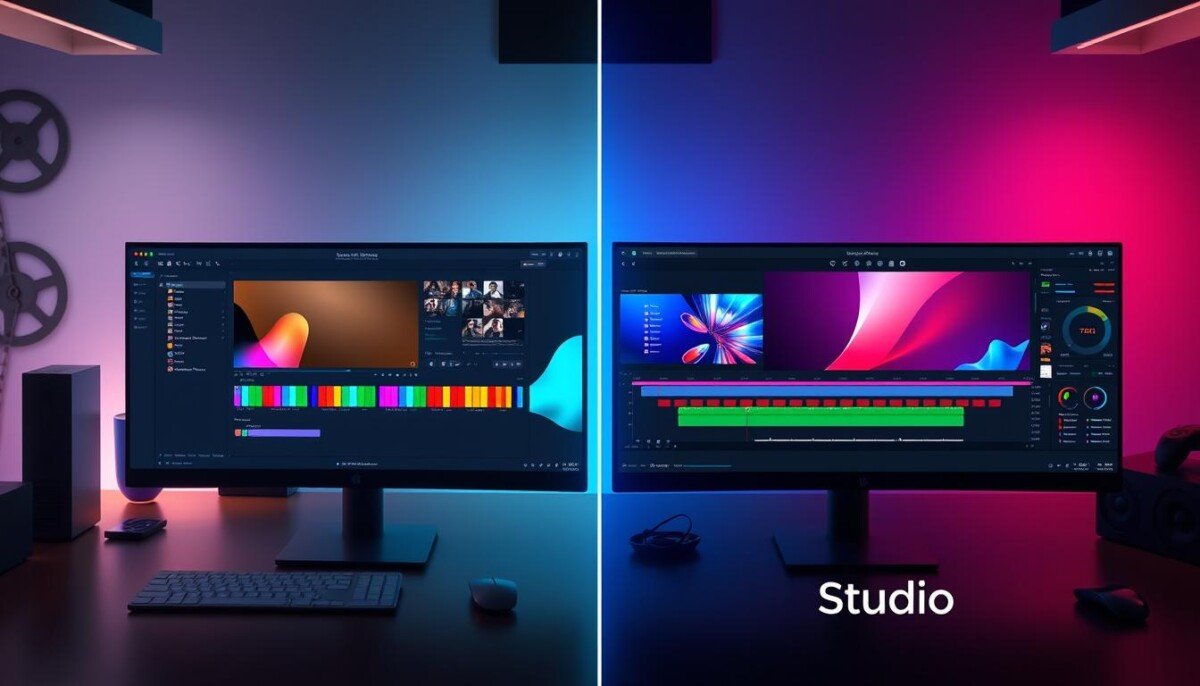
The comparison below shows how the version davinci resolve affects performance and features. It explains what the resolve free version offers and where the paid edition adds power.
Whether you edit short clips or full-length projects, you’ll learn which version davinci matches your needs. We also link to a practical guide on color grading for hands-on context: color grading workflow.
Key Takeaways
- Understand core differences between the two versions to match the tool to your workflow.
- The free edition offers professional-level color and editing tools for many users.
- The paid studio version adds advanced effects and performance gains for heavy projects.
- Start with the free build to test features, then upgrade when you need scale.
- Choosing the right version saves time and keeps your content pipeline efficient.
The Evolution of DaVinci Resolve
Blackmagic’s 2009 purchase shifted the product from a niche film tool into a full post-production suite. That change opened professional-grade tools to many more creators.
The original focus was high-end color grading for film. Over time each new version added editing, effects, and audio tools. This made the platform a true video editing software choice for studios and independents.
By combining color and editing in one app, the workflow became smoother. Artists move from grade to edit without switching programs. You save time and avoid format breaks.
Every version has grown the toolset for modern film work. The platform now supports complex timelines, advanced grading tools, and collaborative features. That steady evolution reflects a focus on quality and real production needs.
- Specialized start: color grading roots.
- Expanded scope: editing and audio added.
- Professional fit: used across film and video projects.
Understanding DaVinci Resolve Free vs Paid
Choosing the right edition starts with matching features to the size of your projects. The free version gives a powerful set of editing and color tools that suit most beginners and small teams.
Key Differences for Beginners
The free version covers timeline editing, basic grading, and core audio tools. You can deliver professional-looking content without spending money.
The studio version adds advanced features for complex work. It includes extra effects, GPU-accelerated processing, and collaborative tools that speed up large projects.
When to Upgrade to Studio
Upgrade when your projects need higher performance or specialized tools. The studio version costs a flat $295 for a lifetime license and future updates.
If you manage heavy timelines, multi-camera edits, or high-end grading, the studio version offers clear value.
- Free version is ideal for learning and small projects.
- Studio version suits pro teams and demanding workflows.
- Pay once for a lifetime license and ongoing updates.
Performance and Hardware Acceleration
Hardware acceleration makes the biggest difference when timelines grow and codecs are heavy.
davinci resolve studio uses GPU power to speed encoding and decoding for modern H.264 and H.265 formats. This matters when you export long projects or work with UHD footage.
GPU Encoding and Decoding
The studio version leverages multiple GPUs to boost overall editing performance. You get smoother playback, faster renders, and shorter export times compared with the free version.
Advanced encoding and decoding for H.264 and H.265 are built into the software. That support reduces CPU load and lets your GPU handle the heavy math.
- Enhanced performance: multi-GPU acceleration for demanding timelines.
- Faster workflows: quicker exports and real-time playback with high-res files.
- Format support: optimized H.264/H.265 tools for professional video delivery.
Investing in the studio version ensures your hardware is fully utilized. That gives you a steadier experience during critical stages of production and lets teams meet tight deadlines.
The Power of the DaVinci Neural Engine

Automated smart tools in the neural engine handle time-consuming tasks so you work faster.
The Neural Engine uses AI to run scene detection, object tracking, and facial recognition. These features cut manual effort and speed up basic editing chores.
When you use davinci resolve studio or the studio version, you unlock real-time upscaling and object removal tools. Those capabilities free you to focus on creative visual effects instead of repetitive fixes.
The free version lacks these advanced AI tools, so teams with heavy footage volumes will see clear gains from upgrading. Integrating the engine into your workflow reduces turnaround times and improves output quality.
- Automation: fast scene cuts and face tagging.
- Real-time tools: upscaling and object removal in the studio edition.
- Creative focus: spend time on effects, not repetitive fixes.
Want to compare other video editing software options? Use that guide to match tools to your workflow and scale with confidence.
Advanced Color Grading and HDR Capabilities
For work that needs exact brightness and hue, this version adds the scopes and controls pros use. You get precise measurement tools that help match deliverables to display targets.
HDR Scopes and Tools
The studio build includes advanced HDR scopes for ST.2084 and HLG images. These scopes show exact luminance and color limits so you can protect highlights and shadows.
Use these tools to align shots across HDR TVs and theatrical screens. The version offers finer control than the free version, which lacks some of these measurement features.
Stereoscopic 3D Grading
Stereoscopic grading tools let you work on left/right eye alignment and depth without switching apps. That capability is vital for 3D film work and complex color passes.
You also gain targeted effects and per-eye adjustments that keep stereo parity and cinematic intent intact.
- Consistent color: maintain the same look across all projects and screens.
- Remote grading: the resolve studio option supports multi-user collaboration on large assignments.
- Precision: advanced HDR and 3D tools speed final delivery for high-end video work.
Want a broader view of modern tools? See our guide to AI-powered editing tools to compare workflows and plugins.
Professional Audio Post-Production with Fairlight
Fairlight brings a full pro audio console into the same app so sound work no longer needs separate tools.
You get a mixing panel that supports up to 2000 tracks. That makes complex soundscapes manageable for any video project.
The studio version adds immersive formats like Dolby Atmos and Auro-3D. These advanced features matter when you need cinematic audio and real surround design.
The free version handles basic mixing and editing tools well. But teams that demand precise routing, B-chain monitoring, and large mixes will prefer the studio build.
- High track count: mix up to 2000 simultaneous audio tracks.
- Immersive formats: Atmos and Auro-3D support in the studio version.
- Pro tools: routing, bussing, and professional metering for final delivery.
Integrating Fairlight into your workflow raises the bar on your final product. You get cleaner mixes, faster turnaround, and audio that matches the quality of your picture in modern video editing work.
Visual Effects and Motion Graphics
Motion graphics and compositing lift a project from good to memorable when the right effects are available.
The studio version gives you over 100 Resolve FX plugins for motion graphics, film grain, and refined looks. These plugins speed creative edits and cut the need for extra software.
Resolve FX Plugins
Resolve FX includes advanced face refinement, stylized flares, and layer-based effects for precise control. You can add polish without long render waits.
- Extensive effects library for motion design.
- Face refinement for subtle portrait corrections.
- Built-in noise reduction to clean low-light clips.
Lens Correction Tools
Lens tools fix distortion and chromatic issues while keeping natural perspective. Use them to match shots from different cameras and lenses.
| Feature | Benefit | Who gains most |
|---|---|---|
| 100+ Resolve FX plugins | Fast access to motion graphics and looks | Motion designers, editors |
| Noise reduction | Cleaner footage without third-party plugins | Low-light shooters |
| Lens correction | Accurate geometry and color matching | Documentary and film crews |
Choosing the paid version unlocks a broad set of visual effects and lens tools. That choice saves time and keeps your video work professional from start to finish.
Media Delivery and Export Limitations

Export capability is often the deciding factor for teams that need cinema-level deliverables.
The free version limits final exports to 4K UHD at 60fps. That cap matters if clients ask for DCI 4K, high-frame-rate action, or extreme slow motion. Plan your timeline and effects with that ceiling in mind.
The studio version raises the ceiling dramatically. It supports exports up to 32K at 120fps and adds pro-grade formats like 10-bit H.264 and AVC-Intra. Those options keep color depth and image detail intact for complex grading and visual effects.
Understand export limits before you start heavy editing or long projects. Upgrading removes delivery barriers and ensures your final video meets industry specs.
| Export Item | Free Version | Studio Version |
|---|---|---|
| Max resolution | 4K UHD | Up to 32K |
| Max frame rate | 60fps | 120fps |
| Professional formats | Standard H.264/H.265 | 10-bit H.264, AVC-Intra, ProRes options |
| Best for | Online content, short projects | Feature work, high-end grading |
If you need a quick check on the product, see davinci resolve for full delivery specs and licensing details.
Multi-User Collaboration Features
Collaborative workflows let editors, colorists, and sound engineers work together live.
This software supports multiple users on the same project at once. You can edit, grade, and mix without exporting timelines or sending files back and forth.
The interface includes an integrated chat so teams stay aligned during review and turnaround. That chat reduces email delays and keeps feedback tied to the timeline.
- Shared editing: simultaneous changes cut review cycles for large projects.
- In-app chat: quick notes between editors, colorists, and audio engineers.
- Studio extras: the studio version adds marker and comment sync via Dropbox.
Working in one shared space saves time on project management and speeds delivery for complex visual effects and color work.
Want a deeper compare? See a practical guide to compare editions and check related tools at ideogram AI alternatives.
System Requirements for Optimal Editing
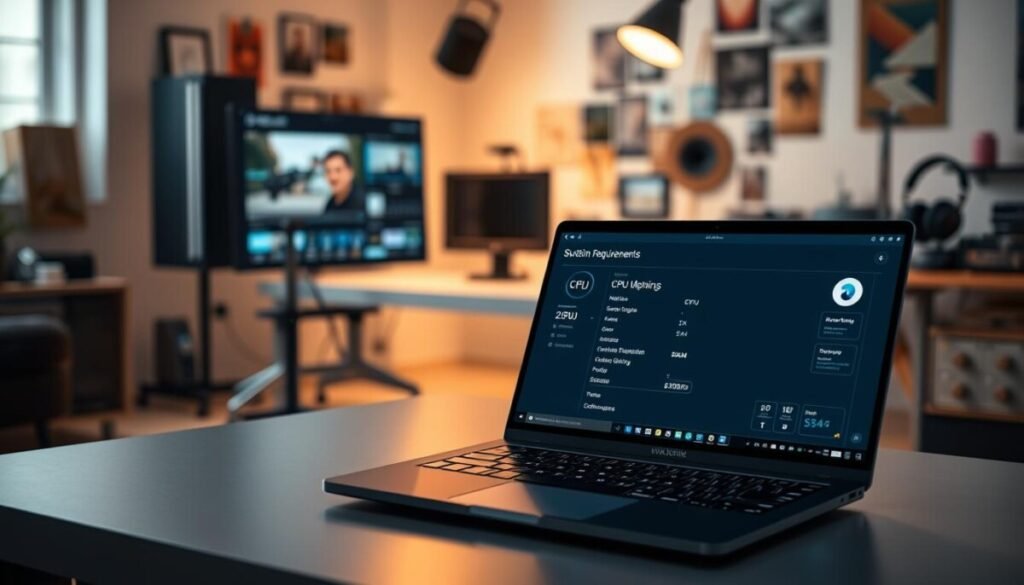
Your system defines how fast you can edit, grade, and export high-resolution video. Meet the baseline, then scale hardware to match project size and tools.
Hardware Recommendations
At minimum, plan for 16GB of RAM and a GPU with at least 2GB of VRAM. For heavy timelines and effects, aim for 32GB or more.
Storage matters: use an SSD or RAID array to handle high data rates from large video files. Separate drives for the OS, cache, and media reduce stalls and speed exports.
- CPU: faster multi-core processors cut render times and improve playback.
- GPU: multiple or stronger cards boost performance when the studio version uses advanced features.
- Drivers: the studio build requires Blackmagic Design Desktop Video driver 10.4.1 or later for certain hardware workflows.
| Component | Recommended Minimum | For Heavy Work |
|---|---|---|
| RAM | 16GB | 32GB+ |
| GPU VRAM | 2GB | 6GB–12GB+ |
| Storage | SSD | RAID SSD / NVMe |
| Drivers | OS drivers up to date | Blackmagic Design Desktop Video 10.4.1+ |
Investing in robust hardware ensures steady performance for the full post-production suite. That reduces noise, speeds editing, and keeps your video and audio work stable under load.
Conclusion
Pick the edition that removes your current bottlenecks and keeps delivery on schedule.
If you need basic editing, effects, and simple noise reduction, the free version is a strong starting point. It includes core tools and the neural engine basics in davinci resolve free to speed routine tasks.
For high resolution work, face refinement, HDR, advanced lens correction, and deeper noise reduction, the studio version better serves professional content. The paid version adds the extra effects and color tools you’ll rely on for polished final delivery.
Your creativity still drives results. Choose the version that matches your workflow and budget, then focus on making great video.