Curious which tool will make your live stream look and run better? Choosing the right streaming software shapes your content, audience growth, and production time.
OBS Studio is open source and gives you deep control of video, audio, scenes, and sources. It tends to use less CPU and suits users who want flexibility and plugin support.
Streamlabs builds on that base and packages chat, alerts, widgets, and overlays into a simpler interface. It can speed setup for newcomers, and a paid tier adds multistreaming to multiple platforms.
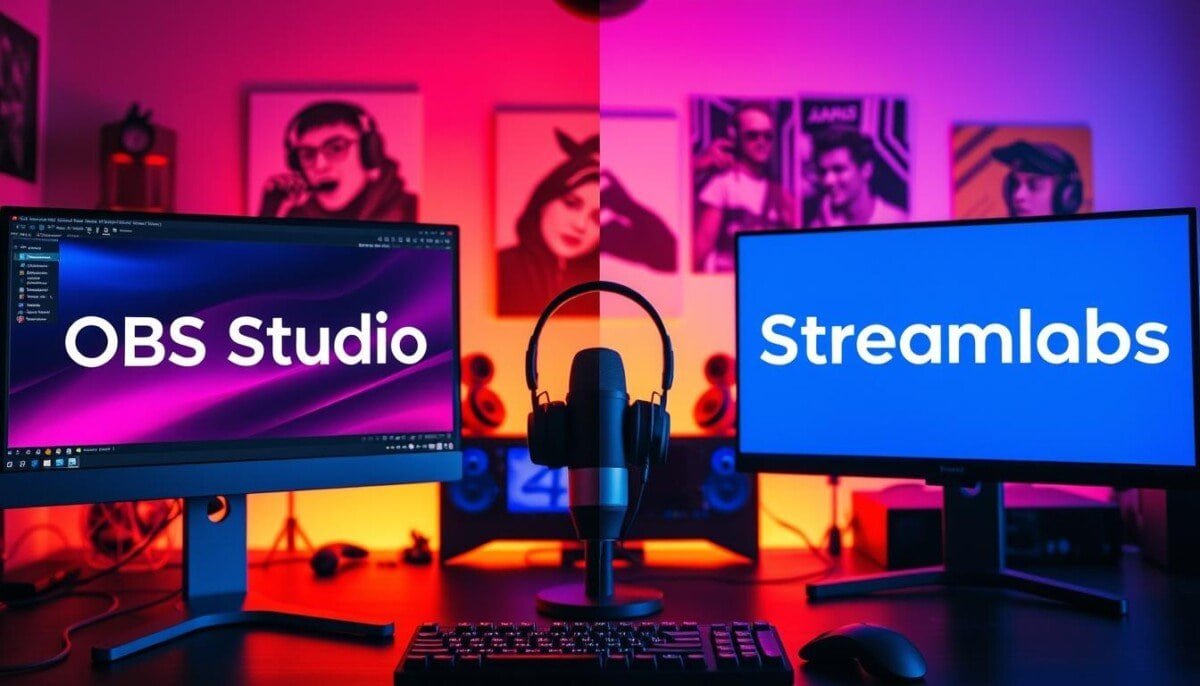
The best choice depends on your goals, hardware, and how much time you want to spend on setup and performance tuning. Below is a quick visual to help you decide.
Key Takeaways
- Open-source studio offers more control and lower CPU use for budget rigs.
- All-in-one desktop speeds setup with built-in chat, alerts, and overlays.
- Both handle scenes, recording, and live streaming; setup time varies by skill.
- Premium plans add multistreaming to multiple platforms for a yearly fee.
- Pick based on performance needs, interface preference, and long-term goals.
Understanding the Core Differences Between OBS vs Streamlabs
Choosing between these tools comes down to control versus convenience. One is a true open broadcaster software foundation. The other packages that engine into a full creator workspace.
The free obs studio build is open source, runs on Windows, macOS, and Linux, and gives power users a modular Dock UI to arrange video, screen, and audio sources. That modularity makes it ideal for deep customization and a large plugin library driven by the community.
Streamlabs Desktop wraps that engine with integrated alerts, chat, and ready-made overlays to speed setup for new streamers. It focuses on growth tools and a polished dashboard, but it skips Linux and can use more CPU because of extra widgets.
- Open broadcaster software = extensible core and low-level control.
- Studio streamlabs = fast setup, built-in audience tools.
- Both support live streaming and recording; pick based on your hardware and workflow.
Software Architecture and User Interface Design

Interface design often decides whether you finish a setup in minutes or spend hours tweaking settings. The software architecture shapes what you can customize and how fast you work.
Design Philosophy
Open broadcaster software like obs studio gives you a modular “Dock” UI. You can pop out windows and build a workspace that fits your process.
The blank-canvas approach suits power users who want fine control over audio, video, and recording sources. It favors flexibility and community-made plugins over packaged convenience.
Ease of Use for Beginners
Some platforms focus on a modern, friendly interface so new streamers start broadcasting in minutes. Built-in chat, alerts, and a pre-broadcast test mode reduce setup friction.
If you want both worlds, the Streamlabs Plugin for OBS lets you add integrated tools into the studio workspace. That keeps performance lean while adding growth features and chat support.
- Modular UI: great for custom workflows and low-level control.
- Friendly interface: speeds onboarding and limits technical setup time.
- Plugin bridge: combines convenience tools with a high-performance core.
For a practical comparison of tools and platform fit, see our complete guide to live streaming tools for.
Performance Metrics and CPU Resource Management

CPU headroom often decides whether your stream runs smoothly while you play. That headroom comes from how the streaming software handles encoding, widgets, and background processes.
OBS Studio consistently uses about 20–30% less CPU under the same scene and source setup. That lower footprint helps maintain high frame rates on mid-range systems.
Both platforms need at least 8GB of RAM. For high-bitrate streaming or recording, plan for 16GB or more to avoid frame drops and recording glitches.
Impact on System Resources
Browser-based widgets increase CPU usage. The all-in-one client runs web processes to power alerts and chat, which adds load compared with a lean encoding build.
- Performance: Choose the lower-CPU option if you prioritize stable frame rates while gaming.
- Flexibility: A more modular setup gives you finer control over sources, audio tracks, and file formats for recording.
- Setup time: Expect more initial tuning for maximum stability, but better long-term performance.
If you want step-by-step help tuning encoder and bitrate settings for your hardware, see our complete guide to live streaming for practical tips and tool comparisons.
Customization Options and Plugin Ecosystems

Your stream’s personality comes from the tools and plugins you choose. Powerful APIs and marketplaces let you tune visuals, audio, and engagement tools without heavy coding.
obs studio exposes a robust API for Lua and Python scripts. That lets advanced users add custom hotkeys, automated scene changes, and precise audio routing.
Its plugin library includes VST support for pro-grade audio and NDI for multi-camera setups. Third-party plugins can replicate many built-in features of competitor software while keeping CPU use low.
On the other hand, streamlabs focuses on themes, widgets, and a one-click overlay marketplace. Creators get ready-made alerts and overlays that speed setup and keep a polished look.
- Limitless plugin options for deep customization on the software side.
- One-click themes and widgets to maintain a consistent channel aesthetic.
- Lower CPU impact when you choose modular plugins over many integrated features.
Streaming Platform Integration and Multistreaming Capabilities
Where you send a live signal shapes reach and workflow. Native platform support reduces setup time and helps you focus on content and audience growth.
Native Platform Support
One-click logins for major platforms speed up setup for frequent streamers. Built-in integrations let you switch between Twitch, YouTube, and Facebook with minimal fuss.
Multistreaming Strategies
Multistreaming through a single service simplifies distribution to multiple platforms at once. A paid tier can push your video and audio to many endpoints without extra tools.
- Use a built-in multistream service to reduce local CPU load and save time.
- Choose a relay service when you need custom destinations or advanced routing.
- Test vertical formats for short-form platforms that accept mobile-oriented streams.
Managing Stream Keys
Manual RTMP keys give you total control over destinations and settings. They require more setup time but avoid third-party subscription costs.
| Feature | Ease of Setup | Control |
|---|---|---|
| One-click platform login | High | Moderate |
| Built-in multistream (paid) | High | Low–Moderate |
| Third-party relay (RTMP) | Moderate | High |
| Aggregated chat across platforms | High | Moderate |
Evaluating the Value of Premium Subscription Features
Deciding whether to pay for advanced creator tools comes down to clear return on time and revenue. Streamlabs Ultra is $149 per year and adds multistreaming, custom tip pages, advanced analytics, and exclusive overlay themes. These features speed setup and reduce the manual work of juggling settings across platforms.
If your priority is a fast, all-in-one workflow, the subscription can pay for itself in saved hours and simpler monetization. Ultra also removes watermarks and bundles creative tools like Cross Clip, Talk Studio, and a video editor to polish content.
By contrast, obs studio remains fully free. Many users combine that software with free browser sources and third-party tools to match premium themes, alerts, and widgets without a subscription.
- When to subscribe: you need built-in multistreaming, custom tip pages, or time savings for professional output.
- When to skip: you have time to assemble free tools and prefer a no-cost platform like obs studio.
Exploring Alternatives for Specialized Streaming Needs
Cloud and browser tools can offload heavy processing and simplify complex broadcasts. These options suit creators who need remote scene control, team collaboration, or wide multistream reach.
Cloud-Based Streaming Solutions
Lightstream handles encoding and overlays in the cloud, so your local PC uses far less CPU. This makes high-quality broadcasts possible from modest hardware.
XSplit offers a polished, professional interface and strong multi-camera support. It works well for events that need 3D scenes or fast scene switching.
Restream Studio runs in your browser and sends your feed to 30+ platforms at once. It’s ideal when your priority is reach and simple multistreaming without extra relay tools.
These alternatives often add specialty features like remote scene switching, cloud collaboration, and dedicated support for multi-camera setups. They can replace or complement your current setup.
- When to pick cloud tools: You want high-quality output without upgrading hardware.
- When to pick XSplit: You need a professional UI and multi-camera control.
- When to pick Restream Studio: You aim to broadcast across many platforms simultaneously.
Testing different tools is the best way to find what fits your workflow. While obs studio remains great for deep customization, these services solve specific limits and speed up production.
Choosing the Right Software Based on Your Streaming Goals
Your streaming goals should guide whether you prioritize convenience or deep control in your toolkit. If you want a plug-and-play start, pick the software that gets you live fast. If you need precise audio and scene control, choose the option built for power users.
Beginners who want built-in alerts, chat, and quick themes will save time with Streamlabs Desktop and a guided setup. That path reduces friction and speeds audience growth for new channels.
Advanced users and podcasters who need separate audio tracks, custom scenes, and low CPU use will benefit from obs studio for long-term performance and flexibility.
| Goal | Recommended software | Why it fits |
|---|---|---|
| Fast setup and alerts | Streamlabs Desktop | Built-in widgets and themes save setup time |
| High performance and audio control | obs studio | Lower CPU use and separate audio tracks for editing |
| Multistream to multiple platforms | Streamlabs Ultra (paid) | Native multistreaming reduces manual routing |
Remember that Twitch Studio was discontinued in 2024, leaving these two primary options for Twitch creators. Test both on your machine and pick the software that fits your hardware, time, and comfort with settings.
For a deeper look at feature trade-offs and platform fit, read our streaming comparison to help finalize your choice.
Conclusion
Pick the tool that fits your workflow, hardware, and how hands-on you want to be.
You can favor low-CPU performance and deep control with obs studio, or choose a faster setup with built-in engagement tools in streamlabs.
Both software options provide strong streaming features and professional outputs. Test each on your machine to compare real-world performance, overlays, and multistreaming needs.
Your final choice should support consistent content and align with your growth plan. Spend time creating, then refine settings as your channel grows.