Curious whether moving your primary email to a privacy-first provider will actually protect your messages? This intro guides you through what matters most: account control, inbox handling, and real-world security.
Founded by CERN scientists in Geneva in 2014, the service grew fast as users sought better privacy. It offers end-to-end encryption so messages stay protected from send to receipt.
We test how this secure email provider manages your inbox, access, and feature set. You’ll get clear answers about the free plan, encryption strength, and whether the switch is worth the time.
For a broader look at end-to-end protection across services, see our guide on end-to-end encrypted cloud storage, which explains zero-knowledge and master key concepts that also affect email security.
Key Takeaways
- The service centers on strong encryption for private emails.
- Account control and recovery policies affect long-term access.
- Free plans can be enough for basic user privacy needs.
- Switching matters most for those who value confidentiality.
- We focus on features that impact daily workflow and security.
Understanding the Proton Mail Ecosystem
What began in a CERN lab is now a connected set of privacy tools for everyday users. The team launched the project in 2014 after raising over $500,000 via crowdfunding. That early support proved demand for a secure email provider outside Big Tech.
The Origins at CERN
The founders met at CERN in Geneva and built a service focused on strong encryption and simple account control. They run their own servers in Switzerland to keep your data under strict privacy laws.
The Integrated Product Suite
The company now offers a unified account that covers email, calendar, cloud storage, and a VPN. This set of products is built so features work together across web and mobile apps.
- Unified account access for all services
- Encrypted storage and calendar synced with email
- Self-hosted servers in Switzerland for stronger privacy
| Product | Primary Use | Key Benefit |
|---|---|---|
| Secure messages | End-to-end encryption for user privacy | |
| Drive | Encrypted storage | Protects files outside Big Tech |
| Calendar | Private scheduling | Encrypted events and invites |
| VPN | Network privacy | Hides traffic from ISPs and trackers |
For users weighing storage options, see our guide to the best cloud storage for large files to compare encrypted alternatives.
Core Security and Encryption Standards
At its core, the platform uses proven cryptography to protect every message.
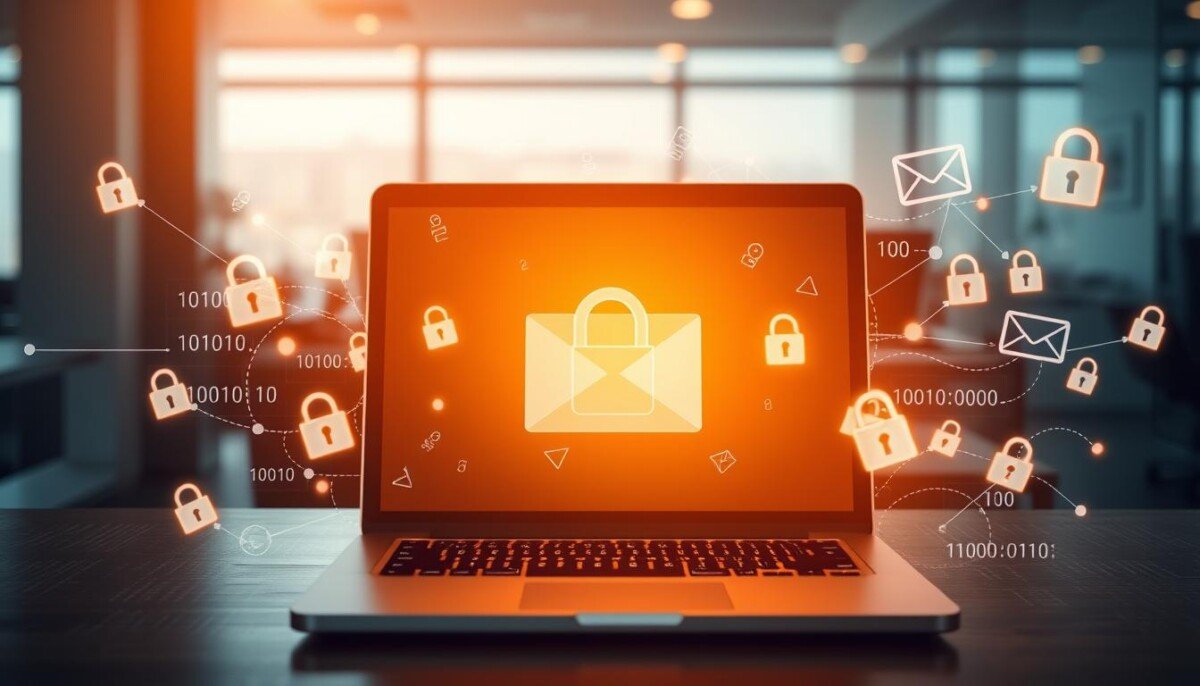
The service implements the OpenPGP standard to provide end-to-end encryption for email exchanged between compatible users. This means the content is encrypted on your device and only the recipient can decrypt it.
All data stored on Swiss servers is protected by zero-access encryption. Even the company cannot read your stored messages because keys stay with users.
- OpenPGP secures messages between users and outside contacts.
- Zero-access keeps stored data unreadable, even if servers are breached.
- Swiss law adds legal protections for user information and privacy.
| Security Layer | What it protects | Why it matters |
|---|---|---|
| OpenPGP | Emails in transit | Ensures only intended recipients can read messages |
| Zero-access encryption | Stored data on servers | Prevents internal or external reading of your files |
| Jurisdiction (Switzerland) | User information and legal access | Stronger privacy laws limit government data requests |
These measures reduce your digital footprint and lower the risk of unauthorized access. If you need secure file backup, compare encrypted cloud storage options at encrypted cloud storage options to keep data protection consistent across services.
Conducting a Comprehensive Proton Mail Review
We ran hands-on tests that measured speed, encryption behavior, and everyday usability on desktop and mobile.
Our methodology focuses on real use. We check how the service handles large attachments, slow networks, and sync across apps.
We also inspect data handling. That includes how the company responds to a court order and what logs remain in an account.
- Performance and usability under varied network conditions.
- Verification of encryption claims and message protection.
- Comparison of the free plan to paid products for value and storage.
| Test Area | What we checked | Key takeaway |
|---|---|---|
| Performance | Sync speed, attachment handling | Works well on modern networks; older devices lag |
| Encryption | End-to-end behavior, key handling | Strong protection when used between compatible users |
| Data & Compliance | Court order handling, logs | Clear policies, Swiss jurisdiction aids privacy |
| Plans & Features | Free vs premium, storage and extras | Free plan covers basics; paid plans add useful tools |
Funding history matters. The 2015 $2M investment and the 2019 €2M EU grant helped scale infrastructure and add encrypted products.
User Interface and Daily Experience
Daily use depends on clear layout, fast response, and predictable controls. The updated interface from April 2022 brings a consistent look across web and mobile. That makes switching easier and reduces training time.
Customizing the Inbox
You can change layout, themes, and density in settings. Custom views and labels help you surface important messages quickly.
The Bridge lets you connect your encrypted account to desktop clients like Outlook or Apple Mail while keeping end-to-end encryption.
Composer Window Functionality
The composer is simple and focused. Add attachments, set a password for external recipients, or schedule a message for later.
These features save you time and keep external messages protected even when recipients use a standard email address.
Keyboard Shortcuts
Built-in shortcuts speed up triage and folder navigation. Power users can move through messages, archive, or compose without touching the mouse.
- Fast search and labels keep access private.
- The web version stays responsive with large inboxes.
Managing Contacts and Calendars
A secure address book and a private calendar make daily work safer and simpler. The service added a native calendar on December 20, 2019, after a year of engineering work. That launch helped tie scheduling to secure email and storage in one account.
Contacts are stored with zero-access encryption, so the company cannot read your data. Each contact entry also uses digital signatures to prove the information has not been altered since you saved it.
Syncing your calendar with your inbox lets you track appointments and deadlines without exposing private information to third-party trackers. You can import existing contacts and calendars from other services to make the switch smooth.
- Secure contact manager: zero-access encryption protects stored info.
- Signed entries: digital signatures verify contact integrity.
- Calendar sync: schedule, invite, and keep events private.
| Feature | What it does | Benefit |
|---|---|---|
| Contacts | Encrypted, signed entries | Prevent tampering and unauthorized reads |
| Calendar | Private scheduling and invites | Keep event details away from trackers |
| Import & Sync | Move data from other accounts | Smooth transition for new users |
Overall, proton mail’s contact and calendar tools act like a secure password manager for your address book. They support a private daily workflow and reduce the risk of exposing messages or other information.
Advanced Security Features for Business Users

Early detection of suspicious logins can stop a breach before messages or files are exposed. Business accounts need continuous monitoring and clear audit trails to prove who accessed what and when.
Proton Sentinel and Threat Protection
Proton Sentinel pairs AI with human analysts to flag and block odd login behaviour from unknown IPs or strange locations. This hybrid approach improves detection while reducing false alarms.
Administrators get detailed security logs to trace every access event. Those logs help you spot unauthorized attempts and meet compliance needs.
- Layered detection: AI scans signals and experts validate threats.
- Actionable logs: Full access records show who touched an account.
- Custom challenges: Enforce 2FA or stricter checks for risky sign-ins.
The same protections extend to calendar and storage, so your whole business ecosystem uses the same end encrypted protocols. For added account security, pair these tools with a reliable password manager like best password managers.
Recommendation: Enable Sentinel and strict settings if your team handles sensitive data. These features reduce the chance that messages, addresses, or stored files leave your control.
The Reality of Anonymity and Privacy
Using an encrypted email service improves privacy, yet it does not make you invisible online.
End-to-end encryption keeps your message content and attachments unreadable to the provider and third parties. That protection covers emails stored on the servers and in transit between compatible users.
However, the company can be required to comply with a valid Swiss court order. In specific cases it may log non-encrypted account metadata, such as an IP address, when ordered or when terms are violated.
To lower exposure, consider pairing the service with a trusted VPN and strong account passwords. These steps reduce the chance that an IP address ties back to you.
The provider publishes transparency reports that list legal orders they received and how they responded. This openness helps users judge risk and trust the service.
- The service does not scan emails for ads or sell personal information.
- It is not a shield for illegal activity; legal requests can still reveal certain data.
- Privacy is a process—using this account is a meaningful step toward stronger protection.
Account Creation and Migration Tools

You can set up a private account fast and bring over years of emails with an automated tool. The process takes only a few minutes and gives you immediate access to the web version so you can work from any device.
The Easy Switch Process
Easy Switch imports emails, contacts, and calendar entries from popular providers like Gmail or Yahoo. It runs in the background and automates the heavy lifting so you do not lose old messages or scheduling data.
The tool preserves folder structure and moves attachments and storage metadata when possible. That saves time and reduces manual cleanup after migration.
Handling Verification Requirements
New account creation may trigger SMS or email verification if the system spots unusual activity. Using a VPN can sometimes cause these checks, so expect a short verification step when that happens.
- Fast setup: Start using your secure email address in minutes.
- Archive migration: Keep years of communications and contacts intact.
- Safety checks: Verification helps stop spammers while protecting other users.
- Recovery options: Set a recovery password or email during setup to avoid lockout.
The service guides you through settings and the account recovery flow so access remains smooth. For help when you cannot update your account email, check this guide on update my email for related steps and tips.
Evaluating the Pricing Tiers
Pick the right level when you care about privacy, storage, and professional features.
Free plan: A good starter account with 500MB of storage. It lets you try the core encryption and basic inbox controls before you commit.
Mail Plus: Offers 15GB of storage and suits professionals who keep many encrypted attachments. Paid plans unlock a custom email address and extra features for business use.
Unlimited: Provides 500GB of storage and access to the full suite—secure calendar, drive, and VPN—making it best for power users.
- Yearly billing reduces cost compared to month-to-month.
- Every paid tier supports a custom email address for businesses.
- Pick storage based on how much encrypted data you keep; add a strong password and backup method.
| Plan | Storage | Best for | Key features |
|---|---|---|---|
| Free | 500MB | Casual users testing encryption | Basic inbox, limited aliases |
| Mail Plus | 15GB | Professionals with regular attachments | Custom email address, larger storage |
| Unlimited | 500GB | Power users and small teams | All services included: calendar, drive, VPN |
| Yearly Billing | — | Cost-conscious users | Discounted rates vs monthly |
We recommend you evaluate storage needs and compare costs. If you want more context on encrypted storage across tools, see our guide to end-to-end encrypted cloud storage.
Comparing Proton Mail to Competitors

Choosing an email provider comes down to which trade-offs you accept between privacy and ease of use. This short comparison helps you see the main differences and decide which options fit your workflow.
Tuta (formerly Tutanota) encrypts subject lines and more metadata. That makes it a strong pick for people who want deeper privacy, though it can limit interoperability with third-party apps.
Fastmail focuses on a polished interface and great integration with tools like a password manager. It does not offer the same end-to-end encryption, but it can be easier to use for teams that need broad app support.
The platform we tested stands out by bundling secure storage, a VPN, and a calendar with its core mail service. For most professionals, that blend of security and features hits the best balance between protection and daily productivity.
- Pick Tuta if subject-line and metadata encryption matter most.
- Pick Fastmail for a familiar, integrated user experience.
- Pick the bundled suite for a one-stop private account with extra services.
| Provider | Strength | When to choose |
|---|---|---|
| Tuta | Metadata encryption | High privacy, fewer third-party integrations |
| Fastmail | Usability and integrations | Teams needing app support and simple setup |
| Proton Mail | Suite of private services | Professionals who want security plus tools |
Every user should evaluate their threat model. No single provider is perfect, so match your needs for security, features, and workflow before you move your email address and messages.
Potential Limitations and Trade-offs
Every encryption choice has practical trade-offs that affect how you use email day to day.
The Subject Line Encryption Challenge
Subject lines are not end encrypted because the OpenPGP standard requires them to stay readable for delivery and routing.
This design keeps messages compatible with other services and preserves search and threading features you rely on.
However, the downside is clear: subject text is part of metadata that could be accessed if a valid court order targets account logs.
If absolute metadata privacy matters to you, consider providers that encrypt more metadata, such as Tuta. That choice may reduce interoperability with common clients and limit some features like server-side search.
- Trade-off: readable subject lines for delivery and search.
- Risk: metadata could be disclosed under legal orders.
- When to choose alternatives: you need total metadata secrecy.
The company is open about these limits, which helps you weigh what is and is not protected.
For most users, the strong message encryption and broader services still deliver meaningful privacy and security while keeping everyday features intact.
Mobile App Performance and Accessibility
The mobile client brings most desktop features into a compact, fast app.
The Android and iOS apps give you secure email access on the go. You can open messages, send attachments, and schedule sends from the same interface you use on the web version.
Security is easy to set up. Protect the app with a PIN or biometric login so your account stays safe if the device is lost.
All key features work in the app. You can set a password for external messages, switch between email, calendar, and storage, and adjust settings without returning to a desktop.
The app loads quickly and keeps the interface clean. That makes organizing your inbox fast and reduces time spent hunting for messages.
Accessibility options are built in, and updates arrive regularly with security patches and new features. We suggest downloading the app to keep access seamless and to get the most from your subscription.
| Area | What to expect | Benefit |
|---|---|---|
| Authentication | PIN & biometric unlock | Quick, device-level security |
| Feature parity | Compose, schedule, passworded messages | Same controls as web version |
| Performance | Fast loading, smooth sync | Less time managing mail on the move |
| Unified access | Email, calendar, storage in one app | Fewer app switches, better workflow |
Conclusion
This proton mail review confirms the service is a powerful, reliable choice if you want stronger digital privacy. It pairs robust encryption with an easy-to-use suite, so you get protection without a steep learning curve.
There are trade-offs: subject lines remain readable for delivery, which limits full metadata secrecy. For most users, that small compromise does not outweigh the benefits.
Bottom line: the switch is worth it for professionals and privacy-minded individuals. Prioritize secure passwords and recovery options, and you will gain real peace of mind knowing your communications use industry-leading protection.