
Question: Can enabling a specific audio protocol turn every call meeting into a reliably clear professional exchange?
Authorize system-level adjustments before live sessions. Apply the documented steps to optimize computer audio. Confirm microphone permissions in the operating system and browser.
Implement the recommended configuration to keep primary speakers audible during meetings. This protocol reduces disruptive background and hardware feedback. The guide has 35,348 views as of March 07, 2026. A total of 398 professionals marked these instructions as helpful.
Use a headset and a stable internet connection for consistent results. Access platform features via a compatible browser. Learn about platform selection and tools at online meeting tools overview.
Key Takeaways
- Enable the setting to prioritize the speaker in every call.
- Verify computer audio and microphone permissions before meetings.
- Use a headset and stable network for high-fidelity calls.
- Follow the step-by-step protocol—398 users found it effective.
- Access a compatible browser to unlock all meeting features.
Understanding Webex Noise Cancellation Capabilities
The platform applies real-time processing to suppress common background sources on the user’s side of every call.
The default configuration sets noise removal as active for all sessions. The system identifies non-speech energy and filters it from the audio stream. This isolates the speaker and preserves intelligibility.
Advanced algorithms classify sounds — steady tones, transient clatter, and background speech. The software applies targeted removal to each class. Maintain the default mode for consistent results across meetings.
- Function: Identify and eliminate background components in real time.
- Method: Process the audio stream to isolate user speech.
- Outcome: Clearer side of the conversation for all participants.
| Mode | Primary Effect | Typical Impact |
|---|---|---|
| Default | Continuous noise removal | Stable audio clarity for individual speakers |
| Enhanced | Aggressive background suppression | Better in loud settings; may lower ambient cues |
| Balanced | Preserve natural room audio | Useful for group scenarios; moderate removal |
For platform comparisons and tool selection consult the online meeting tools overview. Apply default settings before modifying advanced parameters.
How to Enable Webex Noise Cancellation on Your Computer
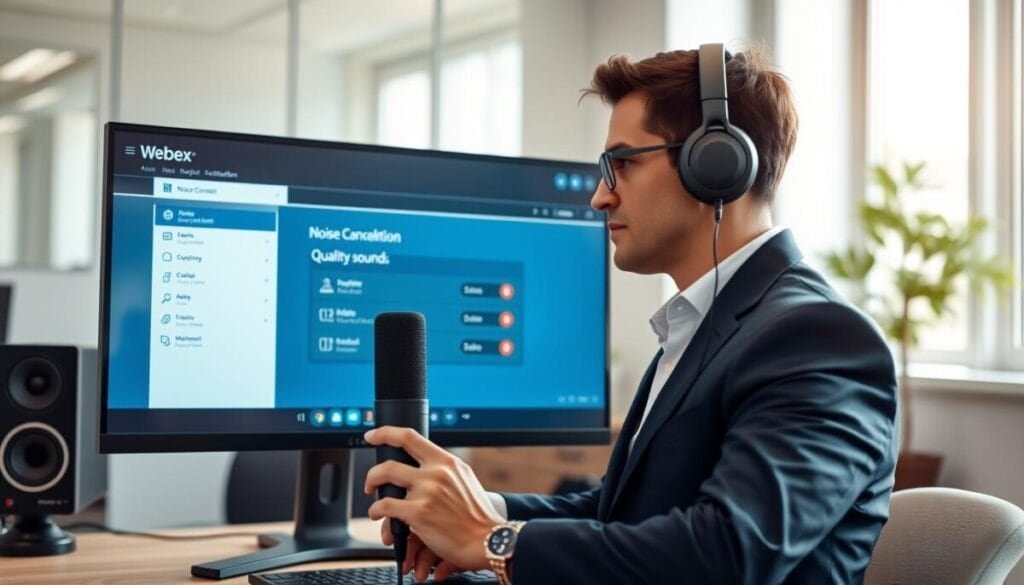
Access the in-meeting audio menu to set smart audio preferences for the current call.
Accessing Audio Options
Open the meeting window. Click Audio options on the toolbar. Select the drop-down under smart audio.
Users running version 41.9 or later must use this menu to configure smart audio for the current meeting. Choose the option that best removes background noise and background speech.
Saving Your Settings
On Windows, click Save after selecting the desired option. This action applies the computer audio configuration to future calls and meetings.
Confirm the default removal mode or change it to suit the side of the conversation. Ensure the computer remains the primary clear audio source.
- Navigate to Audio options to set smart audio for this call.
- Select one following the smart audio presets to remove background noise.
- Click Save on Windows to persist settings across calls.
| Action | When to Use | Effect |
|---|---|---|
| Select Default | Everyday calls | Balanced removal; preserves natural room cues |
| Choose Aggressive | Loud background or shared spaces | Stronger removal of background noise; clearer voice |
| Save Settings | Windows systems | Applies computer audio configuration to future meetings |
Selecting the Right Smart Audio Mode for Your Environment

Select a smart audio mode based on room size and activity to preserve voice clarity.
Optimizing for Personal Voice
Choose optimize voice to remove background speech and ambient noise. This setting is available on Board and Desk Series hardware.
Enable the setting for users in busy locations. The system filters background noise and improves speech intelligibility.
Enhancing Group Conversations
When in a conference room, select optimize for all voices. This mode raises distant voices while suppressing unwanted background.
Use this option for round-table meetings to ensure every participant is captured with precision.
Using Music Mode
Music mode preserves the original timbre of instruments and vocal dynamics. Choose this mode for lessons, concerts, or any session with musical content.
Music mode provides a specialized audio profile that keeps vocals and instruments intact while limiting disruptive ambient noise.
- Select optimize voice to remove background speech and noise on supported hardware.
- Pick the correct mode—solo, group, or music—to tune the audio for the meeting.
- Users must choose one following the smart audio modes to ensure consistent results.
| Mode | Primary Use | Effect |
|---|---|---|
| Optimize Voice | Solo or noisy locations | Filters background noise; enhances speech |
| Optimize for All Voices | Conference rooms | Balances distant voices; reduces unwanted ambient |
| Music Mode | Concerts, lessons | Preserves instrument and vocal fidelity |
Maintaining Consistent Audio Quality for Future Meetings
Verify that noise removal remains active so the speaker side stays clear in every call meeting. Run a brief settings check before important calls. Confirm the computer audio profile is set to remove background interference.
Schedule periodic audits of audio settings. Ensure background noise filters operate and update defaults when software or hardware changes. Toggle music mode only when the session requires preserved tonal fidelity.
Follow a systematic checklist — enable removal, confirm device permissions, and test sound. For industry-focused guidance and setup tips consult the best practices for legal teams.