Curious why many sites serve tiny, sharp images and whether you should change their format for your projects?
WebP is a modern image format from Google that blends quality with advanced compression. It keeps file sizes small so pages load fast across the web.
PNG has been the reliable, open standard for crisp graphics and transparent photos since 1996. Some tools let you convert webp images when a design or browser needs a different file type.
When you work with images, understanding these formats helps you pick the right option for performance and look. Our editor and converter tools streamline conversion and protect visual quality for photos and video thumbnails.
Read on to learn practical steps and when each format makes sense for your site and files.
Key Takeaways
- WebP reduces file sizes while keeping high visual quality.
- PNG is best for transparency and lossless graphics.
- Use conversion when a browser or editor needs a specific format.
- Choose the right format to optimize load time and appearance.
- Modern tools keep photo and video assets intact during conversion.
Understanding the WebP to PNG Converter
You need a fast, reliable tool that handles many images at once. Our webp to png converter processes up to 20 files in a single batch. It saves time when you manage thumbnails, photos, or video artwork.
Security and privacy matter. All uploads use 256-bit SSL and are erased after a few hours. That keeps your work private without extra steps.
Use the online tool from any browser. No installs. The service supports high-res photo assets and video thumbnails. It delivers consistent results across many file types.
- Batch processing: up to 20 items at once.
- Privacy: encrypted upload and automatic deletion.
- Browser-based: instant access, zero setup.
| Feature | Max Items | Security | Use Case |
|---|---|---|---|
| Batch convert | 20 files | 256-bit SSL | Thumbnails & photos |
| Online access | Any number via sessions | Auto-delete | Quick edits, no app |
| Format support | Multiple image types | Encrypted transfer | Web and print assets |
Simple Steps to Convert Your Files
Follow a few quick steps and you can have ready-to-use PNG files in moments. The process is designed for speed and clarity. It works in any modern browser and keeps your workflow simple.
Uploading Your Images
Click the “Choose Files” button or use the drag drop area to add up to 20 items at once. You can upload image batches, including high-res photos and thumbnails.
The tool starts processing automatically. Progress updates show each file status so you know when conversion is complete.
Downloading Converted Files
When the status reads Done, click “Download PNG” for each item or download all results in one zip. Files save directly to your device.
This image converter keeps quality intact and trims file size for faster page loads. If you need tips on format choices, check our SEO optimization tools guide.
- Upload image files via button or drag drop for quick batch jobs.
- The tool processes webp images and generates crisp png files with minimal size impact.
- Download files png immediately after the conversion finishes to keep work moving.
| Step | Action | Result |
|---|---|---|
| 1 | Upload image files | Batch added (up to 20) |
| 2 | Automatic processing | High-quality png file output |
| 3 | Download | Files saved to device |
Why Choose PNG for Your Image Projects
When transparency and exact color matter, the right file format makes a measurable difference. Portable Network Graphics is built for preserving pixel detail and clean edges across edits.
Preserving Image Quality with Lossless Compression
Lossless compression means your image keeps every pixel after saving. This protects fine lines, text, and gradients used in logos and icons.
PNG supports RGB and RGBA color modes, so you can include transparent backgrounds for layered web layouts. That makes it ideal for product shots, badges, and interface artwork.
- Choose the png format for high fidelity and repeat edits without artifacts.
- Use png files when transparency and precise edges are essential for your web projects.
- The portable network graphics standard keeps files sharp and reliable across devices.
| Strength | Best Use | Benefit |
|---|---|---|
| Lossless compression | Logos & icons | Maintains visual quality |
| RGBA support | Layered graphics | Clean transparent backgrounds |
| Stable edits | Design workflows | No quality loss after saves |
Performance Benefits of Format Optimization
Smaller image files give your pages a clear speed advantage on mobile and desktop.
Improving Core Web Vitals
Improving Core Web Vitals
Smaller assets help lower Largest Contentful Paint and total load time. Modern formats offer better compression, which shrinks file size without visible loss.
Use responsive images with the srcset attribute so browsers pick the best match for each screen. That improves perceived speed and helps SEO.
Reducing Bandwidth Costs
Efficient compression cuts bandwidth usage and hosting bills. When each image is lighter, your site serves fewer bytes across many visitors.
Our webp png converter can convert webp png assets and other formats in bulk. The drag drop workflow makes batch jobs fast and repeatable.
Browser Compatibility Considerations
Not every browser supports every format. A smart strategy is to serve modern images where supported and fall back where needed.
Convert webp images into widely compatible files when an editor or browser requires it. This keeps visuals consistent across devices.
- Optimize images to improve Core Web Vitals.
- Reduce file size and bandwidth with efficient compression.
- Use responsive srcset and fallbacks for broad browser support.
| Benefit | Action | Result |
|---|---|---|
| LCP & load time | Use modern formats | Faster page paint |
| Bandwidth | Compress and resize | Lower hosting cost |
| Compatibility | Provide fallbacks | Consistent visuals |
Advanced Editing and Customization Options
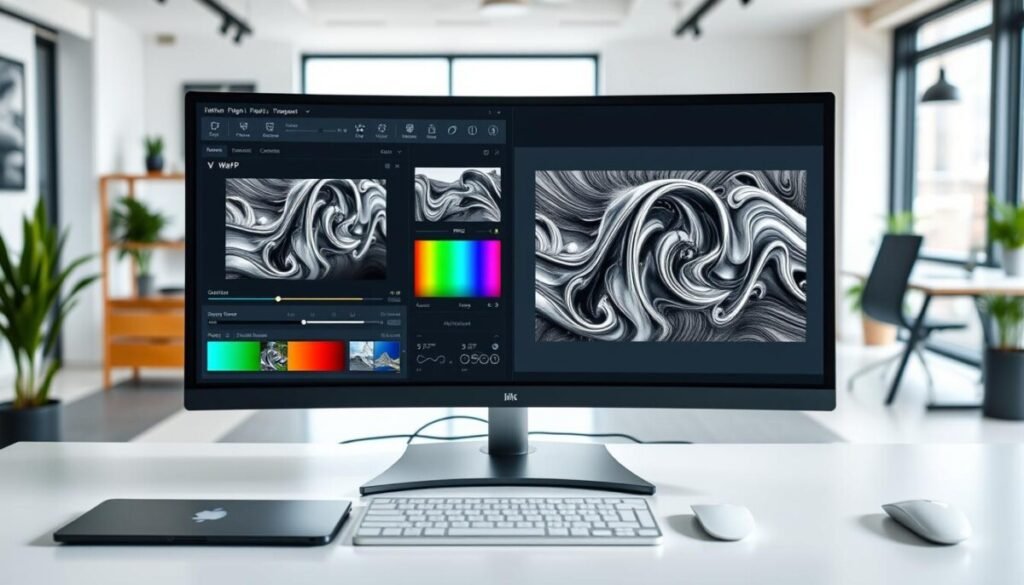
Give each file a final polish with advanced edits that keep quality intact.
After you convert webp images, open the editor to apply filters, color correction, and sharpness adjustments. The interface is simple and fast, so you stay productive.
The editor preserves lossless compression while you work. That means transparency and exact tones stay safe when you add transparent backgrounds or layer effects.
You can control file size without hurting visual quality. Export large, high-resolution files for print or lighter files for the web.
- Apply creative filters and pro adjustments without quality loss.
- Keep transparent backgrounds for clean, modern layouts.
- Balance file size and fidelity for digital or print use.
For more advanced workflows and editing alternatives, see our better editing alternatives.
Ensuring Data Security and Privacy
A secure conversion workflow means your files stay private while you work fast.
We protect every upload. Your image and video files travel over 256-bit SSL encryption. That keeps data safe in transit and during processing.
We store files in secured data centers with strict access control. Staff access is limited and monitored to prevent unauthorized viewing.
Use the drag drop area or upload image tools in your browser with confidence. Files are erased automatically after a few hours to protect your privacy.
- Encrypted uploads: 256-bit SSL for every file.
- Secure handling: systems manage webp files and png files with strict controls.
- Auto-delete: temporary storage removes items after processing.
We also offer a free webp conversion service that keeps professional photos and transparent backgrounds confidential. For more details, see our conversion guide.
| Protection | Action | Benefit |
|---|---|---|
| Encryption | 256-bit SSL | Safe transfers |
| Storage | Secured data centers | Controlled access |
| Retention | Auto-delete | Stronger privacy |
Conclusion
End with this: balance fidelity and file size for the best web results.
Converting your files to the portable network graphics format keeps quality and transparency for logos, photos, and layered designs.
Our webp png converter simplifies conversion and helps you manage image assets fast and reliably. You can also handle webp jpg and jpg webp swaps while keeping compression and file size optimized for the web.
Use responsive images and an image optimizer plugin to lower load time and bandwidth. For plugin options and best practices, see our image optimizer plugins.
Thank you for trusting our tools. Follow this method to keep backgrounds clean, photos sharp, and pages professional on every device.