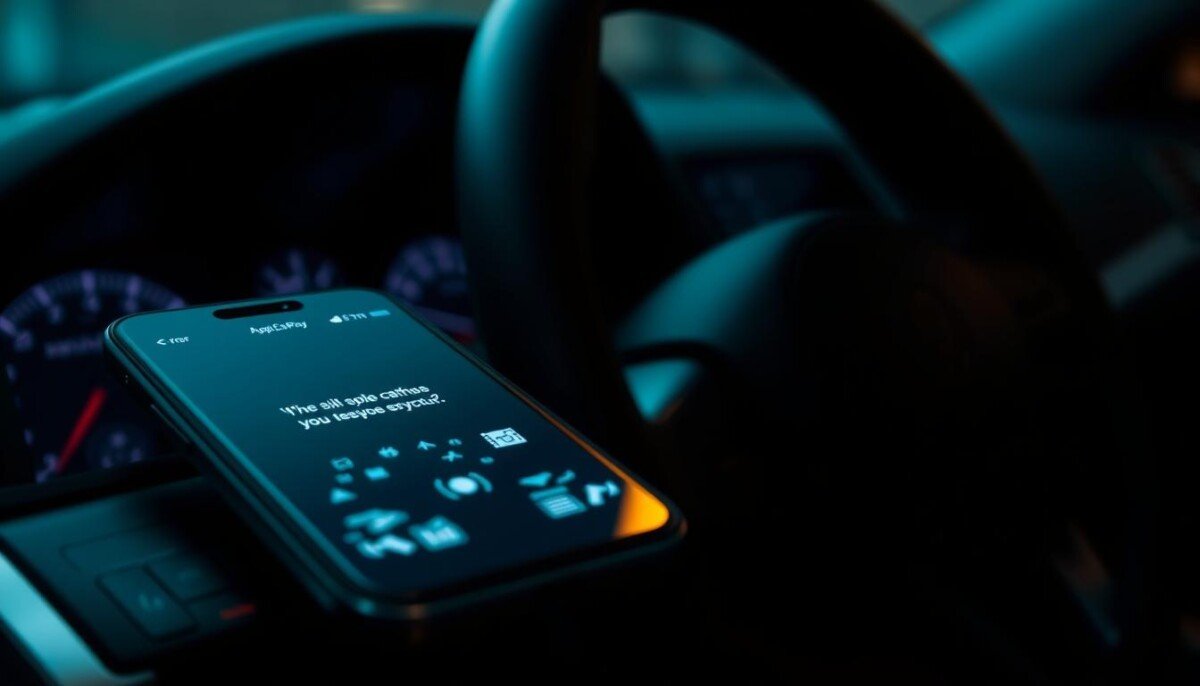
Have you ever been mid-commute and your car refuses to talk to your phone?
When Apple CarPlay fails, it can derail a busy day. A failed connection can block navigation, calls, and key apps in your car. A user with an iPhone 14 reported a persistent link error even after restarting both the car and the device.
We created a compact, no-fluff troubleshooting guide so you can fix the system fast. These steps focus on the settings that matter and the quick checks that restore the connection.
Follow these proven methods to get your devices back in sync and protect your productivity on the road. You’ll spend minutes fixing this instead of hours guessing why the device and car won’t pair.
Key Takeaways
- Quick checks of phone and car settings solve many issues.
- Restarting helps, but specific settings often need adjusting.
- iPhone 14 users may need targeted fixes for connection errors.
- Follow step-by-step troubleshooting to save time on the road.
- Restore the system fast to keep calls, navigation, and apps working.
Understanding Apple CarPlay Not Working Issues
Start by spotting the common connectivity problems that usually block the link between your phone and car.
Most issues are simple communication glitches. A cable fault, a wrong setting on the phone, or a brief system hang can interrupt the connection between your device and vehicle. These problems rarely mean hardware failure.
Chevrolet Support notes the OnStar LED may take 5–15 minutes to go out before a full reset completes. Wait that time before you restart the system to avoid confusing the process.
- Check phone and car settings for disabled ports or permissions.
- Test a second cable or USB port to rule out a bad lead.
- Confirm the car’s infotainment sees the device and allows connectivity.
| Common issue | Quick check | Expected fix |
|---|---|---|
| Loose or damaged cable | Swap cable, try another port | Restore wired connection |
| Phone permissions blocked | Open phone settings, allow car access | Apps and audio return |
| Infotainment hang | Wait OnStar LED, then soft reset | System reboots cleanly |
| Intermittent connectivity | Test Bluetooth and USB separately | Identify faulty interface |
We want you to feel at home with vehicle tech. Use these steps to save time and avoid a dealer visit. If an issue persists, the next section covers hardware and port checks.
Initial Connection and Hardware Checks
Before diving into menus, inspect the physical links between your phone and car.
USB Cable Integrity
Start with the cable. Inspect the usb cable for bends, frayed ends, or loose connectors. A damaged cable often breaks the data connection and causes intermittent issues.
Apple Support recommends using the original Lightning cable or a high-quality alternative to connect iphone to the vehicle. Carry a spare cable to test quickly.
Port Inspection
Check each usb port on the car and the phone for debris or visible damage. Small particles can stop a secure link and prevent the screen from showing the car interface.
Try a different usb port and a new cable to rule out hardware faults. If the connection returns, replace the faulty cable or have the usb port serviced.
- Use a certified cable to ensure stable data and power transfer.
- Keep ports clean and dry to protect the system and devices.
- Test an alternate cable or port before changing settings.
Verifying Bluetooth and Wi-Fi Settings
Start by checking your phone’s wireless radios so the car and device can handshake cleanly.
Both Bluetooth and Wi‑Fi must be enabled on your phone for wireless apple carplay to link. Open your phone settings and confirm each toggle is on.
When you reach your car settings, make sure the vehicle is authorized to communicate with your phone. Look for the vehicle name under paired devices and grant any prompt to trust the device.
If the phone fails to pair, switch Bluetooth off and on to refresh the connection. This often clears small errors within the system and restores service quickly.
- Confirm the car appears as a trusted device in your phone settings.
- Keep Bluetooth and Wi‑Fi active so the car recognizes your phone automatically.
- Ensure a stable Wi‑Fi link for fast map and music transfers to the car.
| Check | What to do | Expected result |
|---|---|---|
| Bluetooth pairing | Toggle Bluetooth, re-pair vehicle | Phone and car reconnect |
| Wi‑Fi stability | Verify Wi‑Fi is on and strong | Smooth map and audio streaming |
| Trusted device | Mark vehicle as trusted in settings | Automatic recognition on entry |
For persistent pairing issues, consult a short troubleshooting guide for a quick checklist and extra tips.
Managing CarPlay Settings on Your iPhone

Start by cleaning old pairings so your phone and car can try a fresh handshake.
Remove stale vehicle profiles. Open Settings > General > CarPlay, select the vehicle, and choose the “Forget This Car” option. This forces a clean connection and clears conflicting entries from your device.
Why this helps
Old profiles can confuse the system when multiple cars or updates exist. Removing them makes the iphone treat the car like a new setup and restarts the pairing process.
- Try “forget car” when you switch vehicles or after a software update.
- User Liverpool1979 fixed a persistent link by using the forget option and then re-pairing.
- Repeat for each car tied to your phone to keep devices current.
After you clear a vehicle, reconnect as if it’s new. Follow on-screen prompts and check carplay settings to confirm permissions. This quick reset often resolves the most stubborn connection issues.
Importance of Software Updates
Keep your phone and vehicle software current to avoid surprise connectivity breaks.
Updates fix compatibility gaps. Manufacturers release software and firmware updates to resolve known bugs and improve the overall connection between your device and car. Check the settings menu on your phone and the vehicle manual to find the latest versions.
Many cars let you download firmware directly through the infotainment system. That can add stability and new features without a dealer visit.
If you need step-by-step help, consult the manufacturer website or a concise update checklist. Follow the exact update instructions for your vehicle model to avoid interruptions.
- Check phone settings and car menu monthly.
- Install both phone and vehicle updates to keep the system secure.
- Keep backups before major updates to protect data and settings.
Regular maintenance protects your investment. Staying up to date ensures smooth features and fewer surprises when you drive.
Disabling VPN and Privacy Restrictions

Start by checking any active VPN on your phone—an encrypted tunnel can stop the car link.
Turning Off VPN Services
Disable VPN before you pair. User huntfor reported an iPhone 16 where an active VPN blocked apple carplay until it was turned off. A running VPN can let the vehicle detect your phone but block the actual projection.
Open your phone settings and toggle VPN off. Try the connection again. If the car links, you found the cause.
Checking Screen Time Restrictions
Verify privacy controls and allowed apps. Go to Screen Time > Content & Privacy Restrictions, then the Allowed Apps menu. Make sure apple carplay is permitted so the screen can show apps while you drive.
- Turn off VPN before driving for the most stable link.
- Allow the feature in Screen Time to avoid blocked access.
- Manage privacy settings so your phone and vehicle communicate freely.
Tip: Once the connection is stable, you can try re-enabling the VPN if you need it. But start with it off to rule it out fast.
Resetting Network Configurations
A network reset clears hidden Wi‑Fi and Bluetooth data that can block a clean link to your car.
Why do this? Corrupted network data on your phone can stop a stable connection to the vehicle. Resetting network settings removes those stale entries and forces a fresh handshake with the car’s system.
What to expect: You will lose saved Wi‑Fi passwords and paired Bluetooth devices. Keep your credentials ready before you start. Perform this step only after you try simpler fixes.
- Refreshes wireless profiles so the device can pair as new.
- Clears errors in the data flows used by the car and phone.
- Often restores reliable audio, maps, and app access.
| Action | Removes | What you must re-enter | Expected result |
|---|---|---|---|
| Reset network settings | Saved Wi‑Fi and Bluetooth profiles | Wi‑Fi passwords, Bluetooth pairings | Clean connection to vehicle |
| Reboot phone | Temporary system cache | None | Improved stability |
| Re-pair car | Old pairing conflicts | Pairing approval on both devices | Reliable data transfer |
| Test connection | Verification of fix | None | Full app and audio access |
Want more guidance from users who tried resets? See the forum thread on reset steps for additional tips: network reset forum guide. For extra troubleshooting checklists, consult a concise resource here: quick troubleshooting checklist.
Managing Infotainment System Connections

Open your vehicle’s infotainment menu and clear out old phone entries to prevent pairing conflicts.
Use the car screen to remove stale profiles. Go into the infotainment system menu, find paired devices, and delete any phone you no longer use. This removes conflicts that stop a clean connection.
Press the voice button on the steering wheel to jump straight to the system menu. From there, select the saved device and choose the remove option.
If the icon is grayed out, check the settings. Make sure the infotainment is set to accept new connections and that your phone is discoverable in bluetooth settings or ready for a wired link.
When wireless fails, try a high-quality usb cable to force a direct connection. A good cable often restores screen access, music, and navigation quickly.
- Keep the infotainment system organized so the phone pairs fast.
- Verify music and navigation are enabled for your device profile.
- Use the voice button and menu to manage entries without fiddling through deep settings.
Result: Regularly cleaning saved entries and using a quality cable saves time and delivers reliable connectivity every commute.
Performing a Forced Restart
A quick forced restart can remove the small glitches that stop your phone from pairing with the car.
This is different from a normal power cycle. A forced restart clears temporary memory and refreshes the operating system so the phone can try the connection again.
If your screen is unresponsive, perform the forced restart while the car is off. That ensures the vehicle system also gets a fresh boot and avoids mixed states between the two units.
After the restart, check your settings and confirm the car sees the device. If the screen wakes and the pairing prompt appears, accept it and test audio or navigation.
- It clears cache and temporary files without deleting your data.
- Use it when the screen freezes or touch input fails.
- Follow on-screen prompts afterward to verify settings and finalize the link.
Pro tip: If problems persist, review detailed steps in this concise guide for related device updates and troubleshooting: forced restart steps. This method is fast, safe, and a staple of professional troubleshooting.
Resetting All iPhone Settings
Restoring all settings on your iPhone removes subtle configuration issues that stop the car from recognizing the device.
What this does: Resetting returns your phone to default settings without erasing personal data. It clears network, privacy, and location entries that often block a stable connection between your device and vehicle.
User FamilySchmarr confirmed this step fixed their car link after other attempts failed. You will keep photos and apps. But expect to re-enter Wi‑Fi passwords and adjust preferences after the reset.
- Resets network, privacy, and location settings that can hide faults in the system.
- Does not perform a factory wipe, so your data and media remain intact.
- Use this as a last step before professional service if smaller fixes fail.
Quick tip: Back up any critical settings or credentials first. After the reset, pair the car again and test audio and maps to confirm the connection is restored.
Seeking Professional Support
If you’ve exhausted the usual fixes, a certified service team can run advanced diagnostics.
Contact your dealer or manufacturer. Press the blue OnStar button to get model-specific help. Explain the steps you already tried and which settings you changed.
Dealerships have tools that go beyond the infotainment menu. They can apply firmware updates and test the hardware for hidden issues. One user, uconnhusky2, needed a dealer update at Cargill Chevrolet in Putnam CT to resolve a persistent connection issue.
- Bring your phone and a list of steps you followed.
- Ask the service advisor to check infotainment system logs and available firmware.
- Request a quote for any required hardware repair or software patch.
Use official guidance when available. For manufacturer tips and dealer update options, see the manufacturer troubleshooting page. For extra device-side steps, consult a concise forced restart checklist.
Final note: Don’t hesitate to ask for help. Professional service keeps your vehicle features reliable and saves time when issues persist.
Conclusion
Wrap up by ensuring your usb cable and software updates are current. A good cable and the latest software often fix the single most common issue. Check the usb port and replace the cable if the icon fails to appear on the screen.
Use clear settings on your phone and in the car to avoid repeat problems. Confirm network and Bluetooth options, then try a quick restart. These steps restore the system and return music, maps, and calls.
If the issue persists, contact your vehicle service center or dealer for a deeper diagnostic. Regular updates and simple maintenance keep your phone and infotainment system reliable on every drive.