Have you ever been ready to play audio and your laptop refuses to recognize an external device?
This guide walks you through a clear, step‑by‑step approach to a bluetooth speaker not connecting laptop fix. Greg, an installation specialist and eight‑year Windows MVP, recommends systematic troubleshooting to isolate root causes fast.
Modern systems like the Predator Helios 16 AI can need specific drivers and settings to keep wireless audio steady. This introduction outlines what to check first and why each step matters.
Follow concise, professional procedures to find discoverability issues, resolve software conflicts, and restore high‑fidelity sound without long delays.
If you want quick pairing tips and practical recovery steps, review the recommended pairing steps and continue with the full troubleshooting sequence below.
Key Takeaways
- Start with power, range, and discoverability checks before changing settings.
- Use systematic troubleshooting to rule out driver and software conflicts.
- Verify device firmware and laptop drivers for stability on systems like the Predator Helios 16 AI.
- Reset or re‑pair devices if they remain undiscoverable.
- Follow expert steps to minimize downtime and restore reliable audio quickly.
Initial Checks for Bluetooth Connectivity
Begin with basic checks on wireless radios and power—these steps catch the majority of pairing problems.
Verifying Airplane Mode Status
You must make sure airplane mode is disabled. This setting turns off all wireless radios, including the device you plan to pair.
Open the system tray and confirm the flight icon is inactive. If you see the flight symbol, toggle it off and try discovery again.
Toggling Bluetooth Power Settings
Turn the radio off and back on to reset the handshake between your device and the PC. Power cycling frequently resolves simple connection issues.
Select Start > Settings > Devices to confirm the toggle is set to On for your device. If the device is missing, refresh power on the external device and retry pairing.
- Make sure airplane mode is off before pairing.
- Turn the radio off/on to refresh the device list.
- Use Settings > Devices to confirm the system is actively scanning.
| Check | Action | Expected Result | When to Escalate |
|---|---|---|---|
| Airplane Mode | Verify system tray flight icon; disable if active | Wireless radios re-enable | Icon won’t toggle or re-enables automatically |
| Radio Power Cycle | Turn device and PC radio off, wait 5s, then on | Device appears in discovery list | Device still not visible after restart |
| Settings Scan | Select Start, Settings, Devices and start scan | System lists nearby devices | No devices appear or scan fails |
If these steps fail, follow a deeper checklist in the troubleshooting Bluetooth connectivity guide. Also note that hardware like 6th Gen AeroBlade fans (0.05mm metal blades) help system stability; stable cooling reduces random radio interruptions during heavy use.
How to Execute a Bluetooth Speaker Not Connecting Laptop Fix
Use this compact sequence to get your external device visible and paired again.
Step 1: Verify radios and discoverability. Make sure bluetooth is active, then select Start > Settings > Devices to check the list of available devices. If the device is missing, turn bluetooth off and on to refresh discovery mode.
Step 2: Remove, restart, and re-pair. Select Remove Device from your settings bluetooth devices list. After removal, use the select Start Power menu and choose Restart to clear temporary cache and registry entries. If you continue to have issues after following the bluetooth device connection troubleshooting steps, consider checking for any software updates on your device. An outdated operating system can sometimes cause connectivity problems, so ensure that your device is running the latest version. Additionally, if the problem persists, consult the manufacturer’s support resources for more targeted solutions.
Step 3: Pairing best practices. Ensure both the laptop and external device are in pairing mode and within range. Initiate pairing from each device so the handshake completes cleanly.
- Select Remove Device, then perform a clean restart.
- Turn bluetooth off/on if discovery stalls.
- Keep devices close during the initial connection attempt.
| Action | Why | When to Repeat |
|---|---|---|
| Remove device | Clears corrupt pairing entries | After failed attempts |
| Start power restart | Clears cache and drivers | Before re-pairing |
| Toggle radio | Refreshes discovery mode | If device stays hidden |
For deeper troubleshooting, consult the troubleshooting Bluetooth connectivity guide. Note: stable cooling—like systems using 100 razor-sharp AeroBlade blades—reduces random interruptions during heavy use.
Managing Drivers and Hardware Settings
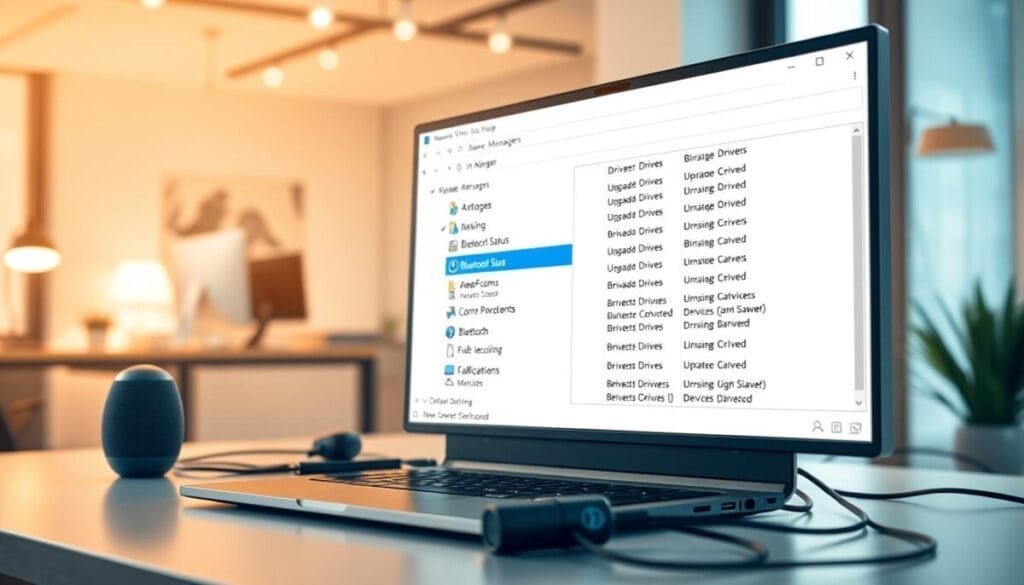
Before you dig deeper, confirm the system-level drivers and adapter settings are clean and current.
Updating Device Manager Drivers
Open Device Manager and scan the list for warnings. You should open device manager to verify the adapter is installed and shows no yellow icons.
When entries show warnings, right-click the adapter and select update driver. Windows will search online and apply the latest package so the device can talk to the hardware manager.
- If you open device manager, you can disable and re-enable the adapter to refresh the communication stack.
- Make sure the driver version is current; outdated software causes many devices to fail in Windows.
- Select Start > Settings to check system updates; these often deliver driver patches for your hardware.
| Action | Why | Expected Result |
|---|---|---|
| Open Device Manager | See full hardware list | Identify missing or faulty drivers |
| Select Update Driver | Fetch latest driver from Windows | Resolve compatibility issues |
| Disable / Re-enable | Reset device stack | Clear transient errors |
For a wider checklist on pairing and driver advice, consult our troubleshooting Bluetooth guide.
Note: hardware improvements matter too—Graphene TIM can boost thermal capacity by about 14.5%, helping keep system radios stable during heavy use.
Resolving Conflicts with Windows Updates
Windows updates can sometimes introduce driver changes that break device connectivity.
Check installed updates first. Open Update History and look for patches installed around the time your bluetooth device began having issues. A matching timestamp often points to a problematic update.
If a specific update aligns with the failure, uninstall that update to restore the prior driver state. Then restart and confirm the device appears in Device Manager.
When updates overwrite a stable driver with an incompatible driver, roll back the driver in Device Manager. This restores the previous driver that allowed the device to work.
- Review update history for recent patches affecting drivers.
- Uninstall suspect updates to test if connectivity returns.
- Use driver rollback when the device is still visible in Device Manager.
| Symptom | Likely Cause | Action | Expected Result |
|---|---|---|---|
| Device vanished after restart | Recent Windows update replaced driver | Check update history; uninstall patch | Device reappears and pairs normally |
| Device present but fails to work | Incompatible driver version installed | Rollback driver via Device Manager | Functionality restores to prior state |
| Repeated failures after updates | Update repeatedly reapplies bad driver | Hide update or block problematic package | Stable driver remains in place |
For a broader checklist on device and driver troubleshooting, see our troubleshooting Bluetooth guide. Note: audio tech like Predator Vox can boost perceived volume by about 47% in the 100–1000 Hz range, so confirm audio levels after repairs.
Advanced System Repair Procedures
Advanced steps address deeper system faults that simple pairing cannot resolve.
Running the Automated Troubleshooter
Advanced repairs start with automated diagnostics to isolate driver and settings faults.
How to run it: Open Start > Settings > Update & Security > Troubleshoot or use the get help app to start the process. The automated bluetooth troubleshooter will scan your device drivers and manager entries.
The troubleshooter attempts to run diagnostics attempt fix routines. It can reset device manager settings to defaults and repair corrupted files that block a device from pairing. In cases where connectivity issues persist, users may need to follow linkedin login troubleshooting steps to ensure their accounts are functioning properly. These steps often include clearing cache data and verifying that the necessary permissions are granted for seamless operation. Additionally, resetting the password may help resolve access issues that are affecting the device’s ability to connect.
Performing a Repair Install
If the troubleshooter get help fails, plan a repair install. Use the Media Creation Tool to refresh Windows without losing files.
- Download the Media Creation Tool from Microsoft.
- Choose Upgrade this PC and follow prompts to reinstall Windows and refresh drivers.
- After install, open device manager to confirm driver status for the affected device.
| Action | Why | Expected Result |
|---|---|---|
| Run automated troubleshooter | Detects driver and settings issues | Automatic attempt to repair device |
| Use get help app | Guides run troubleshooter get steps | Simplified diagnostics attempt fix |
| Repair install (Media Tool) | Fixes deep OS corruption | Restored Windows and refreshed drivers |
Ensuring Long-Term Wireless Stability
A few simple habits will keep your wireless devices stable over time.
Do routine checks. Update drivers and firmware regularly so devices remain compatible with Windows updates. Use the driver refresh and BIOS guidance if you need official steps.
Turn wireless radios off when idle to save power and reduce interference. Periodically turn them back on to look for firmware patches and clear stale pair lists.
Keep the area clear of obstructions and remove old pairings to avoid conflicts. For a practical pairing and interference checklist, consult the pairing and interference checklist.
Tip: Better cooling—like a Predator CycloneX 360 that can cut component temps by about 9°C—helps radios run steadier during heavy use.