If your Facebook notification settings will not save, check both Facebook’s in-app controls and your device’s notification permissions. Most stuck preferences come down to a Facebook setting or a device permission, so check both, then test whether the change stays saved.
A push notification is an alert an app sends to your phone or computer when you are not using it. A preference can save in Facebook but still be blocked by your phone or browser. A stable internet connection also matters, whether you use Wi-Fi or mobile data.
Airplane Mode can cut off that connection, while a saved choice may still look correct. These checks help you tell a setting problem from an alert delivery problem without changing everything at once.
Key Takeaways
- Check Facebook’s in-app notification settings and your device notification permissions.
- A setting that switches back is different from an alert that never arrives.
- Test one preference at a time, then reopen it to confirm the choice.
- Check internet access, phone-wide alert limits, and app updates when needed.
- Compare the same account and alert type on another device to narrow the cause.
Start by noting whether a setting switches back or stays on while alerts fail to arrive.
Tell a Saved-Settings Problem From a Delivery Problem
A setting that switches back is a save problem, while a setting that stays on without an alert points to delivery. The difference matters because each case needs a different first check.
Facebook notifications can disappear from view when alerts are disabled in Facebook or blocked by the phone. A display problem or late delivery can also make an alert seem missing. Check whether the preference itself changed before adjusting other settings.
A Page alert may be missing even when other Facebook notifications work; review Page notification choices when only Page updates disappear.
| What you see | Likely issue | First check |
|---|---|---|
| Setting switches back | Facebook did not retain the choice | Reopen that notification setting |
| Setting stays on, no alert arrives | Delivery or permission block | Check device permission |
| Alert arrives, but no badge appears | Badge display choice | Check app badge display |
Do not treat a missing alert as a save problem until you confirm the setting changed.
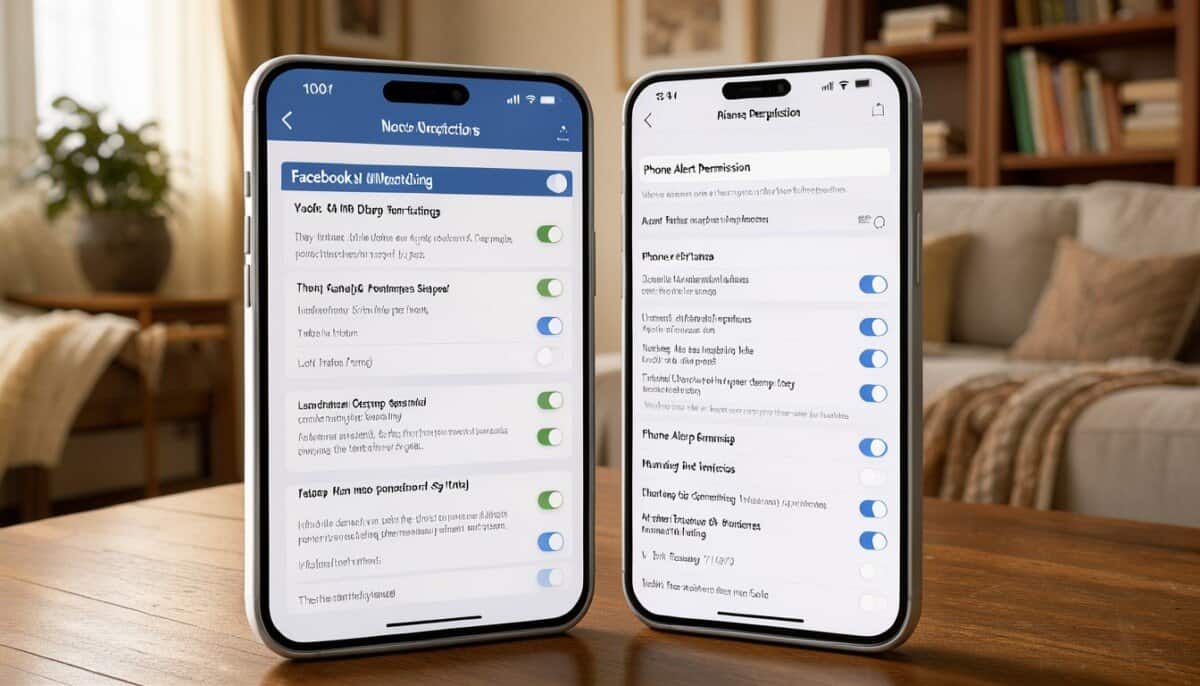
The notification settings screen and the phone’s app controls are separate. Facebook can retain a choice while another control keeps notifications from reaching your screen.
For email alerts, check their separate categories and your inbox filters; Facebook email alert fixes can help isolate that delivery route.
Note the exact alert type and device before changing more than one setting.
Check Meta’s Service Status Before Changing Settings
A service check can help rule out a wider Meta issue before you change personal settings. Compare the status with what happens on your own devices.
StatusGator reported Meta operational on November 24, 2026, at 5:55 PM UTC, while 27 users submitted outage reports in the prior 24 hours. That snapshot describes one time, not every person’s Facebook experience.
Meta’s business-products status page showed “No known issues” for Meta Business Suite, Facebook Login, and the Graph API. The Facebook app can still have a feature problem that does not appear in a broad status view.
Meta’s reported operational status was recorded at that exact time. A report from one service page cannot confirm that every account, alert type, or internet connection works.
Check your own account on the device where alerts fail, then compare it with another device if available. If other apps also have trouble, the internet connection may be part of the problem.
A status page gives useful context, but your saved preference and alert delivery remain the key checks. If the service appears operational but your preference still reverts, continue with the account controls.
Fix Facebook Notification Settings Not Saving in the App
You can change Facebook’s own alert choices from its Notifications settings, not from your phone’s app-permission screen. Use Facebook’s menu to fix an account preference.
Facebook’s in-app notification controls sit under Settings & privacy > Settings > Notifications. That route changes Facebook choices only, not the phone’s permission for the app.
Change notification choices inside Facebook
Open Facebook and tap your profile icon. On Android, the icon is at the top right; on iPhone, it is at the lower right.
Choose Settings & privacy, then Settings, then Notifications. Tap the notification type you want to adjust and choose the option that matches your needs.
The Facebook menu is inside the app. The phone’s Settings app controls whether Facebook can send push notifications to the device.
Verify that each preference stays selected
Change one preference at a time, then leave the Notifications page. Return to that same choice and check whether it remains selected.
If a choice changes back, make a note of its exact name and the time you changed it. This helps separate a saved-settings problem from alerts that simply fail to arrive.
Facebook may show several alert choices under different activity types. Check the one tied to the missing alert instead of changing unrelated settings.
Facebook’s Notifications settings route appears under Settings & privacy on mobile. The profile icon location depends on whether you use Android or iPhone.
Check one specific notification type again after leaving and reopening its settings.
Restore Facebook’s Phone-Level Notification Permission
Facebook can keep a preference in its app while your phone still blocks its alerts. Phone permissions control whether the device can show them.
Facebook notification settings not saving on iPhone can be caused by the phone-level permission. Android users should check the same device permission before testing alerts.
Check Facebook permissions on iPhone
On iPhone, open Settings > Apps > Facebook > Notifications. Check that Facebook can send notifications and review the alert options shown there.
To review how alerts appear, open Settings > Notifications and select Facebook under Notification Style. The app must be allowed to send alerts for its chosen style to matter.
Check Facebook permissions on Android
On Android, open Settings > Apps > See all apps > Facebook > Notifications. Allow notifications, then review any alert categories shown on your phone.
Android menus can vary by phone maker, but Facebook’s app page is the place to check its notification permission. Android notification controls also let you manage how alerts appear.
Set the iPhone alert style you want
iPhone can show alerts as Count, Stack, or List. Changing this display style requires iOS 16 or later.
Count shows a number, Stack groups alerts, and List shows alerts one by one. Badges let supported app icons display information on the Home Screen, but they do not replace the alert list.
Use the table to tell which setting controls Facebook’s choices and which controls phone delivery.
| Control | Where to find it | What it affects |
|---|---|---|
| iPhone Facebook permissions | Settings > Apps > Facebook > Notifications | Facebook alerts allowed on iPhone |
| Android Facebook permissions | Settings > Apps > See all apps > Facebook > Notifications | Facebook alerts allowed on Android |
| Facebook in-app notifications | Settings & privacy > Settings > Notifications | Which Facebook activity sends alerts |
Confirm that Facebook is allowed to send alerts before testing the app again.
Choose Which Facebook Alerts You Want to Receive
An alert can be missing because Facebook is set to notify you about some activity but not that specific person or post. Each activity type has its own choice.
An enabled general permission does not mean every activity type is enabled. Messages, friend requests, group posts, and Page updates can each have separate notification choices.
Review these four alert types when only certain Facebook notifications are missing:
- Messages
- Friend requests
- Group posts
- Page updates
Muted friends, groups, or Pages may not send updates you expect. Check whether you muted the person or Page, or changed its follow choice.
A group set to Highlights may not alert you about every post. If you want every group post, check whether its notification choice is set to All Posts.
Page alerts can also depend on which updates you chose to receive. When messages, comments, or reviews are missing from one Page, check that Page’s alert choices.
For more help with Facebook Page notifications, compare the missing alert with the Page settings that cover messages, comments, and reviews.
Check the individual group or Page setting when only its updates are missing.
Remove Network and Focus Blocks

A saved preference cannot deliver an alert while the phone is offline or blocking app activity. Check delivery limits before changing Facebook choices again.
Facebook needs a working Wi-Fi or mobile data connection to send push notifications. Airplane Mode cuts off internet access on the device.
Restore a working internet connection
Check that Wi-Fi or mobile data works by opening another app or webpage. Turn off Airplane Mode if it is on, then check Facebook again.
If one connection fails, try the other when available. A stable internet connection helps Facebook send notifications, but it cannot fix a disabled alert choice.
- Confirm Wi-Fi or mobile data works.
- Check whether Airplane Mode is on.
- Review Do Not Disturb or Focus.
Check phone-wide alert limits
Do Not Disturb can silence notifications across the phone. iPhone Focus settings can also affect whether alerts arrive as expected.
Low Battery Mode can limit background activity, which may delay an alert. Review these phone-wide limits when Facebook settings stay on but notifications stop arriving.
Check whether Focus is set to silence Facebook or allow alerts only from selected people and apps. A schedule may turn it on at certain times.
Test once on Wi-Fi and once on mobile data if the connection is uncertain.
Update, Restart, or Reinstall the Facebook App
An outdated app or damaged temporary files can keep a preference from behaving as expected. Start with simple upkeep before removing Facebook.
Check the App Store or Google Play for the latest version of the Facebook app. Restarting the phone may clear a temporary glitch without removing your app data.
Update Facebook and restart the phone
Open the App Store on iPhone or Google Play on Android, then look for a Facebook update. Install it if one is available.
Restart your phone if the app still behaves oddly after an update. Then reopen Facebook and check whether the notification preference remains selected.
Remove stuck app files on iPhone
Open Settings > General > iPhone Storage > Facebook. Offload App removes the app but keeps its documents and data for a later reinstall.
Delete App removes the app and its related files from the phone. Reinstall Facebook from the App Store if offloading does not help.
Clear Facebook’s cache or data on Android
Open Settings > Apps > Facebook > Storage. Clear cache removes temporary files, while Clear data removes saved app data.
Clearing data can require you to sign in again. Make sure you know your login details before using that option.
| Action | Platform | Where to do it |
|---|---|---|
| Update Facebook | iPhone or Android | App Store or Google Play |
| Offload or delete the app | iPhone | Settings > General > iPhone Storage > Facebook |
| Clear cache or data | Android | Settings > Apps > Facebook > Storage |
Reinstall only after simpler steps fail, and make sure you can sign in again first.
Check Desktop and Browser Notification Controls
On a computer, Facebook and your browser each have a say in whether push alerts can appear. Both controls must allow them.
Facebook’s desktop notification controls are under the profile icon > Settings & privacy > Settings > Notifications. The browser can still block alerts when Facebook’s own choice is enabled.
Check Facebook’s notification setting and the browser’s permission for the Facebook website. The site permission may be under the browser’s privacy or site settings.
Also confirm that the browser has permission to send notifications at the computer level. A browser may show a site alert only when both its own permission and Facebook’s setting allow it.
If the preference will not stay selected, try the same choice in another browser once. If it works there, the issue may be limited to the first browser.
Use another browser to identify the source, not as a permanent way to avoid fixing the first one. Make sure the browser allows Facebook notifications before judging whether the account preference saved.
Find Older Alerts and Clear Stale Badges

A missing alert may still be in Facebook’s notification list or your phone’s notification history. Check both places before deciding it never arrived.
Facebook’s visible notification history typically spans 21-57 days. Older alerts may no longer appear in Facebook’s list.
On desktop, select the notification bell to open recent alerts, then choose See All for a fuller view. On iPhone, scroll through Facebook’s Notifications tab to find older activity.
iPhone Notification Center can hold alerts you have not cleared. From the Lock Screen, swipe up from the middle; from another screen, swipe down from the top left.
Tap Close, then Clear to remove iPhone Notification Center history. The iPhone can show notifications as Count, Stack, or List with iOS 16 or later.
On Android, the notification panel may offer See previous notifications. Android notification history is available only when the phone offers that option and has it turned on.
A badge is separate from the notification list. Badges show information on supported app icons, so an icon count can remain even after an alert is gone.
Clear Notification Center only after you have checked any alerts you may still need.
Reset Stuck Preferences Without Changing Every Setting
Reset only the choice that is stuck so you do not replace a small fix with a broad settings change. One change at a time makes the result easier to read.
Change the affected Facebook preference, leave Settings, and reopen the same choice. A phone-wide permission reset will not fix a Facebook activity category that remains disabled.
Use these four steps to check one choice:
- Note the alert type that is affected.
- Change only that Facebook choice.
- Leave the page, then reopen its settings.
- Verify whether the same choice remains selected.
If the preference reverted, switch that choice off and back on once. Then leave the page and check it again before changing anything unrelated.
Keep the test focused on the Facebook account choice, not every alert control on your phone. In-app settings and device permissions are separate controls.
Keep a note of the one setting you changed so you can tell whether it stayed saved.
Test the Same Account on Another Device
A second device can show whether the problem belongs to one phone or follows your account. Use the same account and alert type for a fair test.
Open Facebook on another available phone or computer, then test the same kind of alert. Alerts working on the second device point toward a setting, browser, or app issue on the first.
Compare these three details:
- Use the same Facebook account.
- Test the same alert type.
- Compare whether the preference stays saved.
If the same alert fails on both devices, an account issue or wider service problem becomes more likely.
A difference between devices helps narrow the cause without changing more settings. For example, a preference that stays selected on a computer but reverts on a phone points toward the phone or app.
Keep the test limited to one alert type so the result stays clear. If the failure follows the account across devices, contact Facebook support with the alert type and the steps already tested.
Conclusion
Facebook alerts are more likely to stay reliable when both the account choice and the device permission allow them. Check both controls before changing several settings.
When a preference stays selected but no alert arrives, focus on delivery instead. A phone or browser can block alerts even when Facebook’s in-app choice is on.
Change one setting at a time so you can see what fixed the problem. Reopen the affected setting now and confirm that it stays selected after you leave the page.