
Ever wonder why your device suddenly reboots in the middle of a task? That abrupt restart can feel like a mystery, but it often signals a protective response inside the unit.
Modern models have built-in temperature sensors that trigger a restart when internal temperatures climb past safe limits. This prevents permanent hardware damage to the motherboard and CPU.
Overheating is a common hardware-related trigger for unexpected reboots during heavy use. If your device restarts under load, it may be struggling to manage thermal output from apps or charging.
We will show how to tell if the problem is software or hardware, and point you to practical fixes. For a deeper look at causes and safe cooling steps, see this guide on smartphone overheating causes and fixes.
Key Takeaways
- Built-in sensors may force a restart to protect vital components.
- Overheating is a leading hardware issue behind sudden reboots.
- Heavy apps and fast charging raise internal temperature quickly.
- Early action prevents data loss and long-term damage.
- We’ll guide you to diagnose software vs. hardware causes.
Understanding Why Your Phone Randomly Restarting Heat Issues Occur
Devices use temperature limits to protect circuits, often cutting power before damage occurs. That safety step prevents chips and boards from suffering irreversible harm.
Thermal Safety Protocols
IDR Tech technicians see hundreds of phones monthly where hardware faults, not software, trigger reboots. Built-in sensors watch core temps and force a restart or shutdown when levels rise above safe limits.
These protocols act fast. They suspend processes, save critical data when possible, and then power-cycle the system.
The Role of Internal Components
Batteries and connectors can cause power dips that lead to sudden restarts. Aging batteries lose voltage stability and some models handle that poorly.
- Loose connectors or corroded contacts cause intermittent power loss.
- High-demand apps and low storage make the system work harder.
- Outdated software or unfinished updates can increase the chance of an unexpected restart.
Understanding components helps you spot a simple software glitch versus a deeper hardware problem. If the device restarts often, consider a battery check or professional inspection.
Distinguishing Between Software Glitches and Hardware Failures
A clear timeline of crashes helps separate software bugs from failing parts.
Software problems usually show a pattern. They often start after an OS update or when a specific app runs. If the device works normally in safe mode or after you clear app cache and files, the issue likely lives in software.
Try this: boot in safe mode, clear cache for suspect apps, and watch for restarts tied to one application or update.
Hardware issues behave differently. Faulty components cause unpredictable failures that may continue even after a full factory reset. If the phone restarts while idle or during light use, suspect internal parts or battery instability.
- Software: repeats after updates or with one app; often fixed by patches.
- Hardware: sporadic, worsens over time; persists after resets.
Track when the problem occurs — time of day, apps open, charging state. That log saves time and protects your data when you choose repair or replacement.
Performing a Forced Restart to Clear Temporary Conflicts
If your device becomes unresponsive, try a forced restart first. Hold the power button for about 10 to 15 seconds until the unit shuts down and then reboots. This clears temporary files and resets running system processes that may cause conflicts.
This method does not erase personal data. A forced restart differs from a factory reset and preserves your settings, apps, and data while refreshing the system state.
Depending on your phone model, button combinations can vary. Some models require power + volume hold. Check your model’s quick guide if the long press does not work the first time.
- Hold the power button 10–15 seconds to force a full reboot.
- Use this step to rule out minor software glitches before deeper fixes.
- If the problem persists, boot into safe mode or consider a factory reset as a later option.
Why this helps: A forced restart stops stuck processes and clears the volatile cache. It’s a standard, quick step to restore stability without risking your data or settings.
Booting into Safe Mode to Isolate Third-Party Apps

Safe mode temporarily disables all third-party apps so you can test core system behavior. This makes it easy to see if a recent install causes the phone restart or other stability issues.
How to enter safe mode: on most Android phones, press and hold the power button until the power options appear. Then touch and hold the Restart or Power Off option until the prompt to reboot into safe mode shows. Follow the on-screen steps to confirm.
Identifying Problematic Software
If the device runs smoothly in safe mode, third-party apps are the likely cause. Note which apps you installed or updated before the restarts started.
- Review recent installs and updates, then uninstall suspect apps one at a time.
- After removing an app, reboot normally to check performance.
- Update remaining apps and system software before reinstalling anything.
Why this works: safe mode gives a clean environment where only essential system apps run. It helps you avoid a factory reset and find the single app that created the problem.
Managing Device Storage and Cache Files
When storage runs low, apps may fail and the system can behave unpredictably.
Freeing space often fixes crashes and reduces unwanted restarts. Regularly check storage in settings and remove unneeded photos, videos, and large files that sit unused.
Clearing cache makes a big difference. Remove app cache and browser cache to free temporary space and improve overall performance.
If sorting files feels like a chore, use trusted cleanup tools to find duplicates and junk. That saves time and keeps data organized without manual digging.
- Review storage usage monthly to keep enough free space for updates and app data.
- Clear caches and temporary files to restore performance quickly.
- Use cleanup utilities to remove duplicate photos and unused media.
- If the phone restarts often, check free space first — it’s a common root cause.
Good storage habits prevent corrupted cache and give apps room to work. Aim to keep a buffer of free space so your device runs smoothly and stays reliable.
Updating Your Operating System and Applications

Keeping system software current is the single easiest step to reduce crashes and unexpected reboots. Use updates to close known bugs and strengthen stability across the device.
System firmware patches deliver fixes from the manufacturer that target critical issues. Check Settings → Software update on a regular schedule. Install patches when you have a reliable Wi‑Fi connection and enough free storage space.
App Compatibility
App updates often include security patches and compatibility fixes that stop crashes and improve performance. Enable auto-updates in the Google Play Store to keep apps current without extra effort.
- Before installing, verify you have enough storage space to avoid failed installs or boot problems.
- Update both system and apps to reduce compatibility-related restarts and other software issues.
- When updates fail repeatedly, clear cache or free space, then retry the update process.
Why this matters: Staying current prevents many common issues and helps your device handle new apps and features. Regular updates are a low-effort, high-impact maintenance habit.
Cleaning Charging Ports and External Buttons
Debris in ports and around controls often causes power interruptions that lead to restarts. This is a common and fixable issue that affects device stability and battery charging.
Turn off the phone before you start. Use a wooden toothpick or a soft brush to lift lint gently from the charging port. Avoid metal picks or pins that can bend pins or short contacts.
Check the area around the power button. Dirt can make the button stick or trigger false presses. If the phone restarts when you press or grip the side, a physical short may be present and needs careful attention.
- Be gentle to avoid damage to the charging assembly or switches.
- Clean regularly to keep consistent power delivery and better performance.
- If cleaning does not help, seek a professional inspection to rule out internal faults.
| Cleaning Method | Tool | Risk Level | Estimated Time |
|---|---|---|---|
| Light brushing | Soft nylon brush | Low | 2–5 minutes |
| Manual pick-out | Wooden toothpick | Medium | 3–8 minutes |
| Button cleaning | Compressed air (short bursts) | Low | 1–3 minutes |
Evaluating the Impact of Protective Cases and Accessories
Accessories that press against side buttons or block vents often cause stability problems. Start by removing every case, grip, and battery pack to test behavior without extras.
Look for pressure points. A tight case can push on the power key and mimic a failing part. Grips or mounts may bend the frame and cause intermittent button presses.
Also check airflow. Thick or sealed cases can trap heat and make the device trigger protective restarts to protect its internal components.
- Remove all accessories and run the device for a day to see if the restarts stop.
- If stability returns, test each accessory one at a time to find the culprit.
- Before you do a full factory reset, try this quick accessory check — it often saves time.
- Good ventilation helps maintain peak performance and prevents protective shutdowns during heavy use.
If you need extra context, see the Apple Discussions thread for real-user reports on case-related issues.
Assessing Battery Health and Voltage Stability
Voltage that falls under load can make a device cut out without warning. This often looks like sudden restarts and can mimic other hardware problems.
Start by checking battery condition in Settings. Many models show a health percentage you can use to judge next steps.
Voltage Fluctuations
As batteries age they lose the ability to hold steady voltage under demand. That drop can make the system detect a critical power failure and trigger a restart.
Watch for restarts when the unit is under load, during charging, or below 30% charge. These are clear signs the cell cannot supply steady power.
Battery Degradation Signs
If your battery health reads under 80% in settings, plan a professional test or replacement. Lower capacity correlates with more frequent power-related issues.
Other signs: fast discharge, swollen case, or poor performance with power-hungry apps. Replacing the cell is often cheaper than buying a new model when the rest of the hardware is sound.
Calibration Techniques
Try one calibration cycle to rule out reporting errors. Fully discharge until the unit shuts off, then charge uninterrupted to 100%.
- Do this once a month at most.
- If restarts happen while charging or the battery gets very hot, seek professional help immediately.
- Use manufacturer tools on android phones to read deeper battery metrics when available.
| Sign | What to Check | Urgency | Recommended Action |
|---|---|---|---|
| Frequent restarts below 30% | Battery health %, voltage under load | High | Run calibration, then test; consider replacement |
| Restarts during charging | Charger, cable, charging port, battery temp | Immediate | Stop charging; inspect port; seek pro service |
| Fast discharge or swollen cell | Battery condition, back cover shape | Critical | Power down and replace battery right away |
| Normal life but poor peak performance | App demand, background processes, free space | Medium | Update apps, free space, use safe mode to isolate app |
Addressing Internal Component Damage and Corrosion
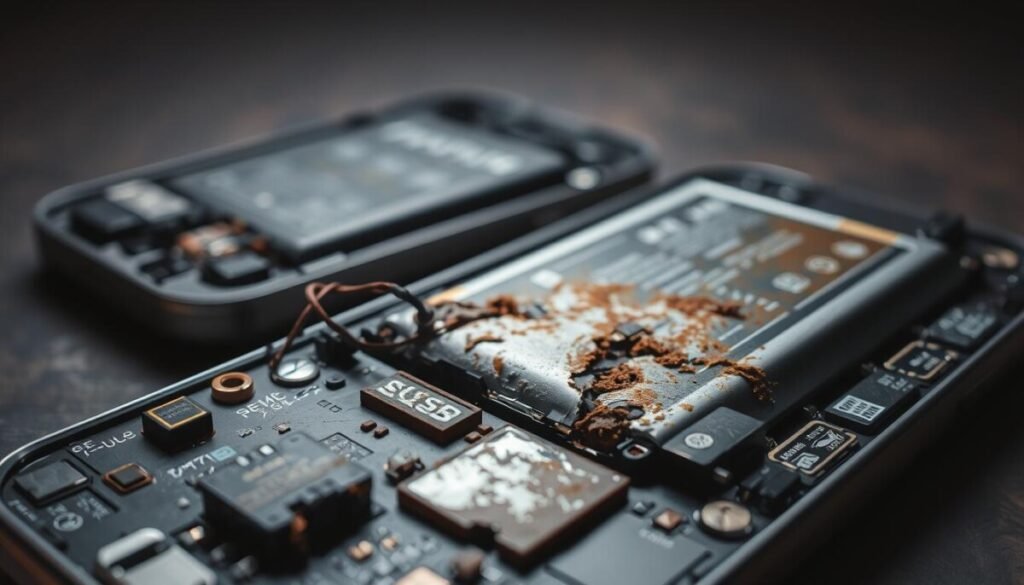
Hidden corrosion and cracked solder are common culprits behind sudden device power loss. These faults can create short paths and trigger emergency shutdowns or unexpected restarts.
Even if the exterior looks dry, a red or pink liquid indicator under the SIM tray often confirms internal exposure. Look for that mark before assuming the problem is software.
Loose battery connectors after a drop can make the unit lose power when moved. If your phone restarts when you shake it lightly, seek professional repair right away.
Technicians use ultrasonic cleaning to remove oxidation from the logic board without harming parts. Cheap aftermarket replacements may cause power instability, so insist on OEM or quality components.
- Corrosion spreads quietly and causes shutdowns over time.
- Solder cracks near the CPU or memory can break current flow on impact.
- Early action protects data and saves the motherboard from permanent damage.
| Symptom | Likely Cause | Immediate Step | Repair Option |
|---|---|---|---|
| Restarts when moved | Loose connector or cracked solder | Power down; avoid using | Professional connector resolder or replacement |
| Visible liquid indicator | Internal corrosion | Stop charging; dry and inspect | Ultrasonic clean and corrosion repair |
| Intermittent power loss | Aftermarket part or oxidized contacts | Revert to original parts; test | Replace with OEM components |
Deciding Between Professional Repair and Device Replacement
Start by weighing repair cost against the value of the model and how long you need reliable performance.
Fix it when the issue is isolated. If the fault is clearly the battery, charging port, or power button assembly, a professional repair often restores full performance at a lower cost.
Use cost as your guide. A repair usually makes sense if the total price is under 30–40% of a new phone. That keeps your outlay proportional to the device’s remaining life.
If multiple components show damage, or the phones no longer receive critical updates, replacement is the safer long-term path. Work users should favor reliability over a marginally cheaper fix.
- Run a factory reset from Settings first to rule out software issues before you pay for hardware service.
- Ask a technician for a diagnostic test to avoid unnecessary work or repeat expenses.
- Compare battery replacement cost against device value when deciding whether to repair or buy a new phone.
| Scenario | Recommendation | Why |
|---|---|---|
| Single component failure | Repair | Lower cost, restores performance |
| Multiple failures or water damage | Replace | Unreliable long-term, risk of further power damage |
| Outdated model with no updates | Replace | Security and app support end soon |
Conclusion
A short troubleshooting routine often restores normal operation without costly repairs.
Start with simple steps: a forced restart, then safe mode to spot bad apps. These quick checks catch most common glitches and improve daily performance.
Check battery health next. A weak cell often explains unexpected power loss and repeat restarts.
If software updates and a factory reset do not stop the problem, you may face a hardware fault that needs repair.
Keep storage tidy and clear caches to avoid slowdowns. Regular maintenance prevents many issues and extends device life.
If the steps here don’t work, seek a professional diagnostic. With the right fix you can get back to work fast.