Can a single platform really cut procurement chaos and give us clear, real-time control?
We’ve seen teams struggle with scattered vendor data, slow approvals, and unclear spend. Precoro and similar tools help us onboard, approve, and track suppliers so procurement runs smoothly.
By centralizing supplier details in one place, operations gain a clear audit trail and better compliance. That reduces disruptions and speeds up the onboarding process for new vendors.
Our focus here is practical: how a robust vendor management system delivers real-time insights into performance, risk assessment, and purchase orders. We’ll show how approval workflows and contract tracking save time and keep teams aligned.
Key Takeaways
- Centralizing vendor data improves visibility and reduces manual issues.
- Real-time performance metrics help optimize spend and supplier performance.
- Approval workflows and purchase orders create consistent control across teams.
- Strong onboarding and contract tracking boost compliance and audit readiness.
- The right platform scales with our procurement needs and offers essential support.
Understanding the Role of Vendor Management Software
Having a single place for supplier records clears confusion and speeds decisions. We rely on centralized tools to keep contracts, contacts, and delivery history in one secure hub.
Defining the Product
What this platform does is collect supplier profiles, contract dates, and performance logs so our teams can find answers fast. It replaces scattered spreadsheets and long email threads with a clear audit trail.
Benefits of Centralization
Centralization saves us time and reduces errors. When information lives in one place, approvals move faster and audits take less effort.
- Real-time visibility into vendor performance and delivery.
- Automated reminders for contract renewals and key deadlines.
- Fewer operational disruptions thanks to complete supply-chain insight.
In short, the right platform frees our staff to focus on strategy, not admin. It helps us build stronger, data-driven supplier relationships and improve procurement outcomes.
Top Vendor Management Software Solutions for Modern Teams
When systems sync in real time, our teams gain the insights needed to act fast and save time.
Our research highlights eight best solutions for 2026: Spendflo, SAP Ariba, Coupa, GEP Smart, Oracle Procurement Cloud, Jaggaer, Gatekeeper, and Precoro. Each platform brings distinct tools for real time tracking, risk assessment, and performance management.
Spendflo stands out for SaaS procurement with a G2 score of 4.6/5. That rating reflects strong user experience and actionable insights for procurement teams.
We look at how each option supports integration with finance systems and boosts customer support. The right platform reduces manual work, saves time, and centralizes data so our users can make informed decisions about vendor performance.
- Real time dashboards and alerts to surface issues fast.
- Automated risk assessments and scorecards for clear oversight.
- Seamless integration that ties procurement to finance and ops.
Centralizing Vendor Information for Better Visibility
Putting all supplier files in one hub stops duplicate work and lets us act on issues faster.
Centralizing your vendor information into a single management system is the fastest way to gain full visibility across procurement. When every contract, compliance check, and performance metric lives in one place, teams no longer hunt through emails or shared drives.
That unified approach cuts the time spent on manual entry and reconciliation. It also reduces the risk of lost documents and shows a clear audit trail when regulators or auditors ask for records.
- Track contracts and renewals from a shared dashboard.
- Monitor performance in real time to spot issues before they escalate.
- Find cost-saving opportunities by comparing vendor data across categories.
We recommend a robust vendor management system to keep records organized and transparent. For teams handling stock or e-commerce inventories, consider pairing this approach with specialized tools — see our guide to inventory tools for small e-commerce to streamline workflows.
Enhancing Risk Management and Compliance
We need a clear, repeatable way to spot supplier risks before they hit operations.
Automated risk assessments give us continuous checks on contracts, certifications, and financial health. These tools flag gaps so we can act fast.
Automated Risk Assessments
Modern vendor management platforms scan documents and scores for issues in real time. That helps us confirm SOC 2, GDPR, and other standards are met.
We rely on the system to restrict access to only verified vendors. This lowers exposure and protects our reputation.
- Continuous contract and certification monitoring
- Real time reliability and performance insights
- Automated onboarding checks and financial stability flags
| Feature | Benefit | Why it matters |
|---|---|---|
| Automated scoring | Faster risk identification | Reduces manual review time |
| Certification tracking | Continuous compliance | Simplifies audits |
| Financial alerts | Early warning on stability | Protects supply continuity |
For deeper security checks and best practices, see our project security guide. Strong controls and the right tools help us keep operations secure and compliant as we scale.
Streamlining Procurement Workflows
A clear intake-to-purchase flow cuts unnecessary steps and keeps our teams moving.
We automate routine tasks so creating purchase orders and routing approvals no longer eats time. A central platform standardizes forms and reduces manual errors.
Onboarding follows a defined path. Required documents are collected and verified before any engagement starts. That lowers risk and speeds ramp-up.
Automated approval workflows prevent unauthorized buys and keep policy checks visible. Real-time tracking shows each step from request to invoice.
- Faster intake-to-procure cycles for busy teams
- Consistent onboarding to improve vendor performance
- Seamless integration with finance systems for accurate spend
| Feature | Benefit | Impact |
|---|---|---|
| Automated PO creation | Reduces manual entry | Save time and cut errors |
| Approval workflows | Enforces policy | Prevents unauthorized spend |
| Onboarding checklist | Standardizes documents | Improves compliance and vetting |
| Real-time dashboards | Shows process status | Boosts operational agility |
When we combine automation with solid integration, procurement becomes responsive and auditable. Streamlining workflows helps us scale while keeping control.
Improving Vendor Performance and Collaboration

Real improvement comes when teams share data and set joint targets with their suppliers.
Supplier portals create a single place for documents, invoices, and direct messages. When we give vendors controlled access, our teams spend less time chasing updates and more time on strategy.
Portals keep records current in real time. That reduces errors and speeds approvals across the organization.
Performance Scorecards
Scorecards let us track delivery times, quality, and compliance with clear KPIs. We use them to spot trends and act before small issues become big problems.
- Scorecards provide consistent, comparable metrics for every supplier.
- Reports built from hundreds of data points let us drill into spend and vendor performance.
- Transparent scoring improves negotiations and strengthens relationships.
Precoro, for example, provides data reporting tools that allow users to create reports from over 150 data points. That depth gives us the insights to take corrective action fast and to reward high performers.
For teams evaluating options, see our guide to enterprise project management platforms for tools that pair well with a vendor management system.
| Feature | Benefit | When to use |
|---|---|---|
| Supplier portal | Faster updates, fewer emails | Day-to-day collaboration |
| Performance scorecards | Clear KPIs and trends | Quarterly reviews and audits |
| Custom reports | Data-driven decisions | Contract renewals and negotiations |
Key Features to Look for in a Management Tool
We prioritize features that remove daily friction and save teams time on routine procurement tasks.
Automated purchase orders and approval workflows should be core capabilities. They cut manual entry and keep buying within policy. That saves time and prevents costly mistakes.
Contract tracking is a must. A system that flags renewals and stores compliance documents means we never miss a deadline or an audit request.
A useful tool gives real time insights into vendor performance and risk. Live dashboards and scorecards help us act on trends before they become problems.
- Centralized information in one place for complete visibility.
- Integration with finance and ERP to sync spend and invoices.
- Risk assessment to monitor compliance and financial health.
- Scalability so the platform grows with our needs.
| Feature | Why it matters | When to use |
|---|---|---|
| Automated POs & workflows | Speeds approvals and reduces errors | Daily procurement and high-volume buying |
| Contract tracking | Prevents missed renewals and compliance gaps | Legal reviews and audit prep |
| Real-time scorecards | Shows performance and drives improvement | Quarterly reviews and vendor optimization |
| ERP/finance integration | Ensures accurate spend and reconciliation | Month-end close and budget control |
Selecting the Right Platform Based on Company Size
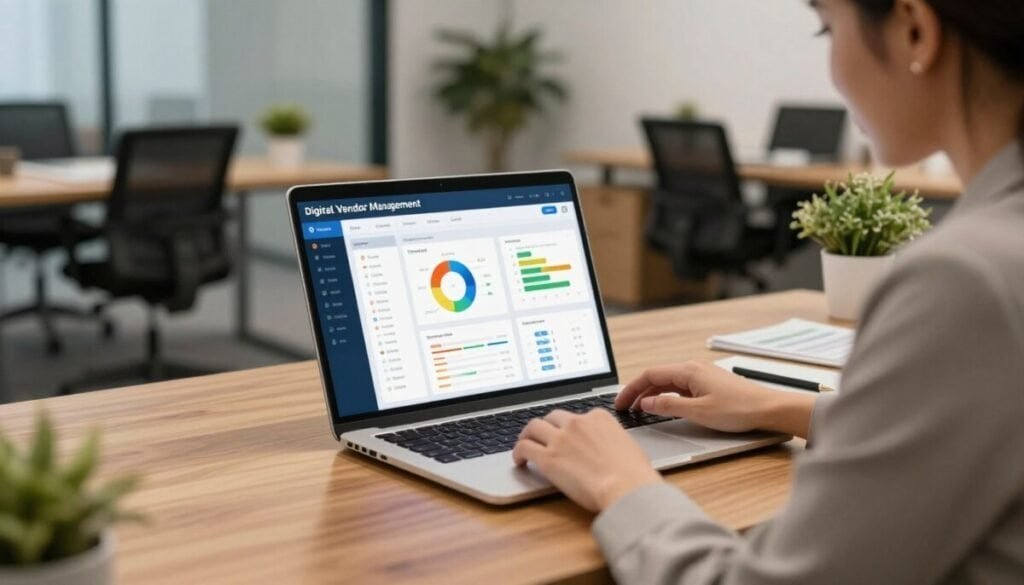
Not every tool fits every company — scale, security, and integration needs should drive our selection.
Large enterprises need a platform that supports complex procurement flows, global partners, and strict security controls. We look for advanced analytics, multi-entity reporting, and rigorous access controls so users across regions stay aligned.
Enterprise Requirements
Choose a platform with deep reporting and configurable controls. It must integrate with ERPs and handle thousands of suppliers. Also verify enterprise-grade security and dedicated support for global rollouts.
Mid-Market Needs
Mid-sized companies benefit from solutions that balance automation with ease of use. We favor systems that give visibility into spend and performance, yet are simple to configure and connect to finance tools.
Small Business Priorities
For small teams, speed and cost matter most. A lightweight tool that offers contract tracking, renewal alerts, and quick deployment delivers the best ROI. Minimal overhead lets us focus on growth.
- Support: Ensure the provider offers onboarding and responsive customer support for your company size.
- Scalability: Pick tools that grow with your teams and users to avoid costly migrations.
- Security: Confirm compliance standards and role-based controls before purchase.
| Company Size | Top Needs | When to Upgrade |
|---|---|---|
| Enterprise | Advanced analytics, global controls, integrations | Expanding to multiple countries or entities |
| Mid-Market | Automation, finance integration, ease of use | Rising transaction volume or headcount |
| Small Business | Cost-effective setup, contract tracking, renewals | Needing better visibility without extra staff |
Choosing the right traditional vendor management software starts with honest needs assessment. Match automation, integration, and support to your company size and you’ll get lasting value from your platform.
Leveraging AI for Smarter Spend Management
Smart algorithms spot spending patterns that human review often overlooks.
AI in our management software analyzes transactions and flags where 60%–80% of spend concentrates. That matters because most business dollars flow to external partners, so small shifts create big savings.
By automating analysis, the platform serves up clear recommendations. We get suggestions for bulk buys, timing, and stronger negotiation points with suppliers.
- Automated anomaly detection stops unauthorized or wasteful purchases before they compound.
- Historical tracking and real-time insights let us compare past and current spend quickly.
- AI frees our teams to focus on strategic sourcing instead of manual review.
In short, AI-powered tools turn raw purchase data into actions. We make smarter choices, improve financial performance, and build a more data-driven procurement function for the long term.
Simplifying Data Transfer and Integrations

When data flows smoothly between systems, our teams stop rekeying information and start acting faster.
Synchronized connections between our core apps cut manual entry and keep critical vendor details current. That single source of truth reduces errors and saves time.
We favor a platform that offers flexible APIs so we can build custom links to finance and ops. Secure transfer and encryption protect sensitive procurement information at every step.
Automated syncs push updates to all systems. That means contracts, contact info, and invoices update across the stack without extra work.
- Use APIs to tailor integrations to your needs.
- Encrypt data in transit to preserve security.
- Automate syncs to keep information accurate in one place.
| Integration Method | Key Benefit | Security | Best For |
|---|---|---|---|
| REST API | Custom data flows and mappings | TLS / token auth | Complex workflows |
| Prebuilt Connector | Fast setup, less dev time | Vendor-tested encryption | Standard finance links |
| CSV Sync | Low-cost, simple imports | Secure file storage | Small teams or legacy systems |
| Webhook Events | Real-time updates | Signed callbacks | Live dashboards and alerts |
For more on connected planning and tools that help tie systems together, see our guide to online planning tools. Well-integrated systems let us scale procurement without losing control.
Best Practices for Successful Implementation
A clear rollout plan turns new procurement tech from a disruption into an immediate productivity win.
Start with a short pilot to test workflows and confirm integrations. A controlled pilot helps us find issues early and refine settings before a full rollout.
Train all users with role-based sessions and easy reference guides. High user adoption depends on clear training and quick access to help.
Rely on white-glove support when available. For example, Precoro offers hands-on setup and training so teams can go live in just 2–8 weeks.
- Involve cross-functional teams early so the system matches procurement workflows and avoids surprises.
- Schedule regular check-ins to track progress, fix issues, and iterate on configuration.
- Plan for ongoing updates and vendor support so the tool stays aligned with changing needs.
When we follow this approach, the platform delivers value from day one. For implementation reviews and comparisons, see our implementation reviews.
Overcoming Common Procurement Challenges
Procurement often stalls because teams lack a clear process for tracking performance and risks. A unified platform fixes that by keeping contract tracking, approvals, and vendor information in one place.
Disorganized data leads to missed renewals and duplicate orders. We reduce errors by using automated approval workflows and electronic purchase orders that enforce policy and speed approvals.
Real time performance insights and simple risk assessment tools help us spot underperforming partners and financial exposure early. That saves time and protects company operations.
- Onboarding process: Guided checklists ensure required documents are captured before engagement.
- Support: Reliable customer support helps teams resolve setup issues fast.
- Integration: Connect the platform to finance and security tools to keep spend and controls aligned.
| Challenge | Solution | Benefit |
|---|---|---|
| Scattered vendor data | Centralized system | Faster audits |
| Poor performance visibility | Real time scorecards | Proactive fixes |
| Compliance gaps | Automated checks | Lower risk |
For teams wanting to tie procurement to marketing or growth, see our guide to digital marketing automation for ideas on cross-team workflows. The right system makes procurement resilient and easier to run.
Future-Proofing Your Procurement Strategy
, We recommend choosing a platform that grows with your needs.
To stay competitive, we must pick tools that scale as buying patterns and teams evolve. Choose a vendor management software that supports AI-driven insights and automated risk assessment so you spot issues early and act fast.
Make sure the platform handles higher volumes of vendors and more complex workflows without slowing down. Commit to continuous improvement, regular reviews, and upgrades so procurement stays a strategic asset.
In short, invest in flexible tools and a solid platform now to protect operations, strengthen supplier relationships, and keep long-term goals within reach.