Does Warranty Cover an Overheating Phone? Apple, Samsung, Carriers

Published:

Updated:

warranty cover overheating phone

Disclaimer

As an affiliate, we may earn a commission from qualifying purchases. We get commissions for purchases made through links on this website from Amazon and other third parties.

Have you ever felt your device heat up and wondered if the maker will fix it? You rely on your phone for work and fast answers. When it gets hot, you likely have urgent questions about repair and protection.

Most manufacturer warranties last one year from purchase and promise fixes for defects that stop a device from working as intended. That usually means the maker must handle a failed battery or a hardware fault that causes heat.

But not all problems qualify. Many limited warranties exclude accidental damage, drops, and liquid harm. Knowing the difference between a hardware defect and user-caused issues can save you time and money when you contact service.

We’ll walk through how major manufacturers and carriers approach these claims so you can decide if your phone qualifies for repair under current policies.

Key Takeaways

  • Manufacturer warranties typically last one year and address defects that stop a device from working.
  • Battery failure or hardware faults that cause heat are often eligible for repair or replacement.
  • Accidental damage and liquid exposure usually fall outside limited warranties.
  • Knowing the difference between a defect and user damage speeds up service and reduces cost.
  • Check your manufacturer’s policies and the days since purchase before you file a claim.

Understanding Manufacturer Warranty Coverage

Standard guarantees spell out what a maker will fix and what you must pay for.

A manufacturer warranty typically promises repairs for defects that appear under normal use within a set time frame.

What is included in standard warranties

Most manufacturers cover mechanical or electrical failures for a limited year period. Samsung, for example, offers one year for parts, labor, and the original battery.

Accessories like the original charger often get shorter protection—Samsung lists six months for accessories.

Distinguishing between defects and accidental damage

Defects stem from manufacturing faults such as failing circuitry or unexpected heat caused by hardware errors.

Accidental damage, like a cracked screen or water exposure, is almost always excluded. That means you’d pay for repairs unless you bought extra protection.

  • Service scope: Mechanical and electrical failures only.
  • Excluded: Drops, liquid, and cosmetic harm.
  • Tip: Check days since purchase before you file a claim.
Item Typical Term Notes
Parts & Labor 1 year Includes original battery for many manufacturers
Accessories 6 months Chargers often limited to shorter term
Accidental Damage Not included Requires separate protection or paid repair

Does Warranty Cover Overheating Phone Issues

A close-up shot of a modern smartphone displaying a distorted screen due to overheating, resting on a sleek wooden desk. In the foreground, there are signs of heat damage with faint smoke wisps rising from the edges of the phone. Organized on the desk, a professional warranty document and a pen are visible, hinting at the concept of warranty coverage. In the middle ground, blurred outlines of a concerned individual in business attire examining the phone, their expression a mix of worry and contemplation. The background is softly lit with a warm glow, suggesting a calm but tense atmosphere, evoking the seriousness of overheating issues. The photo is captured with a shallow depth of field to emphasize the phone and documents while artistically blurring the surroundings.

When a device runs very hot and stops working, manufacturers usually view that as a hardware failure.

If your device shuts down from heat during normal use, it often qualifies for repair under the maker’s limited warranty.

A failing battery or a circuit fault that makes a device run excessively hot typically meets the defects criteria. Document the incidents with dates, screenshots, and notes about what you were doing at the time.

  • Internal electronics that cause heat are usually eligible for service.
  • Cracked screens and clear accidental damage remain excluded.
  • Contact the manufacturer early to prevent more serious damage.

Most manufacturers offer a clear repair or replacement path when a device fails to meet quality standards.

Issue Typical Response What You Should Do
Device shuts down from heat Often repaired or replaced Document incidents; request service
Battery fails to charge or runs hot Commonly covered as defect Save proof of purchase; back up data
Cracked screen or liquid damage Usually excluded Consider paid repair or protection plan

Comparing Apple, Samsung, and Carrier Protection Plans
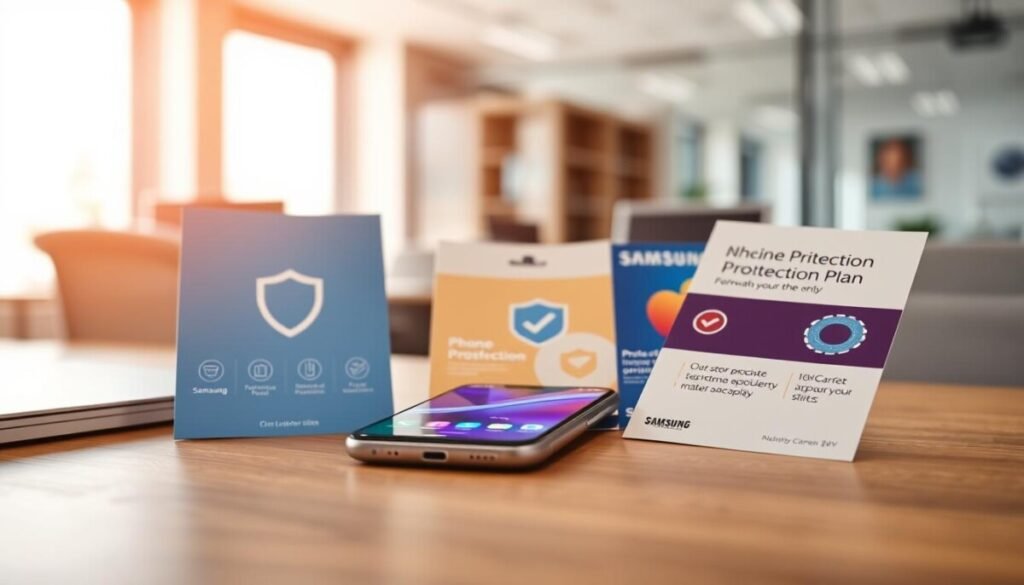
A close-up view of a modern office desk with a focus on a sleek smartphone displaying a vibrant screen. Surrounding the phone are three distinct protection plan brochures: one for Apple, one for Samsung, and one for a major carrier. Each brochure features eye-catching graphics and icons that symbolize phone protection, like a shield and checkmarks, in bright colors. The background features a softly blurred image of a professional office environment, bathed in warm, natural light filtering through a window. A subtle depth of field effect emphasizes the brochures in the foreground while providing context with office elements in the mid-ground. The mood is informative and professional, creating a sense of reliability and trust.

Your choice of plan affects how quickly a hardware fault gets fixed and how much it costs.

AppleCare and hardware failure

AppleCare gives 90 days of tech support and one year of hardware coverage for most devices.

For accidental damage like a cracked screen you need AppleCare+. It can cost up to $249 for two years or $12.99 monthly. Deductibles range from $39 to $129 for repairs.

Samsung Care and extended terms

Samsung Care+ adds 24/7 support and covers cracked screens and liquid damage. Plans start as low as $49 for a two-year term.

That plan often makes screen repairs cheaper and speeds up service compared with pay-as-you-go fixes.

Evaluating third-party protection alternatives

Google Pixel offers a one-year manufacturer warranty, and Preferred Care adds incident pricing from $49 to $149.

  • Third-party apps like Mulberry provide flexible, often cheaper protection for mechanical issues and accidental damage.
  • Compare total cost: monthly fees, deductibles, and expected repair times.
Plan Key benefit Approx. cost
AppleCare+ Screen & accidental help $12.99/mo or $249/2yr
Samsung Care+ 24/7 support, liquid claims $49/2yr and up
Third-party app Flexible plans, lower fees Varies; often less money

For a full look at how insurance and manufacturer plans differ, read our guide on cell phone insurance vs warranty.

Conclusion

Start by checking the fine print to learn if your device qualifies for repair. Review your manufacturer warranty and proof of purchase. That quick step can tell you if a defect is likely to be fixed or if extra protection is needed.

If your phone shows signs of overheating or other defects, document dates and symptoms. Note accidental damage or liquid exposure, since those often fall outside standard coverage.

Consider extended plans or third‑party options to save money and downtime. Contact the manufacturer or your carrier with any questions about service and next steps.

FAQ

Does a manufacturer’s warranty cover a device that overheats?

Most factory warranties cover defects in materials and workmanship, not damage from misuse or external heat sources. If overheating results from a manufacturing defect—like a faulty battery cell or thermal sensor—the maker will often repair or replace the device. If the cause is physical damage, liquid exposure, or unauthorized repairs, service is typically denied.

What does a standard manufacturer warranty usually include?

Standard manufacturer protection usually covers hardware faults that arise under normal use for a limited time, often one year. This includes failed components such as batteries that stop holding charge, processors that fail, or internal circuitry defects. It generally excludes cosmetic damage, intentional harm, and problems caused by third-party parts or apps.

How do you tell the difference between a defect and accidental damage?

A defect shows up without outside force or user error—like a battery that swells or a device that shuts down repeatedly under normal conditions. Accidental damage comes from drops, liquid contact, extreme temperatures, or installing unofficial parts. Service technicians diagnose the cause during inspection and document findings in the repair report.

Will AppleCare cover overheating and related repairs?

AppleCare+ expands hardware coverage and adds accidental-damage options for a fee. If Apple determines overheating is caused by an internal fault, AppleCare+ will cover repair or replacement. If the issue stems from a third-party charger, physical damage, or app-induced stress, you may pay for service or have the claim denied.

How does Samsung Care+ handle overheating problems?

Samsung Care+ offers extended service and accidental-damage claims that can include battery and thermal issues if they are manufacturing-related. If inspection shows misuse, like using nonapproved accessories or exposing the device to extreme heat, coverage may not apply and you’ll be charged for repairs.

Do carrier protection plans cover overheating or battery damage?

Carrier protection varies. Many carriers sell plans that include mechanical failures and accidental damage, sometimes with fast replacements. Terms differ—check limits, deductibles, and whether the plan covers battery degradation or overheating caused by apps or accessories.

Should I choose manufacturer protection or a third-party plan?

Choose based on risk tolerance and cost. Manufacturer plans often provide seamless service and genuine parts. Third-party plans can be cheaper and include extras like theft protection, but they may use nonoriginal parts or service partners. Compare turnaround time, claim limits, and exclusions before buying.

How long after purchase can I make a claim for a thermal defect?

Standard coverage windows are usually one year from purchase, while extended plans lengthen that period. Consumer laws in some regions offer additional protections beyond the manufacturer term. Keep receipts and service records to support any claim.

Can a faulty app cause overheating and will that be covered?

Apps that overwork the processor or run continuously can cause the device to heat up. Problems caused by third-party software are generally not covered under hardware fault policies. Fixing app-related issues may involve uninstalling the app, updating software, or factory reset rather than a hardware repair.

What should I do immediately if my device is overheating?

Turn it off and move it to a cool, ventilated area. Disconnect chargers and accessories. Avoid placing it in extreme cold or sealed containers. Document the symptoms and any steps you took; that helps service technicians determine the cause during inspection.

Will replacing the battery fix overheating and is that covered?

If overheating stems from a degraded or defective battery, replacing it typically resolves the issue. If the battery failure is within the manufacturer or extended plan term and meets coverage rules, the replacement is often covered. Out-of-warranty or aftermarket replacements may carry a charge.

How do manufacturers diagnose overheating during a repair?

Technicians run hardware diagnostics, inspect internal components, and review logs that show temperature spikes or high CPU usage. They also check for signs of physical or liquid damage and test battery health. The written findings determine whether the repair qualifies under the policy.

Are there ways to prevent overheating and extend device life?

Yes. Use manufacturer-approved chargers, keep software updated, close demanding apps, and avoid direct sunlight or hot cars. Remove heavy cases while charging if the device runs warm, and charge on hard, flat surfaces for better airflow. Regular care reduces the chance of device failure.

About the author

Latest Posts