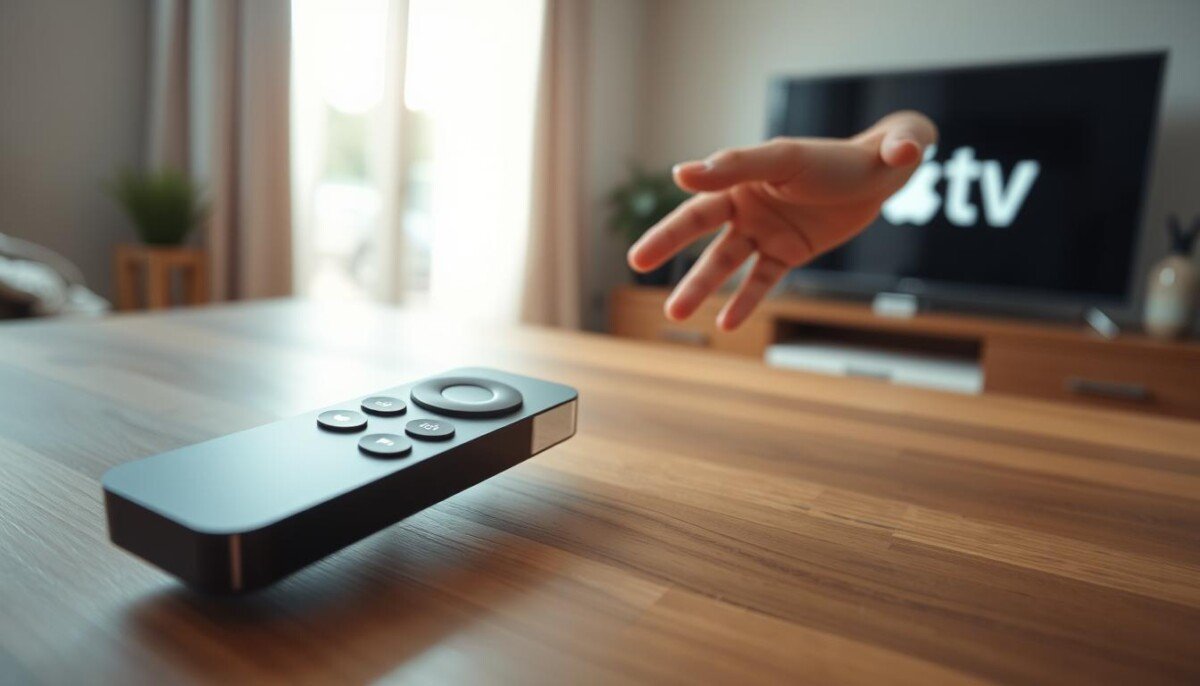
Frustrated when your controller goes silent during your show? That sudden disconnect can feel like a big tech puzzle. You’re not alone—users like jmstunt report a 4th generation device stopped responding to the control app on a new iPhone 13 Pro.
Start with simple checks: confirm the apple remote has charge, make sure your system and phone are updated, and verify your iphone ipad are on the same network. Small fixes often restore full control.
If the control center app won’t pair, move both devices closer and review power and network settings. When basic checks fail, re-pairing the controller or using a companion app can get you back to streaming fast.
We’ll walk you through clear, practical steps and offer reliable support so you can fix apple connectivity problems with confidence. For related pairing and app tips, see this troubleshooting guide on companion apps and controls: troubleshooting tips for remote apps.
Key Takeaways
- Begin with charge, updates, and same-network checks.
- Move devices closer to rule out interference.
- Use the control center app and re-pair if needed.
- Adjust power and network settings before advanced steps.
- Companion apps can serve as a fast backup control option.
Initial Troubleshooting Steps for Apple TV Remote Not Working
Start simple and save time. Begin by unplugging the set-top box from power for at least six seconds, then plug back in to force a system refresh. This quick power cycle clears many temporary glitches that cause a lost control signal.
Power Cycling Devices
Power Cycling Devices
Unplug the box, wait six seconds, then restore power. Next, restart the handheld controller by holding the required buttons for a brief reset.
Checking Network Connectivity
Checking Network Connectivity
Make sure both devices are on the same Wi-Fi network so the control center can find the controller. If volume buttons act oddly, go to settings remotes devices and set volume control to Auto instead of HDMI.
- Verify remote pair status on the menu screen before navigating.
- Hold the TV/Control Center and volume button for five seconds to trigger a status light change for a reset apple attempt.
- If problems persist, check for firmware updates on both devices to prevent future connection lost errors.
Physical Hardware and Battery Maintenance

Charge and clean first. Charge the controller for 30 minutes using a high-quality USB-C or Lightning cable connected to a wall outlet.
Keep a clear path between the unit and the controller. Physical obstructions within 6 meters can block the signal and cause the volume buttons to lag.
Quick hardware reset: Press and hold the TV/Control Center and Volume Down buttons for 5 seconds until the status light flashes.
If the unit freezes, unplug apple and wait at least 6 seconds before you plug back in. That power cycle clears most hangs.
- Charge for 30 minutes before deeper steps.
- Wipe the touch surface to keep sensors responsive.
- Check settings if volume buttons still fail after charging.
| Action | Time | Why it helps |
|---|---|---|
| Charge controller | 30 seconds to 30 minutes | Restores battery and stable wireless link |
| Hardware reset | Hold 5 seconds | Re-establishes pairing and clears faults |
| Power cycle unit | Unplug 6 seconds | Resets internal systems and recovers control |
Resolving Pairing and Connection Issues

Quick pairing fixes save time. Bring the controller within an inch of the device and begin the pairing sequence while watching the on-screen prompts. This close placement triggers the proximity sensor and speeds recognition.
Resetting the Siri Remote
Press and hold the designated buttons for the reset routine until the status light flashes. If you see a connection lost message, hold the control center and volume buttons to restart the unit and clear pairing cache.
Managing Remote App Devices
Go to settings remotes devices and remove old entries that may conflict with a new iphone ipad pairing. Use your phone as a temporary controller to navigate the menu and select any reset apple tv connection settings option.
Re-pairing via Proximity
To re-pair, place the controller on the top of the unit within 1 inch and hold the required buttons. Wait up to 20 seconds for the 6-digit notification to appear on the screen. Keep the controller closer during the whole pairing time to avoid errors.
- Remove old remotes devices if pairing fails.
- Mirror your phone to force the system to accept the remote app connection.
- After pairing, check devices volume control so volume buttons map correctly.
| Action | When to use | Expected result |
|---|---|---|
| Reset Siri remote | When status light blinks or response is slow | Clears pairing state and readies device for re-pair |
| Remove old devices | Before adding a new iphone ipad | Eliminates pairing conflicts in settings remotes devices |
| Re-pair by proximity | Use when on-screen code doesn’t appear | Triggers fast pairing and shows pairing notification |
For more detailed pairing tips and app controls, see our troubleshooting tips for remote apps.
Advanced Software and Account Configuration Fixes

When basic checks fail, accounts and home settings often hold the answer. Start by signing out of your iCloud account on the set-top unit and remove that device from your phone’s Apple ID list. This clears stuck links that block the control center from discovering the unit.
Manage iCloud and HomeKit
Put every device into the same HomeKit home in settings. Then change the device name to something specific, like “Living Room.” The control app often rediscovers a renamed device.
- If pairing still fails, toggle Bluetooth off and on on your phone to refresh the handshake.
- Sign back into your Apple ID after a full restart; that often forces the control center to list the unit again.
- When re-pairing, place remote top of the set-top within 20 seconds of the prompt so the notification appears on the screen.
| Action | When | Result |
|---|---|---|
| Remove old devices | Before re-pair | Stops conflicts with outdated entries |
| Rename unit | After sign-out | Helps the control app recognize the device |
| Toggle Bluetooth | If connection lost | Refreshes wireless pairing |
These steps target account and system causes that basic resets miss. Follow them in order for the best chance to restore full control and volume mapping quickly.
Conclusion
Conclude with a quick pass over power, network, and volume to rule out easy causes. Use a strong, routine of charging and software updates to prevent repeat issues.
If simple steps fail, combine hardware resets with account checks to fix apple connectivity problems. Follow the guided reset steps if you need a clear walkthrough; this reset guide can help you re-pair and refresh firmware: reset guide.
When you’ve exhausted these options, contact apple support for device-level help and repair advice. Regular maintenance and quick attention to volume settings will keep control stable and reduce future interruptions.