Curious whether switching your phone’s theme really cuts power use or it’s just marketing? You are not alone.
Does dark mode save battery on modern smartphones depends on the screen type and how bright you keep it. Phones with OLED panels, common after 2017, can turn individual pixels off. That can lower power draw when large areas are black.
Legacy LCDs use a constant backlight. They offer little benefit from dark themes unless brightness is reduced. Research from Purdue University looked at popular Android apps and found results vary by app, screen brightness, and usage patterns.
In short: theme choice can matter, but the real levers are display technology and screen brightness. This guide cuts through the jargon so you can pick the best setup for longer battery life and smoother workdays.
Key Takeaways
- OLED screens can save power by turning off pixels; LCDs use a steady backlight.
- Screen brightness often affects power more than the color theme.
- Purdue research shows app use and settings change outcomes.
- For most newer phones, theme choice helps at lower brightness levels.
- We will show practical steps to get the best battery life from your phone.
Understanding the Mechanics of Dark Mode
When you switch to a low-light palette, apps paint large areas black or near-black. This simple change alters how your phone shows content and can affect energy use.
Dark mode flips the color scheme so backgrounds go dark and text becomes light. The goal is better comfort for your eyes at night and less glare.
OLED displays make light at the pixel level, so each pixel can turn off to show true black. That means fewer lit pixels can cut the power a screen draws.
By contrast, LCD panels use a steady backlight under the whole display. The light stays on no matter what color fills the screen, so energy use barely changes.
- OLED advantage: individual pixels can go dark, reducing draw.
- LCD reality: the backlight keeps the whole display lit.
Understanding this technology helps you pick settings that extend phone life while keeping a comfortable view.
Does Dark Mode Actually Save Battery?
Putting a mostly black theme on your phone trims screen power only under certain conditions. It helps most when your phone uses OLED panels and you keep brightness low.
The Reality of Power Savings
Research shows the real-world amount is modest. A Purdue study found switching themes at 30%–50% brightness typically cuts total battery use by about 3% to 9%.
That means: for many people the change is visible but not game‑changing for daily battery life.
Real World Usage Scenarios
How much you gain depends on apps, what appears on the screen, and how bright you set the display.
- OLED phones save when many pixels go black; LCD phones barely benefit because the backlight stays on.
- Apps with mostly white pages show the biggest difference; video or maps may not change total drain much.
- Using dark mode can improve comfort, but use other steps—lowering screen brightness and limiting background tasks—to extend battery life more.
The Fundamental Difference Between OLED and LCD Displays
Your phone’s panel type—OLED or LCD—decides whether a black pixel pulls power or not.
Why OLED Pixels Matter
OLED panels make light at each pixel. When a pixel is black it can turn off. That lowers screen power use and can extend battery life on phones with this technology.
The liquid crystal display, or LCD, traces back to George H. Heilmeier in 1964. LCDs rely on a constant backlight. The lamp stays on even when colors are dark. So colors or themes change look but not much power draw.
- OLED: individual pixels can turn off, cutting draw when many pixels are black.
- LCD: backlight lights the whole panel, so dark screens rarely reduce power.
- Phones using OLED often weigh less and sit thinner without a bulky light layer.
| Feature | OLED | LCD (liquid crystal display) |
|---|---|---|
| Pixel lighting | Self-emissive, can turn off | Requires constant backlight |
| Typical power behavior | Lower with many blacks | Stable regardless of colors |
| Device thickness | Thinner, lighter | Thicker due to backlight layer |
| Practical outcome | dark mode oled yields real gains | light mode or dark themes change look, not life |
How Screen Brightness Impacts Power Consumption
Screen brightness controls how much power a display draws more than the theme you pick. Brightness sets how hard the display must drive light. That controls most of the screen’s energy use.
At high brightness levels, even OLED phones lose many of their advantages. Each pixel must emit more light, so overall power rises. On LCDs, the backlight works harder and energy climbs regardless of colors shown.
- Higher brightness increases the power needed to light pixels and backlights.
- At 100% brightness, the drain can overwhelm any gain from dark mode save.
- At low brightness, the difference between light mode and dark themes shrinks.
Manage brightness first to extend battery life. Use adaptive brightness, lower manual levels during indoor work, and reduce peak brightness when possible.
| Factor | How it affects power | Practical tip |
|---|---|---|
| Brightness level | Primary driver of screen power draw | Keep below 50% for most indoor use |
| OLED pixels | Higher brightness increases pixel emission and drain | Use low brightness and dark themes for best effect |
| LCD backlight | Backlight power rises with brightness regardless of colors | Lower brightness and reduce screen-on time |
| Content shown | Large bright areas need more power | Prefer darker content when brightness must be high |
Insights from Recent Academic Research
Academic tests now quantify how visual themes interact with display tech and brightness.
Methodology of the Purdue Study
The 2021 team measured power draw on four real phones: Pixel 2, Moto Z3, Pixel 4, and Pixel 5.
They used an open model that recorded screen power directly instead of treating the device as a black box.
Findings on Popular Apps
The researchers ran common apps such as Google Maps and YouTube to see how content affects drain.
Results showed app layout matters: pages with large bright areas cost more power on OLED screens.
The Impact of High Brightness Levels
At 100% brightness the study found dramatic gains. Switching to a darker theme cut power by about 39%–47% on OLED phones.
For most people using auto brightness, however, the practical change in battery life is modest — often under 10%.
| Item | Condition | Typical impact |
|---|---|---|
| OLED phones | 100% brightness | 39%–47% lower screen power |
| Typical use | Auto brightness | Under 10% total battery change |
| Apps | Bright pages vs dark pages | Variable drain by content |
Why Your Phone Battery Metrics Can Be Misleading
Your phone’s usage report often misses how content changes power draw. Built-in totals list apps and minutes, but they rarely track what pixels show on the screen.
That matters because an OLED display cuts power when many pixels go dark, while an LCD keeps the backlight on. Current Android charts treat the display as one item, so they can understate the impact of a theme or a bright page on your battery life.
Researchers and developers built Android Battery+ to fix this. The tool measures screen-level power and links it to content. That gives a clearer view of how a setting like dark mode or screen brightness affects phone power and daily life.
| Metric | What it misses | Why it matters |
|---|---|---|
| System battery use | Pixel content, per-frame usage | Misleading app drain numbers |
| Android Battery+ | Screen power by content | Accurate display impact |
| User action | Brightness and theme | Real effect on phone battery life |
- Do not rely only on system charts for display impact.
- Use tools that measure screen power to see true drain.
- For pros, accurate data helps optimize apps and settings.
The Role of Dark Mode in Visual Comfort and Health
At night, a softer screen palette can make long work sessions far less tiring for your eyes. This effect is often more noticeable than any small gains in battery life.
Reducing eye strain is the most immediate benefit for many users. Using a low-contrast theme cuts glare and makes text feel clearer in dim rooms. That helps you read longer with less fatigue.
Reducing Eye Strain and Blue Light
Minimizing blue light exposure at night can help your body keep a normal sleep rhythm. Dark themes lower the amount of harsh blue light coming from the screen, which may help you fall asleep easier after late work.
Many professionals prefer using dark mode during long sessions. Beyond possible power savings on OLED phones, the softer contrast improves focus and lowers visual stress.
- Comfort: Easier on eyes when ambient light is low.
- Clarity: Text often reads cleaner against a muted background.
- Sleep: Less blue light can support a healthier circadian rhythm.
Prioritize eye health by matching display settings to your environment. If you work at night, using dark mode can improve comfort and overall life quality more than it changes device power use.
Potential Drawbacks for Specific User Groups
Certain vision conditions make high-contrast themes uncomfortable rather than helpful.
People with astigmatism often report fuzzier text when light letters sit on a black field. The iris reacts and edges can blur, which slows reading and strains the eye.
Some users with dyslexia find that high-contrast dark mode reduces reading speed and comprehension. Tracking lines of text becomes harder for those readers.
Practical advice: if you have visual issues, try light mode with dark text. That layout usually offers clearer letter shapes and steadier focus.
- Accessibility should guide your choice, not trends.
- Test settings on your phone and across apps to find the best balance.
- Small changes—font size, contrast, and line spacing—can improve readability more than a theme swap.
| User group | Typical issue | Recommended setting |
|---|---|---|
| Astigmatism | Blurred edges on bright text | Light mode, higher contrast text |
| Dyslexia | Line tracking and speed problems | Lower contrast, readable font, spacing |
| General users | Eye comfort vs. power trade-off | Test dark mode on OLED at low brightness |
Prioritize readability and your work life. Choose the display that helps you focus and keeps your phone power and battery use secondary.
Future Developments in Energy Efficient App Design
New developer tools now expose per-frame power costs so designers can reduce app drain. The Per-Frame OLED Power Profiler (PFOP) helps teams see how each UI choice affects power on OLED screens.
With that data, designers can pick color palettes that cut screen draw without harming the look and feel. Apps can use softer contrasts or partly dark themes where it matters most, so your phone keeps more life during a busy day.
Developers are building models that optimize themes dynamically. These systems balance brightness, pixel emission, and content to extend run time while keeping a polished interface.
- PFOP lets creators measure per-frame power and tweak UI elements.
- Optimized palettes let apps reduce power even when users avoid full dark mode.
- Smart interfaces will adapt to context and conserve phone power automatically.
| Focus | Benefit | Impact |
|---|---|---|
| Per-frame profiling | Precise power data | Targeted design fixes |
| Palette optimization | Better contrast choices | Lower screen draw on OLED |
| Adaptive UI | Context-aware shifts | Longer phone life for professionals |
What this means for you: apps will get smarter about conserving energy, so your phone lasts longer without you changing many settings. Supporting efficient design helps create sustainable tools people rely on daily.
Practical Tips for Extending Your Device Life
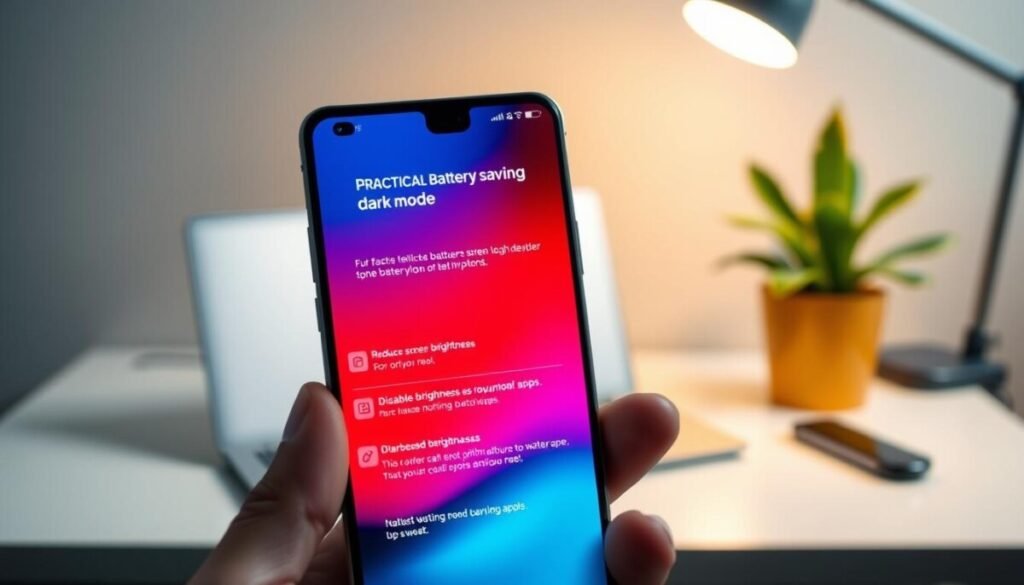
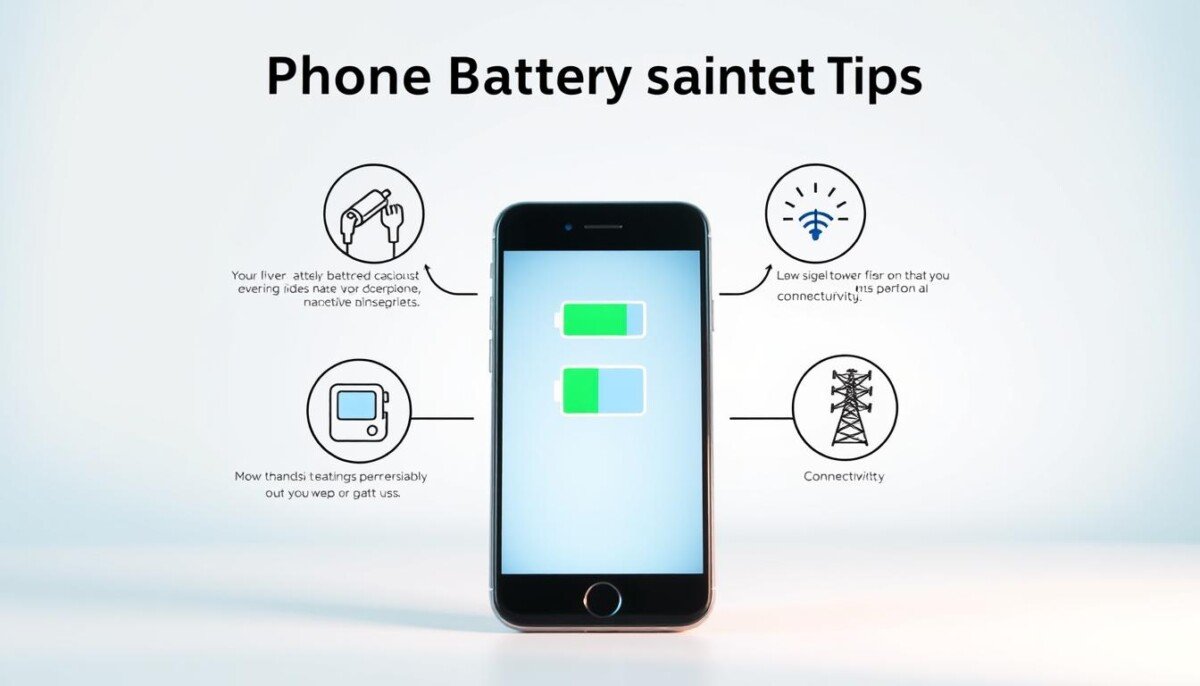
A few settings changes today will extend your device life far more than a theme swap. Start by lowering your screen brightness—this cuts the most power across OLED and LCD phones.
On LCD displays, control the backlight more than the color theme. For OLED displays, using dark themes plus low brightness reduces how many pixels emit light.
Close unused apps and turn off unneeded connectivity. Background sync and idle apps add steady drain over time.
- Keep brightness low: Aim under 50% indoors for the best gains.
- Combine strategies: Using dark with lower brightness gives the best balance on OLED phones.
- Manage apps: Quit background apps and limit auto-sync where possible.
- Use built-in tools: Turn on battery saver or adaptive brightness to automate changes.
| Action | Why it helps | When to use |
|---|---|---|
| Lower brightness | Reduces display power draw | All the time indoors |
| Dark themes on OLED | Fewer lit pixels, less power | Low-to-moderate brightness levels |
| Limit background apps | Cuts steady system load | Daily work hours |
Small habits add up. Follow these steps and your phone will last longer through the workday while keeping performance steady.
Conclusion
For most users, small habits beat a theme switch when stretching device life.
Dark mode save can help on OLED phones, and dark mode saves matter most at high brightness. The real returns are usually modest for day-to-day use.
On LCD screens, the visual theme offers little real benefit. Focus on screen brightness, app management, and background tasks to cut power use.
Choose settings for comfort and clarity first, then tune for longer battery life. Close unused apps and lower brightness to get the best results.