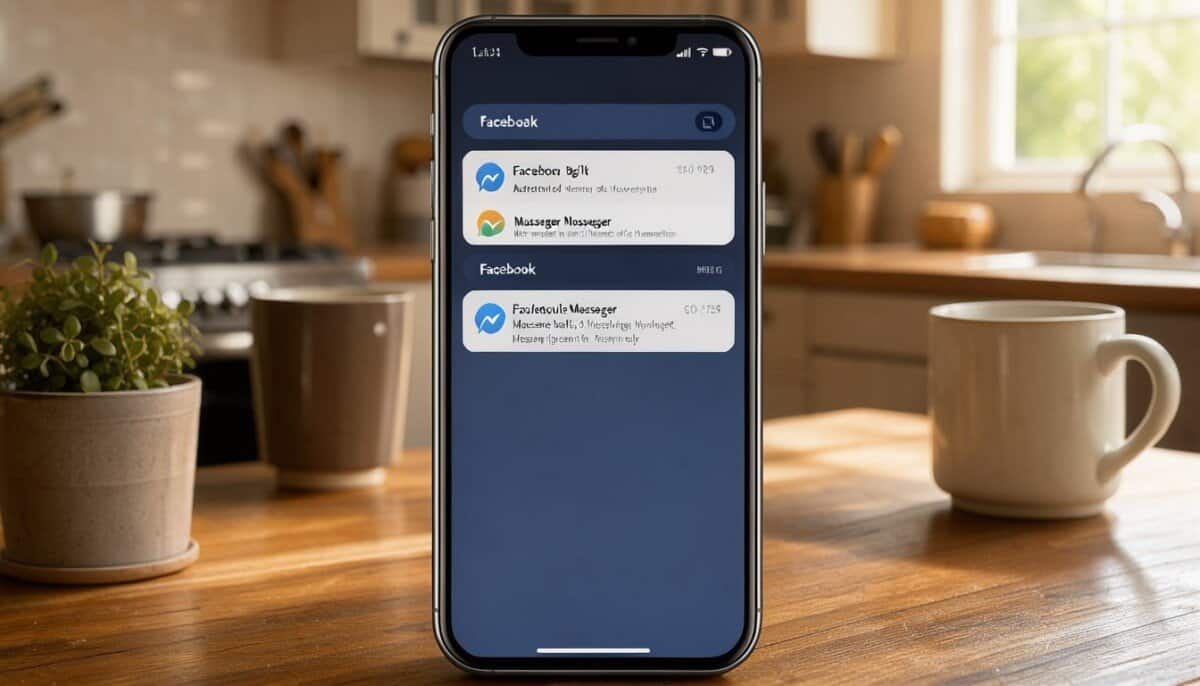
Two alerts for one Facebook action usually mean more than one notification path is active. The Facebook duplicate notifications issue usually stops when you find the app or browser sending the second alert and turn it off.
A notification path is a place that can send an alert, such as Facebook, Messenger, or a browser. Each can alert you about the same post, so note whether you hear a sound, see a banner, or get both. Keep at least one alert route active for timely updates you still want to see.
Start with phone settings only after you spot the alert type. That clue can help you tell an app alert from a browser alert. Then change one route and test the result before making another change.
Key Takeaways
- More than one app or browser can alert you about the same activity.
- Note whether the extra alert is a sound, banner, or both.
- Check Messenger reminders for alerts about old messages.
- Chrome can send Facebook alerts apart from app alerts.
- Keep one route on for updates you still want.
How to Fix the Facebook Duplicate Notifications Issue
If old messages keep triggering reminders, check Messenger’s Message reminders setting first. Message reminders are separate Messenger alerts about old messages, not new activity.
Turn off Message reminders if that option appears in Messenger. On a Galaxy S23, open the three-line menu, then Settings, Notifications and sounds, Friends, and Message reminders.
Turn off Messenger message reminders
Switch off Message reminders to stop reminders about old messages. Menu names can change with app updates, so look for the same setting names.
A second alert may come from Facebook and Messenger both handling one message. Compare the alert settings in both apps before you silence either one.
| Alert path | What you may notice | Setting to check |
|---|---|---|
| Facebook app plus Messenger | Two alerts or sounds for one message | Compare both apps’ alert settings |
| Messenger Chat Heads | An extra alert or sound | Toggle Chat Heads to test, then check if it returns |
| Chrome site notifications | A browser alert beside an app alert | Chrome Site Settings, Notifications, then block Facebook |
Check for a second app or browser alert
On a Pixel XL, a Facebook “Pop” followed three to five seconds later by a Messenger “Ding” pointed to duplicate alert paths. Turning off Chat Heads appeared to help for a time, but check whether the alert returns.
Chrome can send Facebook alerts from messenger.com, even when the app also sends alerts. Browser menu names can vary by version.
Change one alert path at a time so you can tell which setting stopped the extra sound.
Chrome Site Settings lets you block Facebook site notifications. If you are also sorting out missed work app alerts, our Teams notification settings guide explains how app and device controls can both affect alerts.
A Facebook post can reach you through more than one route. Test each route after a change, and keep the one that best fits how you use notifications.
Adjust iPhone notification controls

On iPhone, Repeat Alerts affects Messages, not Facebook or Messenger. The Facebook duplicate notifications issue on iPhone and iOS is usually managed through Facebook or Messenger app notifications.
Repeat Alerts repeats configured Messages alerts at two-minute intervals in 2026. That control does not repeat Facebook or Messenger alerts.
Review and clear the notification history
To fix a notification glitch on your iPhone, review Notification Center and check the app’s alert settings. Notification Center shows recent alerts, while app settings control how new alerts appear.
- Open Notification Center to review recent alerts.
- Swipe left on a Facebook or Messenger alert to manage or clear it.
- Tap Close, then Clear, to remove alerts from the history.
- Open that app’s iPhone notification settings to check alert style and its Home Screen badge.
Apple’s iPhone notification guide covers reviewing, clearing, and changing alerts. Clearing the history removes notifications from the view, not messages or app activity.
Change app alerts and distinguish Messages repeats
If notifications are turned on but you are not getting them, check both the app’s alert settings and iPhone settings. Alert style and the Home Screen badge can each affect what you see.
You can set iPhone notifications to Count, Stack, or List; changing that view needs iOS 16 or later. A list may make it easier to spot two alerts for one action.
The iPhone Repeat Alerts setting can explain why Messages repeats a configured alert. It cannot explain why Facebook or Messenger repeats an alert.
If your iPhone repeats notifications, check whether the alert belongs to Messages before changing Facebook settings. For a stuck notification, use Close, then Clear, in Notification Center.
A badge may stay even after you clear notification history because the app still has unread activity. If the badge remains after you clear the history, check the app itself for activity that is still unread.
Check for a Facebook or Messenger outage

A Messenger outage tracker reported no problems detected on November 24, 2026. Its last detected outage was October 16, 2026, for about 42 minutes.
A status check is useful when several people cannot use Messenger. If alerts arrive together after your phone reconnects, suspect a phone or app delivery issue.
An outage may affect many people at once, while a phone setting can affect just you. Ask someone nearby whether Messenger works for them before changing more settings.
Several people losing Messenger at once points more strongly to a service issue than a phone setting.
Android notification channels let you manage alerts by app and alert type. A delayed group of alerts can appear after your phone reconnects, even if the service works again.
Check whether other apps also delivered alerts late. If only your phone is affected, focus on its app and notification settings rather than assuming a platform-wide outage.
Conclusion
You can usually quiet a duplicate alert without turning off every Facebook update. Disable only the extra alert route, then test with a new message or post before changing anything else.
If one alert still reaches you, you can keep the updates that matter without hearing every sound twice. A short test helps you avoid silencing an alert you still need.
Keep a note of the setting you changed so you can restore it if an important alert disappears.


