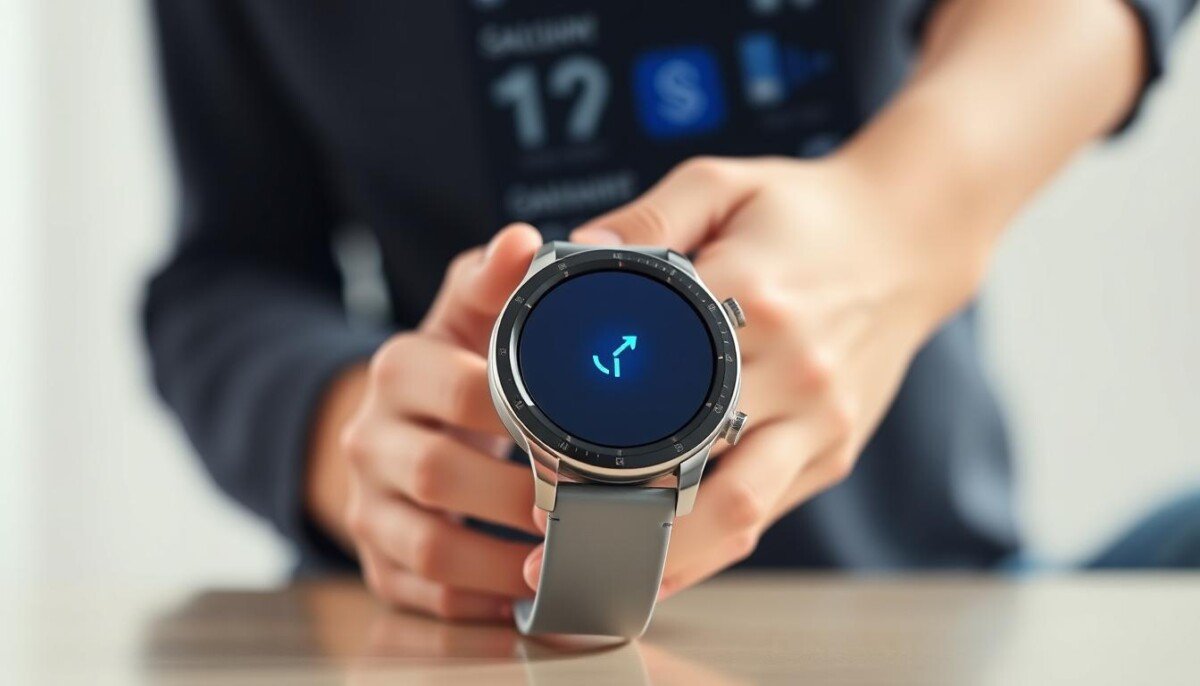
Have you tried every trick but your smartwatch still won’t connect to your phone? That sudden break in sync can disrupt your day and block alerts you count on.
This short guide walks you through clear steps to restore the link between your device and phone. We explain quick restarts, resetting the Galaxy Wearable app, and when a service visit is the right move.
If your screen stays blank or the device keeps dropping connection, simple checks often fix the problem fast. We cover options for new and older models so you can get back to tracking time and notifications without delay.
Key Takeaways
- Restart your watch and phone first; many connection issues clear quickly.
- Reset or re-install the Galaxy Wearable app to rebuild the link.
- Unpair and re-pair the device if simple fixes fail.
- Settings and menus vary by model and software—follow model-specific steps.
- Visit a Service Center if physical damage prevents a restart or button use.
Initial Troubleshooting Steps
Start with a quick restart of both devices. This clears temporary bugs and saves time. A reboot often restores the connection in minutes.
Restarting Your Devices
Press and hold the Power key until “Rebooting…” appears. On some models it can take up to 30 seconds for that message to show.
To force a reboot, press and hold the Home and Back buttons together until the device restarts. Use this when the screen is frozen or the device fails to respond.
Checking Battery Levels
Ensure both your phone and wearable have at least 25% charge. Low battery can block background services and stop a successful connection.
- Disable battery-saving modes in the settings phone menu to allow background tasks.
- Confirm the model-specific options for restart in the device settings page before trying advanced steps.
- If a hard reboot is needed, remember it reloads the operating system and often fixes the issue.
If restarts and charging don’t help, follow the detailed troubleshooting steps in our extended guide for more solutions: troubleshooting steps.
Galaxy Watch Not Pairing: Basic Bluetooth Checks
Start by confirming both devices are close and free from barriers that can weaken Bluetooth.
Keep the phone and your galaxy watch within about 30 feet during setup. Walls, large appliances, and metal objects can block the signal and cause connection issues.
Open the watch settings to confirm Bluetooth is on and actively searching for the phone. On Tizen models press the Home key to find Settings; on Wear OS swipe up to Apps, then open Settings.
Also check your phone’s Bluetooth toggle in its settings. If Bluetooth is enabled on the screen but the pairing still fails, move the two devices closer and retry.
- Keep both devices within range and free of interference.
- Use the correct method for your model to reach Settings.
- Ensure Bluetooth is enabled on the phone before starting pairing.
If these basic checks don’t resolve the problem, try the more advanced troubleshooting steps for further solutions.
Managing the Galaxy Wearable App
Start by verifying the Galaxy Wearable app on your phone is up to date.
Updating the Application
Open the Play Store or the App Store on your phone and search for the Galaxy Wearable app.
Find the app in the store page. If you see UPDATE, tap it to install the latest version.
If the store shows OPEN instead of UPDATE, your app is current and ready.
- Keeping the wearable app updated keeps the bridge between your phone and watch stable.
- Open Galaxy Wearable to confirm device plugins and companion items are current.
- Regularly checking the Play Store or the App Store reduces long-term connection issues.
If you cannot find an update, open galaxy settings on your phone to confirm the app is recognized and has required permissions.
Clearing Cache and App Permissions

Start by clearing temporary files and checking app permissions on your phone. These small steps remove hidden conflicts that often block sync between the device and your phone.
Open Settings > Apps on your phone. Find Google Play services, tap Permissions, and allow any items that are denied until the list reads “No permissions denied.”
Next, locate the Galaxy Wearable app in the apps list. Tap Storage and clear the cache to remove stale data that can interrupt connection.
Then open galaxy wearable and confirm all permissions are granted. If permissions are restricted, the device will struggle to sync and send alerts reliably.
- Clearing the cache resolves hidden file conflicts.
- Use Settings > Apps to access storage and permission controls.
- Ensure Google Play services have full permissions for stable links.
Result: After these steps, restart both phone and device. This often fixes persistent faults without a full reset.
Updating Watch and Phone Software
Check for updates on both devices before deeper troubleshooting. A quick update often fixes the small bugs that cause connection issues. This step can save time and avoid resets.
On an Android phone, open Settings > Software update > Download and install. Install any available system updates and restart the phone after the process finishes.
Open the Galaxy Wearable app on your phone and tap Watch software update to check the wearable. If the samsung galaxy watch shows an update, start it while both devices charge and stay nearby.
- Always keep your phone and watch on the latest releases to avoid compatibility issues.
- Restart both devices if an update refuses to install, then try again.
- Confirm your phone has enough free storage to download update files to prevent failed installs.
Regular updates include patches for known issues and improve performance. Keeping software current is one of the best ways to ensure the device pairs and runs smoothly.
Unpairing and Reconnecting Devices

Begin by cleaning up past Bluetooth pairings so the phone and watch can start fresh. This clears old profiles that often block a successful reconnect.
Removing Old Bluetooth Profiles
Open your phone Settings > Bluetooth. Find the watch in the device list and tap the settings icon next to it.
Select Unpair or Forget to remove the old profile. Then open galaxy settings to confirm the device no longer appears on the list.
Establishing a Fresh Connection
Restart both the watch and phone before attempting to reconnect. A restart clears temporary data and reduces interference during the process.
Open galaxy wearable to begin the setup. Follow the on-screen steps to create a new link and grant required permissions in the wearable app phone interface.
- Manually unpair from Bluetooth if the device remains visible but fails to complete the connection.
- Verify the device is removed from the phone list via open galaxy settings before starting again.
- If issues persist, consult the official support page for model-specific solutions.
Resetting Your Samsung Smartwatch
When software fixes fail, a full factory reset often clears deep errors and restores normal operation.
Back up your data first. Open the wearable app on your phone and save settings, health data, and watch faces before you reset watch settings.
To reset on the device, open Settings > General > Reset. Confirm the command to return the device to factory defaults.
If you own a Galaxy Fit, go to About band > Reset band to clear data.
If the screen is stuck, use the galaxy wearable app on your phone to start a remote reset. Or press hold the power button to force a restart, then try the reset again.
After the reset, you must reconnect the samsung galaxy watch and open galaxy wearable to complete setup and sync updates.
| Method | When to Use | Outcome |
|---|---|---|
| On-device Reset | Device responsive; settings accessible | Full factory default; clears user data |
| App-initiated Reset | Screen unusable or remote start needed | Removes profiles; allows fresh setup |
| Force Restart | Device frozen or unresponsive | Reboots OS; may restore access without full reset |
Addressing Cellular and Network Issues

A network reset can clear hidden settings that stop an LTE-capable device from connecting. Use this when a standard restart leaves cellular service unusable. The process removes saved carrier data that can cause persistent issues.
Resetting Network Settings
On Tizen models go to Settings > Connections > Mobile networks > Mobile plans > Reset. This clears carrier entries and forces a fresh activation attempt.
On Wear OS open Settings > Connections > Mobile networks > Access Point Names > Reset. You can also trigger a network reset from the Galaxy Wearable app on your phone.
- If LTE fails, reset network settings to remove configuration errors.
- Verify bluetooth enabled and that your settings phone allow carrier handoffs.
- Resetting often fixes activation issues where the device cannot connect to mobile data.
After a reset, confirm your mobile plan details and re-enter any required profile information. This isolates network causes so the device keeps a reliable connection even when away from your phone.
Handling Common Error Codes
Error codes give a fast clue to the root problem. Note the number on the screen and follow the right steps. This saves time and prevents guesswork.
2001 / 5000: These codes usually mean the app can’t talk with the network service. Check your phone’s settings, confirm cellular or Wi‑Fi is active, and restart both devices.
3001: Activation failed. Try a force restart by using the press hold button method. Then reopen the galaxy wearable app and retry activation.
4002: This code signals a software update is required. Open the Play Store and update the app and the device software. Install any pending updates before reattempting setup.
- Verify app permissions and settings for the model you own.
- Keep Bluetooth active during fixes and stay near the device.
- If an error persists, record the code and check the official support page for tailored solutions.
Result: Addressing these codes in order usually restores connection and clears common problems quickly. If steps fail, contact Samsung support for model-specific help.
When to Seek Professional Service
A trained technician can spot physical faults and hidden errors that routine fixes miss. If your problem persists after the steps above, professional help saves time and risk.
If the screen is cracked, a button is stuck, or the device fails to respond after a reset, visit an authorized Service Center. Physical damage usually requires hands‑on repair and replacement parts.
When software resets and apps fail to clear the fault, the root cause may be internal hardware. Contact Samsung support or bring the unit to an authorized repair center for diagnosis.
- Have proof of purchase and the serial number ready for faster service.
- Do not open the device yourself; that will void the warranty and risk further damage.
- If specific error codes persist, contact Samsung help for guided next steps or consider professional repair.
If you want extra troubleshooting before a service visit, check a detailed guide for sync problems here: sync troubleshooting. A technician can then focus on hardware if issues remain.
Conclusion
Follow these last tips to keep your wearable app and phone working together. Use the clear steps here so the watch and phone keep a steady connection. Back up settings before major changes and run updates when available.
Keep both devices charged and the galaxy wearable app current to avoid common problems. If the samsung galaxy watch or phone shows a blank screen during setup, try a restart and then a fresh pairing.
Update the app phone permissions and check watch software when updates arrive. If issues persist, seek professional support for a fast fix.
Thank you for reading this page. We hope these solutions save you time and restore full device function.