Why does your device heat up during one app but stay cool during another? This is the core question many users face. Gordie, for example, sees his iPhone 11 get hot after 20–25 minutes on Google Meet, yet long FaceTime sessions stay comfortable.
You likely want quick, practical steps that work. The problem often comes from high CPU demand when streaming a live call. That strain forces the battery and processor to work harder, which leads to overheating.
We will explain how apps place different loads on your device and offer clear fixes you can try right away. For deeper troubleshooting and causes, see this guide on managing heat during streaming and device use at smartphone overheating causes and fixes.
Key Takeaways
- Different apps tax hardware differently; one app can make a device work harder than another.
- Simple steps like closing background apps and lowering brightness can reduce heat fast.
- Use short breaks during long calls to let your device cool.
- Cases and direct sun raise temperatures; remove the case and move to shade if needed.
- If heat persists, seek professional help to rule out battery or hardware issues.
Understanding Why Your Device Gets Hot
When an app pulls heavy data and CPU time, your device reacts by getting warmer. This can come from multiple sources: apps that stream high-resolution content, many apps running in the background, or a weak network that forces extra effort to stay connected.
Resource-Heavy Apps
Some apps demand more processor and memory. Google Meet, for example, can use more memory and network resources than FaceTime. If your battery health is below 80% capacity, the device will struggle to manage performance and may generate excess heat.
Network and Signal Factors
A poor wifi or cellular signal makes the device boost radios and use more power to send data. That extra work raises temperature quickly during long calls or sustained streaming.
- Too many apps running increases processor load and heat.
- Low battery health reduces thermal headroom and raises risk of overheating.
- Weak network or unstable signal forces higher power use and more heat.
| Cause | What it stresses | Quick check |
|---|---|---|
| Resource-heavy app | CPU & RAM | Close unused apps; test with lighter app |
| Poor battery health | Power delivery | Check battery health in settings |
| Weak network signal | Radio power | Move closer to wifi or check signal bars |
| Background processes | Continuous load | Disable background refresh for heavy apps |
Immediate Fixes for Phone Overheating on Video Calls

Tackle thermal spikes with three simple moves you can do in under a minute. These steps help reduce processor load, save battery, and lower temperature while you stay connected.
Adjusting Screen Settings
Lower your screen brightness before the call. Dimming the display cuts significant heat and extends battery life.
Turn off high-resolution streaming where possible to reduce data and GPU load.
Managing Background Processes
Close unused apps that run in the background. Swipe up from the bottom and pause to view previews, then swipe away any app not needed.
Stopping apps running in the background saves power and keeps heat down during long calls.
Removing Protective Cases
If your phone feels hot, remove the protective case. Exposed air helps the device shed heat more efficiently.
Also avoid charging the battery during a long session. That adds extra temperature and stress.
Long-Term Strategies to Prevent Thermal Issues
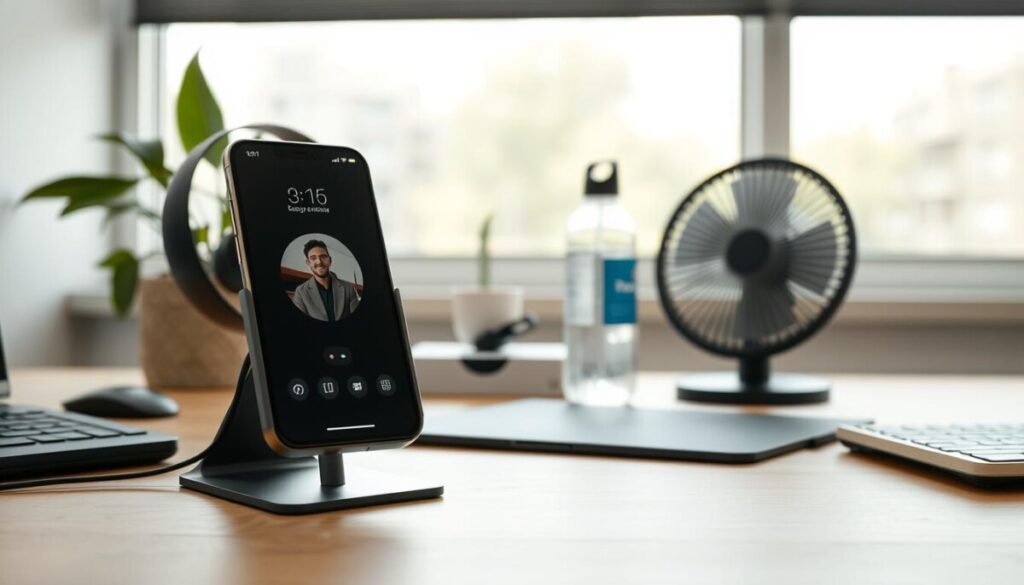
A few setup changes make a lasting difference in device temperature and performance. These steps reduce strain so you spend less time troubleshooting and more time working.
Adjusting screen settings
Lower your screen brightness and enable auto-brightness to match ambient light. That cuts power draw and reduces heat during long use.
Reduce high-resolution streaming where possible. Small quality drops can save significant processor and battery effort.
Managing background processes
Keep background apps to a minimum. Disable background refresh for less-used apps and close extras before a long session.
Also keep your software updated; updates often include efficiency fixes that limit unnecessary processor work.
Removing protective cases
Use a breathable case or remove it during heavy use. Better airflow helps the device shed heat faster and protects battery life.
Avoid charging in direct sunlight or on soft surfaces. For tips about battery health, check battery health.
| Strategy | What it helps | How to check |
|---|---|---|
| Lower screen brightness | Reduces display power | Toggle brightness or enable auto-brightness |
| Limit background apps | Cuts CPU load | Close apps; disable background refresh |
| Keep software updated | Improves efficiency | Check system updates in settings |
| Avoid charging in heat | Protects battery | Charge in cool, hard surfaces |
Conclusion
A few deliberate moves will keep your device cooler and more reliable. Protect the battery by closing unused apps and lowering screen brightness before a long session.
During a video call, reduce streaming quality if possible and pause unnecessary apps. Take short breaks to let the device rest and avoid continuous stress.
Do not use charging while you run heavy sessions. Removing a tight case helps air flow and cuts temperature fast.
Consistent care—keep software updated and watch performance—keeps your phone ready for every important call.