Can a single app truly replace scattered shortcuts and clunky menus across your machine? This guide explains how the new release brought powerful productivity tools to a PC audience. You will see how a familiar macOS-style launcher now helps you move faster and stay focused.
Raycast v0.71.0.0 Beta brings advanced features like rich clipboard and clipboard history, a growing extension ecosystem, and smart keyboard shortcuts. These tools let you customize your workflow, call up commands instantly, and reduce friction when you edit text or manage files.
In this short guide you will learn setup steps and the best extensions that boost productivity. Expect clear steps to install, tips to map commands, and ways to make the app fit your daily work. By the end, key actions will be within a few keystrokes and your routine will feel simpler.
Key Takeaways
- New beta brings macOS-like launcher to PC users with quick setup.
- Clipboard and history features speed up text handling and copying.
- Extensions let you tailor workflows and add useful tools.
- Keyboard shortcuts keep important commands within reach.
- Install steps and top picks in this guide will save you time.
Getting Started with Raycast for Windows
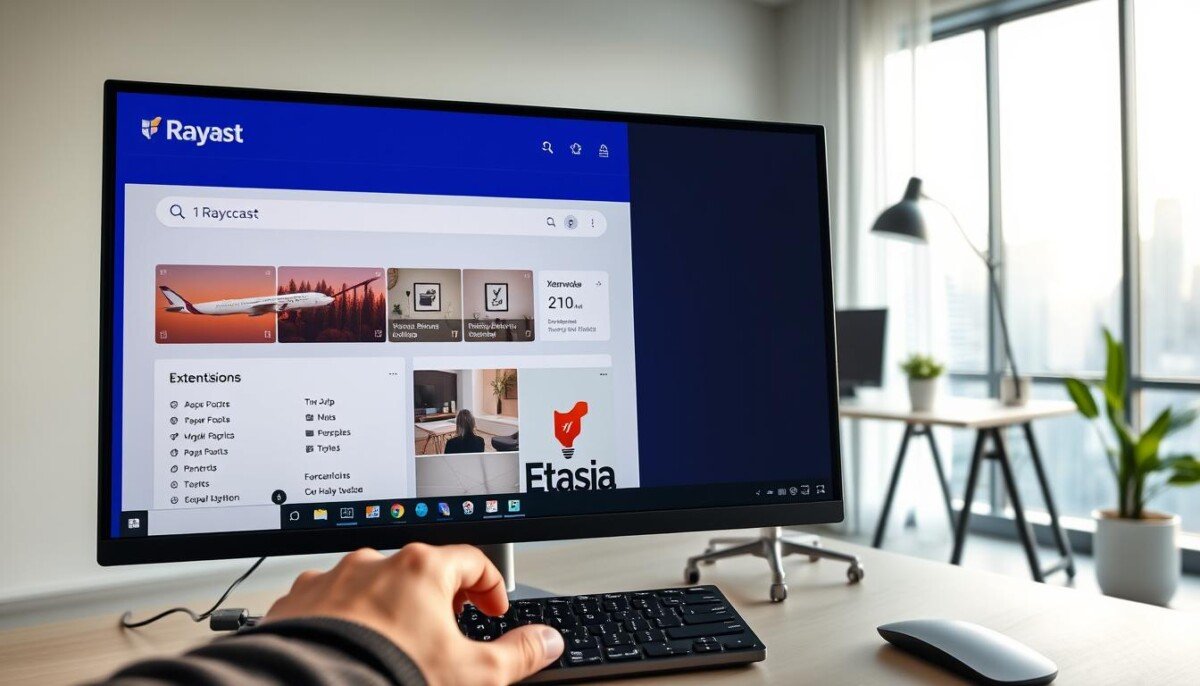
Replace the clunky start menu with a fast command bar. Set Alt+Space to open the command bar and you can call up apps, search local files, or run quick commands in seconds.
This change makes your computer feel snappier. Instead of digging through nested menus, you type a few letters and the result appears.
Map the shortcut once, use it every day. The Alt+Space hotkey keeps your most used app and file access one keystroke away.
- Find apps instantly and switch context without losing focus.
- Search documents and files with simple queries.
- Execute saved commands to automate repetitive tasks and save time.
Professional users gain real time savings. Centralizing search and launching in one bar reduces friction and keeps work moving.
Installation and Initial Setup

Start by confirming your PC meets the minimum system needs before installing the launcher.
System Requirements
Ensure your system runs Windows 10 (21H2 or later) or Windows 11. These are the minimum supported releases for the current beta.
Keeping the OS up to date prevents hiccups during setup and improves stability.
Installation Methods
You can install the app straight from the Microsoft Store or use the command line with “winget install raycast”. The Store path is simple; the winget command is faster for power users.
The installer is lightweight and designed to keep your machine responsive while you manage apps and local files.
- The setup wizard walks you through permissions and preference sync.
- Syncing preferences readies your workspace and saves time on configuration.
- This unified approach reduces setup overhead so you focus on work.
Mastering Core Productivity Features

Learn how the command bar turns small actions into big time savings. These core features put common tasks within a keystroke so you keep momentum while you work.
Clipboard History Management
Access everything you copied. The clipboard history stores recent snippets and text so you can paste past items without retyping.
This saves time when you repeat phrases, links, or code. Use keyboard shortcuts to open history and pick the exact entry you need.
File Search Capabilities
Search local files instantly. A custom file indexer scans your files in real time and returns results much faster than native tools.
Find documents, apps, and system items from the bar. Clear results mean less digging and more finished work.
Quicklinks and Snippets
Create a single source of truth. Quicklinks hold websites and system links; snippets store email templates and repeated text.
Use commands to insert snippets or jump to saved links. The built-in calculator also parses plain language so you can run math or currency conversions right in the bar.
- Clipboard history speeds up repetitive text tasks.
- Real-time indexing makes file search responsive.
- Quicklinks and snippets reduce typing and errors.
- Keyboard shortcuts keep your hands on the keys and your focus intact.
Want to compare AI-powered tools that expand productivity? Check this AI tools comparison guide to see complementary apps and workflows.
Expanding Functionality with the Extension Store
The extension store turns the launcher into a central hub that connects many of your daily tools.
Install integrations for GitHub, Notion, and other apps to keep work inside one surface. These extensions use React and TypeScript, so development follows familiar web practices and is easy to pick up.
Use cases are immediate. Control smart home devices, translate text without opening a browser, or review pull requests from the same interface.
Many extensions run on macOS and windows out of the box. That makes switching platforms smoother and keeps your workflows consistent.
- Discover prebuilt tools to automate repetitive tasks.
- Customize quick commands with simple development skills.
- Turn the app into a single place for your key services.
| Extension | Primary Use | Platforms | Tech Stack |
|---|---|---|---|
| GitHub PR Manager | Review and merge pull requests | macOS, windows | React + TypeScript |
| Notion Quicklink | Open pages and search notes | macOS, windows | React + TypeScript |
| Smart Home Control | Toggle lights and scenes | macOS, windows | React + TypeScript |
| Quick Translate | Translate text without a browser | macOS, windows | React + TypeScript |
Optimizing Your Workflow with AI and Shortcuts

Turn short keystrokes into deep research and instant text edits without opening another app. This keeps you in the flow and reduces context switching.
Leveraging Quick AI
Quick AI runs on OpenAI’s GPT-5 mini and answers with citations when you hit the Tab key. Use it to draft summaries, pull facts, or check sources without leaving your workspace.
Save time and avoid bouncing to a browser. The AI gives predictable, copy-ready responses you can paste into messages, docs, or code.
- Research complex questions quickly, without launching a browser.
- Use custom keyboard shortcuts to run AI prompts and paste refined text.
- Combine commands and snippets to automate repetitive writing tasks.
Practical tip: Bind an extension hotkey to a common prompt and reduce multi-step edits to a single key press. Over time you will see real gains in productivity.
If you want complementary tools that speed multimedia tasks, check this video editing tools guide to find apps that pair well with AI workflows.
Why Raycast Outperforms Native Windows Tools
When speed matters, a single interface that combines search, clipboard, and app launch wins every time.
This unified approach removes the need to jump between separate utilities. It puts files, apps, and your clipboard history in one fast place so you finish tasks with fewer steps.
The built-in search often lags or returns noisy results. A dedicated file indexer returns instant matches and helps you open the right file without extra clicks.
The platform feels polished and native. It blends with menus and your existing keyboard habits, so development and daily use both feel smooth.
- Combine app launching, search, and clipboard into one cohesive tool.
- Indexing delivers faster, more accurate results than the default menu search.
- Manage quicklinks, snippets, and the built-in calculator without extra apps.
- Replace many small utilities and save real time on routine work.
Use this single app to centralize commands and cut clutter. You will spend less time hunting and more time doing focused work.
Conclusion
A compact, keyboard-first tool can turn routine clicks into focused work and real time saved. That shift matters if you handle many apps, files, and quick edits each day.
Centralizing your apps, files, and AI tools reduces context switching and keeps your attention on outcomes. You will spend less time hunting and more time shipping work.
The rich extension ecosystem lets you tailor the interface to specific tasks and teams. Add integrations, snippets, and clipboard workflows that match your role and industry.
The beta is ready to try. Download it today to see immediate gains in speed and focus as the platform matures with regular updates.