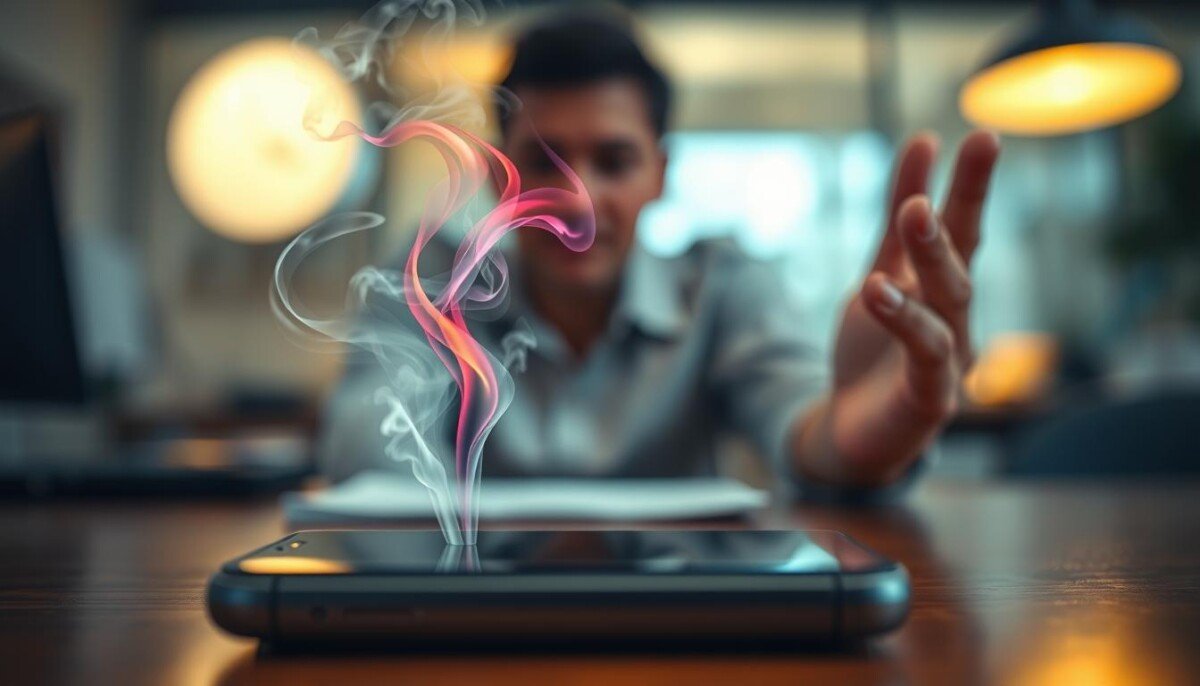
Have you ever caught a sudden smell and wondered if your device is about to fail? That odd scent during charging can be a real warning. Act quickly and calmly to protect yourself and your home.
Stop charging immediately if the scent appears while the unit is plugged in. Power off the device and move it away from flammable materials. These simple steps reduce the risk of fire and further hardware damage.
Many users notice this issue starts during charging, which often points to stressed internal parts or a faulty charger. Take the time now to decide if a replacement or professional check is needed to avoid a worse problem later.
Key Takeaways
- Unplug and power down immediately when you detect a burning smell.
- Check charging equipment and consider a replacement if the scent returns.
- Persistent odor is a serious safety problem; seek professional help.
- Avoid charging in hot places and remove cases while cooling down.
- Learn simple fixes and prevention tips at smartphone overheating causes & fixes.
Identifying Why Your Phone Smells Like Burning
When your device gives off a noticeable scent, quick checks can reveal the root cause. Take a calm, step-by-step approach to find an answer and avoid damage.
Dust and Lint Accumulation
Dust and lint collect in the charging port and trap heat from charging cables and connectors. That debris can produce a plastic odor when hot components warm up.
Inspect the port with a light and small tool. A careful cleaning often removes the source and fixes the issue without repair.
Internal Component Overheating
Internal components and rubber parts give off a warm-computer scent during the first few days of use or after heavy charging. If the scent persists, it may point to a short on the circuit or failing battery cells.
If you see smoke or strong odor, stop charging immediately and seek a professional inspection. Early action can save the device and reduce long-term damage.
Immediate Safety Steps When You Detect Odors

If you detect an unusual scent from your device, act fast and follow a short checklist.
Stop charging and power off immediately. Unplug the charger and move the device away from fabric or papers. This small step reduces the chance of a fire and limits battery harm.
Check for heat and visible damage. If the unit feels hot or the odor worsens, leave the area and seek help. High-profile recalls, like the 2016 Samsung Galaxy Note 7, show that failing batteries can be deadly.
- Move the device to a non-flammable surface.
- Do not puncture or squeeze a swollen battery.
- Contact a certified repair center to discuss replacement and next steps.
| Action |
When |
Why |
| Unplug and power off |
At first scent |
Stops further charging and heating |
| Move to safe spot |
Immediately |
Reduces fire risk to surroundings |
| Seek professional help |
If odor persists |
Battery or circuit faults need expert repair |
Troubleshooting Charging Port and Component Issues

A quick inspection of cables and the charging port often reveals the root of a port-related odor.
Inspecting the Charging Cable
Unplug and look for frayed insulation, melted plastic, or exposed wires. Surface Pro cables were redesigned after fraying exposed live conductors, so use that history to guide checks.
Checking for Circuit Board Damage
Open the port area to spot burn marks or dust buildup. A Samsung Galaxy A5 (2017) case showed that internal boards can fail and cause a burning smell.
Evaluating Battery Health
Look for bulging, discoloration, or rapid heat during phone charging. If you see serious damage on boards or the battery, seek a professional replacement.
When in doubt, contact maker support. For device-specific reports and community answers see the Apple support thread.
| Check |
What to look for |
Next step |
| Cable |
Fraying, melting, loose connector |
Replace cable; test with known-good adapter |
| Port |
Debris, burn marks, loose pins |
Clean gently; replace port if damage |
| Battery & boards |
Bulge, heat, discoloration |
Stop charging; seek professional replacement |
Conclusion
When you catch an acrid odor from your device, stop charging and move to a safe spot. Prioritize safety over convenience to lower fire risk and reduce battery damage.
Find clear answers to your questions before you decide on repair or replacement. A persistent burning smell is a serious problem that could signal failing cells or wiring faults.
If you cannot identify the source or the odor returns after cooling, get professional help right away. For guidance on electrical odors and next steps, see this electrical burning smell guidance.
Acting fast can protect your life, your home, and your phones.
FAQ
My device smells hot or like burning — what should I do first?
Immediately stop using and unplug the device. Power it off and move it to a safe, non-flammable surface away from flammable materials. If you see smoke or flames, evacuate the area and call emergency services. For a faint odor without smoke, let the unit cool and keep it powered off while you inspect it.
What common causes make a device emit a hot, unpleasant odor?
The most frequent culprits are lint or dust trapped in vents or ports, a failing battery, or an overheating circuit or component. Faulty chargers, damaged charging cables, or poor ventilated cases can also cause heat buildup and odor.
How do I check for dust and lint accumulation safely?
Power off and unplug the device. Use a soft brush, compressed air (short bursts), or a clean toothpick to remove visible debris from ports and speaker grilles. Avoid poking deep into internal cavities and don’t use liquids. If debris looks embedded, seek professional cleaning.
How can I tell if an internal component is overheating or damaged?
Signs include persistent heat after light use, sudden shutdowns, unusual performance drops, or a chemical or plastic odor. Check for bulging battery, discoloration near ports, or visible scorch marks. If any appear, stop using the device and get it inspected.
What immediate safety steps should I take when I detect odors?
Turn the device off and unplug all cables. Remove any case or cover to help cooling. Move the unit to a well-ventilated area and avoid charging it until the cause is identified. If the odor worsens or you see smoke, leave the area and call emergency services.
How do I inspect the charging cable and adapter for problems?
Unplug and examine the cable and adapter for frayed wires, bent pins, melted plastic, discoloration, or a burnt smell. Swap in a reputable, manufacturer-approved charger to see if the issue stops. Never use a visibly damaged cable or third-party adapter of unknown quality.
What should I look for when checking for circuit board damage?
Only inspect externally unless you’re trained. Look for burnt marks, melted plastic, or a strong chemical smell around ports. If you suspect internal board damage, stop attempts to power the device and take it to an authorized repair center for diagnosis.
How do I evaluate battery health and decide if it needs replacement?
Watch for swelling, reduced runtime, overheating, sudden shutdowns, or poor charging. Many devices show battery health info in settings; low maximum capacity combined with heat is a warning. If the battery is swollen or the device gets very hot, replace the battery through an authorized service provider.
Can a case cause overheating and odors?
Yes. Thick, poorly ventilated cases can trap heat and amplify odors from internal components. Remove the case and test the device on a flat surface with normal use; if temperatures and smells drop, consider a slimmer, breathable case.
How long can I safely use a device after noticing an odor?
You should not continue regular use until the cause is identified. Briefly powering off and cooling is okay, but repeated use risks damage or fire. Arrange inspection or repair before resuming normal operation.
When should I contact the manufacturer or a professional repair service?
Contact them if you detect smoke, visible damage, a swollen battery, persistent heat, or if the smell persists after basic checks. Use authorized service centers for battery replacement and board repairs to ensure safety and warranty coverage.
Are third-party chargers safe to use if my original is lost?
Use only high-quality chargers from reputable brands that match the device’s voltage and current specs. Avoid cheap, uncertified chargers; they raise the risk of overheating, port damage, and electrical faults that cause odors or fires.
Could software issues cause overheating and odors?
Yes. Rogue apps or heavy background processes can push the processor to high loads and produce heat. Check battery or performance settings, force-stop power-hungry apps, update firmware, and reboot. If heat persists, hardware is more likely the cause.
Is a faint plastic or chemical scent always a hardware problem?
Not always. New devices or accessories can emit manufacturing odors for a short time. Persistent or worsening chemical smells, especially with heat, point to failing components or the battery and need inspection.
Can accumulated moisture cause odors or heating?
Yes. Moisture can corrode contacts and short circuits, producing heat and smells. If the device was exposed to liquid, power it off, do not charge, and seek professional drying and inspection.