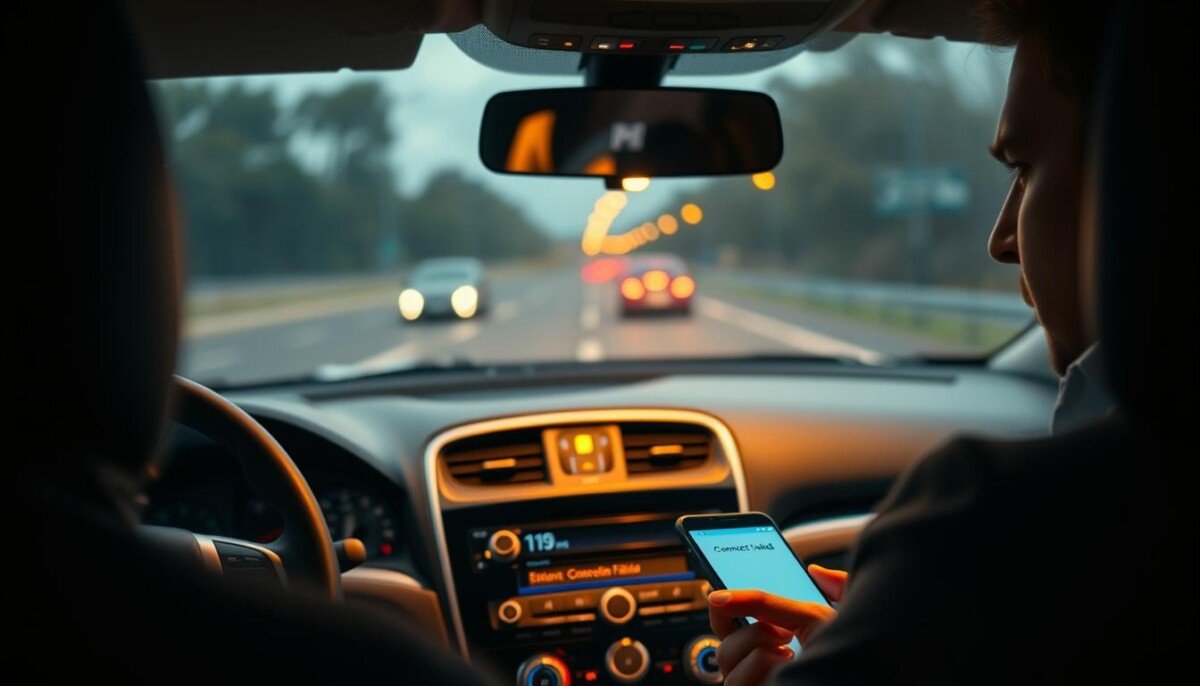
Facing a stubborn connection between your phone and car? You’re not alone. Many drivers hit a wall when their in-car screen refuses to mirror navigation or media.
Is the problem a simple software update or a hidden hardware snag? Start with quick checks: your phone needs version 9.0 or higher for wired use, and a high-quality usb cable under 3 feet helps keep data flowing.
The guide that follows gives clear, step-by-step fixes for this common issue. It covers fast resets, the importance of software updates, and when to press the blue OnStar button for live support while a vehicle reset may take 5–15 minutes to finish.
We’ll help you test cables, confirm system updates, and get your auto working again so you can reclaim navigation and calls with minimal downtime. If problems persist, see our related troubleshooting tips for wireless links here.
Key Takeaways
- Confirm your phone runs at least Android 9.0 for wired support.
- Use a high-quality usb cable under 3 feet for reliable data transfer.
- Install pending software updates on both phone and vehicle system first.
- Try a full power cycle; a vehicle reset can take 5–15 minutes.
- Contact vehicle support (press the blue OnStar button) if issues persist.
Understanding Android Auto Connectivity Requirements
Before troubleshooting, check that your device and car meet the required software and data rules. That quick check saves time and avoids extra steps.
Operating System Compatibility
Wired links require a phone running at least Android 9.0 (Pie). Wireless setups need Android 11 or higher for a stable link with your vehicle infotainment.
Data Plan Essentials
An active data plan is mandatory to stream music, load maps, and get live traffic. If you pause mobile data, the car may show limited features even when the physical connection is fine.
- The android auto app is built into modern phones; you usually do not need to install a separate app from google play.
- Check the manufacturer website to confirm car compatibility and any model-specific settings for wireless use.
- Grant permissions in your phone settings so the vehicle can access contacts, messages, and location.
| Setup | Minimum Phone OS | Key Requirement |
|---|---|---|
| Wired | Android 9.0+ | High-quality USB cable; device permissions |
| Wireless | Android 11+ | Vehicle wireless settings enabled; strong data signal |
| Compatibility Check | N/A | Visit maker website or official support pages |
Troubleshooting When Android Auto Not Connecting

Start with simple restarts — they clear temporary glitches in both phone and vehicle systems. Power off your phone and the vehicle, wait 30 seconds, then power them back on. This often fixes intermittent connectivity and frozen screens.
Next, check your phone settings. Confirm the app is allowed to access location, contacts, and data. If permissions are blocked the system may refuse the link.
- Clear the app cache via your settings menu to remove corrupted temporary files.
- Use a high-quality usb cable that supports data transfer during the initial handshake.
- Ensure your phone has the latest software updates and the vehicle system firmware is current.
If you use an aftermarket receiver, visit the manufacturer website for firmware downloads. For persistent screen or system freezes, an OnStar LED reset or a full system reset can force a refresh.
When these steps fail, seek professional assistance. Contact dealer support or use our related troubleshooting FireStick resource for general device reset tips and next steps.
Inspecting Your USB Hardware

Start by checking the physical link between your phone and car so you can rule out easy hardware problems. A quick hardware review saves troubleshooting time and gets you back on the road faster.
Cable Quality Standards
Use a high-quality usb cable under 3 feet (1 meter). Short, well-made cables keep data stable and reduce drops that make the screen flicker or lose the connection.
A damaged or low-grade cable is a common issue. Try the original cable that came with your phone when possible.
- Use a tested usb cable under 3 feet to maintain data speed.
- Avoid hubs or cable extensions; they often break the needed data link.
- If you have persistent issues, try a different cable or port in the car to isolate the fault.
Cleaning USB Ports
Dust and lint in the phone port can stop a secure fit and cause intermittent faults. Use a non-conductive tool, like a plastic pick or compressed air, to clear debris carefully.
If your vehicle has multiple usb ports, test each port in the infotainment system. One port may fail while another works fine.
If the phone port is bent or loose, consider a wireless adapter as a fallback. Always check both phone and vehicle ports when you follow these steps.
Managing Software Updates and App Cache

Keep your phone and car talking smoothly by managing updates and clearing app data regularly.
Temporary files can break the android auto app performance. Clearing cache removes those files and often fixes freezes or crashes.
Clearing Cache and Storage
Open your phone settings and find the app list. Tap the android auto app, then select Clear cache.
If the issue persists, choose Clear storage (or Clear data). This resets the app to its original state and requires reconfiguration.
- Check the Google Play Store for the latest updates to the auto app.
- After clearing cache or storage, do a quick restart phone to let the system reinitialize.
- Confirm your vehicle firmware is current; both systems must match for a stable connection.
- Verify the usb cable is good before deep troubleshooting.
- Find app version info in the app menu to share with technical support if needed.
- Follow these maintenance tips for more reset and update guidance.
Configuring Vehicle Infotainment Settings
Open your car’s settings menu and confirm the android auto app is enabled so the system can detect your phone.
If the screen does not show the app icon, check the infotainment system options and make sure the feature is not disabled.
For aftermarket receivers, visit the manufacturer website for firmware that adds device support and required updates.
- Set your phone to file transfer mode; charging-only prevents the vehicle from reading apps.
- Manage paired devices from the center display and use the menu to remove old pairings.
- If needed, perform a system reset from the settings menu to clear stale configurations.
Check Google Play for any pending app updates before you try pairing again.
If problems remain, contact dealer support or use the in-menu support link for professional assistance.
Resolving Wireless Connection Interference
Wireless interference often hides in plain sight — nearby signals can drop your phone’s link to the vehicle.
Bluetooth and Wi-Fi Stability
Bluetooth and Wi‑Fi must both be active on your phone for a stable wireless connection to the car. Toggle each off and on if the link is unstable.
Move the vehicle or phone away from crowded signal areas like parking garages. Other devices and heavy signal noise can cause intermittent drops.
- Keep your phone within close range of the vehicle to reduce interference.
- Check phone settings so power-saving modes or apps do not block Wi‑Fi or Bluetooth.
- If you use a wireless adapter, open its companion app for diagnostics and firmware updates.
- Turn Bluetooth and Wi‑Fi off and on when you notice the connection dropping while on the road.
Maintaining clean wireless signals preserves live navigation and streaming data. For extra troubleshooting tips on wireless gear and interference, see our wireless troubleshooting steps.
Resetting Your Phone and Vehicle Pairing
Clearing old pairings and restarting hardware gives you a true fresh start for the infotainment link.
On the vehicle screen, choose Forget the Phone Connection. On your phone, open the android auto settings and pick Forget This Car.
After both entries are removed, fully restart phone and vehicle. A clean reboot helps wipe cached pairing data and avoids lingering faults.
If your vehicle supports an LED reset (OnStar), run that process; it can take 5–15 minutes to refresh the system. Confirm your phone is not in Do Not Disturb or a restricted mode before you reconnect.
- Remove pairings on both devices.
- Restart phone and car hardware.
- Follow the on-screen steps to connect phone and vehicle using a quality usb cable or via wireless.
Re-authorize permissions for the app when prompted. If issues persist, perform a deep infotainment reset or contact dealer support for hands-on assistance. For more pairing tips, see this pairing guide.
Handling Third-Party App and Notification Issues
Problems with messaging and streaming often trace back to app settings on both your phone and vehicle.
First, check the Play Store or google play for updates. Install pending updates for all apps to prevent compatibility issues.
Next, enable notifications for messaging apps in your phone settings and in the vehicle menu. If texts still fail, set your messaging app as the default service on the phone.
Clear an app’s cache as a quick fix for display glitches. If problems persist after these steps, perform a soft reset of the app or device and try again.
- Keep system and apps current to keep the in-car experience smooth.
- Check that the phone is not in a restricted mode that blocks notifications.
- For persistent app issues, seek technical support from the device maker’s website or the vehicle maker.
| Problem | Quick Check | Fix |
|---|---|---|
| Missing messages | Notifications off | Enable in phone and vehicle menu; set default app |
| App crashes on car screen | Outdated app | Update via Play Store; clear cache; restart |
| Poor integration | Permissions blocked | Grant permissions; reinstall app; contact support |
If you’ve tried everything and need hands-on help, use the vehicle’s in-car support or visit Chevrolet’s smartphone integration support for additional assistance.
Conclusion
Keep a simple routine, and your in-car link will behave far more reliably.
Check hardware first: use a high-quality USB cable and test different ports. Keep both phone and infotainment software up to date.
Clear the app cache occasionally and remove old pairings before a fresh setup. A quick reboot often fixes temporary glitches.
If you still face issues, contact dealer or device support for hands-on help. With these steps, you’ll keep navigation and media running smoothly.