Have you ever wondered how shifting from owning software to subscribing to it can transform your business? This shift, often referred to as the service model, is changing the landscape of how we interact with technology.
In today’s fast-paced world, cloud computing serves as the backbone for delivering powerful applications. By leveraging this technology, we can access essential tools without the burden of hefty upfront costs or hardware limitations. This not only allows us to focus on our core business objectives but also ensures that our users have the necessary resources to thrive.
Understanding this transformative approach helps us align our internal strategies with effective technology solutions. As we embrace this model, we prioritize data security and operational efficiency, paving the way for long-term growth in an increasingly competitive market.
Key Takeaways
- The shift to a service model allows businesses to access software without ownership.
- Cloud infrastructure reduces costs and enhances accessibility to powerful applications.
- Focus on core objectives while the service provider manages software and data.
- Modern applications are vital for maintaining a competitive edge.
- Prioritizing data security is essential for long-term growth.
- This model aligns resources with effective technology strategies.
Understanding SaaS: The Fundamentals
Have you ever considered how the shift from software ownership to subscription models can redefine your operations? This transition is at the heart of what we call SaaS applications. These services allow us to access software over the internet, rather than installing it on our own hardware.
The evolution of software delivery began in earnest when Gmail launched in 2004. This was one of the first mass-marketed SaaS products, proving that web applications could effectively replace traditional software installations. By 2019, SaaS had captured 43 percent of the cloud market, demonstrating its dominance in modern business.
Unlike traditional software that requires manual maintenance, our chosen SaaS applications live on the provider’s servers. This ensures instant access for all users. Additionally, we rely on the provider to manage the complex infrastructure and security protocols that keep our data safe.
This subscription model allows our company to scale resources based on real-time needs. It also means we benefit from automatic updates, ensuring we always have the latest features without manual intervention.
| Feature | Traditional Software | SaaS Applications |
|---|---|---|
| Maintenance | Manual updates required | Automatic updates |
| Access | Installed on local hardware | Accessible via the internet |
| Cost Structure | One-time purchase | Subscription-based |
| Scalability | Limited by hardware | Flexible scaling options |
For more insights on cloud versus on-premise project management, check out this resource.
Realizing saas based meaning in Today’s Tech Era

In today’s digital landscape, the evolution from software ownership to subscription models is reshaping how we operate. Since Salesforce launched its CRM in 1999, the industry has seen a massive shift toward cloud-based software service models that prioritize user experience.
Our insights show that large enterprises used an average of 131 SaaS applications in 2024, highlighting the rapid adoption of these digital solutions. We interpret this transformation as a commitment to agility, allowing our business to pivot quickly by selecting the best providers for our needs.
Utilizing these applications ensures that our data remains accessible and secure, even as our company grows. The transition from traditional software to modern SaaS solutions has allowed us to reduce infrastructure overhead and focus on strategic innovation.
- We believe that successful SaaS providers offer robust platforms that integrate seamlessly with our existing ecosystem.
- The subscription model provides predictable costs, enabling us to test new products without significant upfront investment.
- As we continue our adoption journey, we prioritize applications that empower our users and enhance service delivery.
For more insights on financial management software, check out this resource.
How SaaS Applications Empower Our Business

Consider how the right software tools can transform our collaboration and efficiency. By utilizing SaaS applications, we have successfully shifted our IT budgets from capital expenditure to operating expenditure. This change provides significant financial benefits for our company.
Our team leverages these solutions to streamline workflows. Every user can access the same real-time data, ensuring everyone is on the same page. This unified access enhances our ability to collaborate effectively.
We rely on our SaaS providers to manage the underlying infrastructure. This allows us to scale our operations without worrying about hardware limitations. The subscription model also offers predictable pricing, making it easier to manage costs as we expand our use of various software services.
Security is a core component of the SaaS model. Providers invest heavily in protecting our data from modern cyber threats. Moreover, these applications foster better collaboration, enabling team members to access the platform from any location with an internet connection.
| Benefit | Description |
|---|---|
| Cost Management | Shifts IT budgets to operating expenditure for better financial control. |
| Streamlined Workflows | Ensures real-time data access for all users, enhancing collaboration. |
| Scalability | Allows operations to grow without hardware limitations. |
| Predictable Pricing | Makes cost management easier as software usage expands. |
| Enhanced Security | Investments in data protection against cyber threats. |
The Role of Cloud Computing in Delivering SaaS
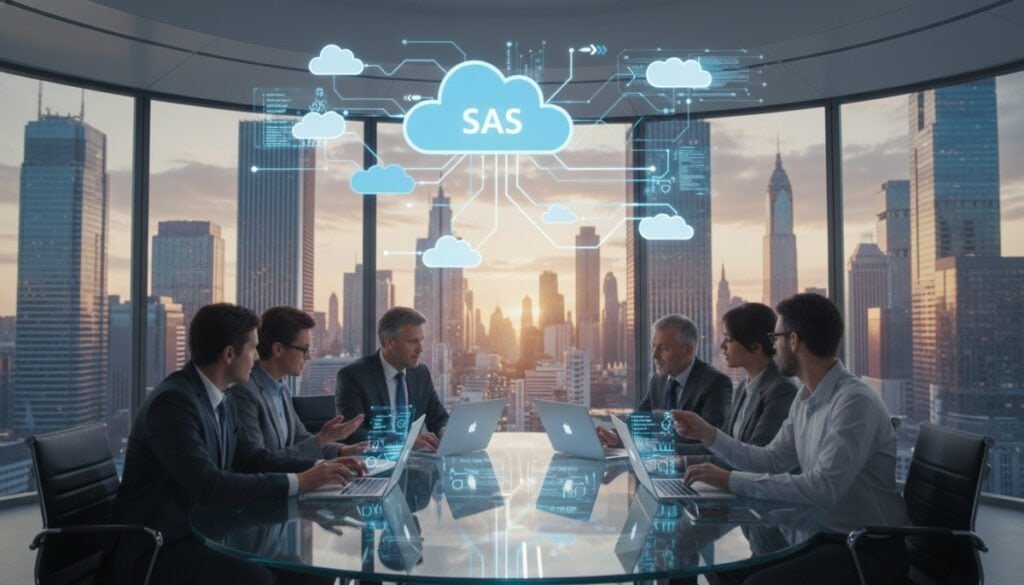
Imagine a world where software is not just a tool, but a flexible resource that evolves with your business needs. This is made possible through cloud computing, which provides the essential infrastructure for our SaaS applications.
With cloud technology, we can ensure that our services remain scalable for a variable number of users at any time. Our provider utilizes multi-tenant architecture, allowing them to serve multiple customers efficiently while keeping our data secure and segregated.
Moreover, our users access these applications via a reliable internet connection. This means they can work from anywhere without the hassle of local software installation. The flexibility of this model allows us to adjust our subscription tiers as our business needs change, optimizing our overall cost and resource efficiency.
Instant updates are another key feature of our SaaS strategy. This ensures our team always has access to the latest security patches and features. By leveraging these cloud-based solutions, we can focus on delivering value to our customers while our provider manages hardware and maintenance.
Additionally, the scalability of the cloud ensures that our software service remains performant, even during periods of high demand or rapid company growth. This adaptability is crucial for our ongoing success.
For more insights on migrating data to a new cloud storage provider, check out this resource.
Driving Customer Relationship Management with SaaS
What if we could enhance our customer relationships by leveraging modern software solutions? The subscription model offers us a way to maintain predictable pricing, essential for our long-term financial planning and customer relationship management strategy.
By utilizing advanced applications, we foster improved customer engagement. These tools help us understand our clients’ needs better and provide tailored solutions. Our SaaS providers often use the Rule of 40 to measure their performance, which reassures us about the stability and future of the software we depend on.
Effective relationship management becomes easier when all team members access centralized data and communication tools. This ensures that no client is left without support as our business grows. The recurring revenue from our subscription helps providers deliver frequent updates, keeping our tools at the cutting edge of the industry.
- We utilize advanced customer relationship management tools to track every interaction with our clients.
- These solutions allow us to scale our customer engagement efforts as our business expands.
- We prioritize applications that offer deep integration for a unified view of every customer.
Navigating Challenges and Innovations in SaaS Adoption
Navigating the complexities of modern software adoption requires a keen understanding of the potential pitfalls and innovations. As we integrate new applications into our operations, we must prioritize security and data privacy.
Ensuring Security and Data Privacy
Our team implements strict security protocols, including zero-trust architecture, to protect sensitive information. This approach ensures that our data remains private and secure from unauthorized access.
Tackling SaaS Sprawl and Infrastructure Demands
We actively manage our SaaS adoption to prevent SaaS sprawl, which can lead to security vulnerabilities and fragmented data across our business. Regular audits of our software usage help us identify and eliminate redundant applications.
By working closely with our SaaS providers, we can address infrastructure demands and ensure that our services remain performant and reliable. We prioritize SaaS solutions that offer robust privacy controls, essential for maintaining the trust of our customers and partners.
Maximizing Benefits: Data, Updates, and Advanced Integration
Consider the potential of integrating our software applications to enhance operational efficiency. This approach allows us to leverage the strengths of each tool, creating a unified ecosystem for data management.
Data-Driven Decision Making
Real-time updates are critical for our data-driven decision making. They provide our team with the most current information available at any moment. By centralizing our data, we ensure that every user has access to the insights they need to perform their roles effectively.
Seamless Integration and API Advantages
We leverage API integration to connect our various applications. This ensures that data flows seamlessly between our core business systems. Our commitment to this model keeps us prepared to adopt new technologies that can further enhance our business performance.
Continuous Improvements Through Real-Time Updates
We rely on our providers to deliver continuous improvements. This keeps our platform competitive and aligned with the latest industry standards. By maximizing the benefits of our software service, we can improve our operational efficiency and deliver better results to our customers.
Wrapping Up: Future-Forward SaaS Strategies
As we reflect on our journey, it’s clear that the future of our operations lies in the innovative potential of software applications. We are confident that our future-forward strategy will continue to leverage the power of these solutions to drive innovation across our entire business.
By maintaining a focus on cloud-based options, we ensure that our company remains agile and capable of adapting to the rapidly changing tech landscape. Our commitment to data security and efficient infrastructure will remain the cornerstone of our approach as we scale our operations in the coming years.
We will prioritize software that empowers our users and provides the flexibility needed to meet the evolving demands of our customers. As we look ahead, we see endless opportunities to refine our service model and integrate new technologies that enhance our overall productivity.
We believe that the saas based meaning will continue to evolve, and we are ready to lead the way in adopting the next generation of digital tools. For more insights on the latest trends in this area, check out our blog on SaaS trends.