Have you ever wondered how modern businesses thrive in an increasingly digital world? The answer often lies in cloud-based solutions that simplify operations and enhance productivity. Today, we invite you to explore the complex landscape of cloud computing as we analyze the core benefits and challenges of this innovative model.
Software as a service has transformed how organizations access essential applications. Our comprehensive guide will help you understand how these services can reshape your daily operations and digital strategy. Imagine accessing powerful tools without the burden of managing complex hardware or software installations.
By evaluating the true impact of this model, we ensure that your business can make informed decisions regarding technology investments. Join us as we break down the realities of adopting a modern solution to improve your overall productivity and efficiency.
Key Takeaways
- Explore the transformative power of cloud-based software.
- Understand how these services can enhance business operations.
- Evaluate the impact of adopting modern technology solutions.
- Access powerful applications without complex installations.
- Make informed decisions for long-term technology investments.
The Evolution of SaaS: A Brief History
The evolution of technology has transformed the landscape of software services. This journey began in the 1960s with time-sharing systems. These systems allowed multiple users to connect dumb terminals to a single mainframe for basic computing tasks.
By the 1980s, businesses were moving towards local area networks (LANs). While this offered more control, it also required significant internal effort to manage hardware and network infrastructure.
The 1990s marked a pivotal shift with the rise of Application Service Providers (ASPs). These early services utilized modems and phone lines to deliver CRM and accounting software, setting the stage for the modern software delivery models we see today.
Ultimately, this historical progression highlights how we transitioned from manual management to the streamlined, subscription-based software models that are now commonplace.
| Decade | Key Development | Impact on Software |
|---|---|---|
| 1960s | Time-Sharing Services | Basic access to mainframe computing |
| 1980s | Local Area Networks | Increased control but complex management |
| 1990s | Application Service Providers | Early internet-based software delivery |
What Exactly is Software as a Service?
In today’s fast-paced digital environment, understanding the concept of a software service is essential for businesses. This model provides a streamlined approach to accessing applications without the hassle of traditional software installations.
A software service is fundamentally a cloud-based licensing model where the provider manages all hardware, middleware, and application requirements for the customer. This means that businesses can focus on their core operations while leaving the technical details to the experts.
We define SaaS as a delivery method where the provider hosts the application on remote servers. Users can access these applications via web browsers, eliminating the need for complex installations on local machines.
This model removes the need for companies to write their own code or build complex infrastructure, as the provider handles all maintenance tasks. By centralizing software management, users can access their tools from any device, including mobile phones or desktop computers.
Understanding this core service concept is vital for any business looking to streamline its operations through modern, cloud-hosted application delivery platforms.
| Feature | Description | Benefit |
|---|---|---|
| Cloud-Based | Hosted on remote servers | Access from anywhere |
| Managed Services | Provider handles maintenance | Less IT overhead |
| Scalability | Easily add or remove users | Adapt to business needs |
How SaaS Works in Today’s Digital World
In a world where digital connectivity reigns, understanding how cloud services operate is crucial for businesses. Modern SaaS platforms depend heavily on a stable internet connection to provide user-specific services efficiently. This model eliminates the need for clients to manage their own physical infrastructure.
Public cloud providers employ a multi-tenant architecture, which ensures that customer data remains securely segregated while hosting applications on remote servers. This setup allows businesses to focus on their core operations rather than worrying about IT maintenance.
To maintain a consistent and productive connection, companies must invest in reliable network hardware. The provider manages all network components, storage, and data center servers, relieving internal IT staff from routine maintenance tasks.
By leveraging this cloud infrastructure, we can avoid the burden of physical hardware while still accessing high-performance, scalable software solutions. For more information on transitioning to cloud services, check out our guide on migrating data to a new cloud storage.
Exploring saas advantages and disadvantages for Your Business
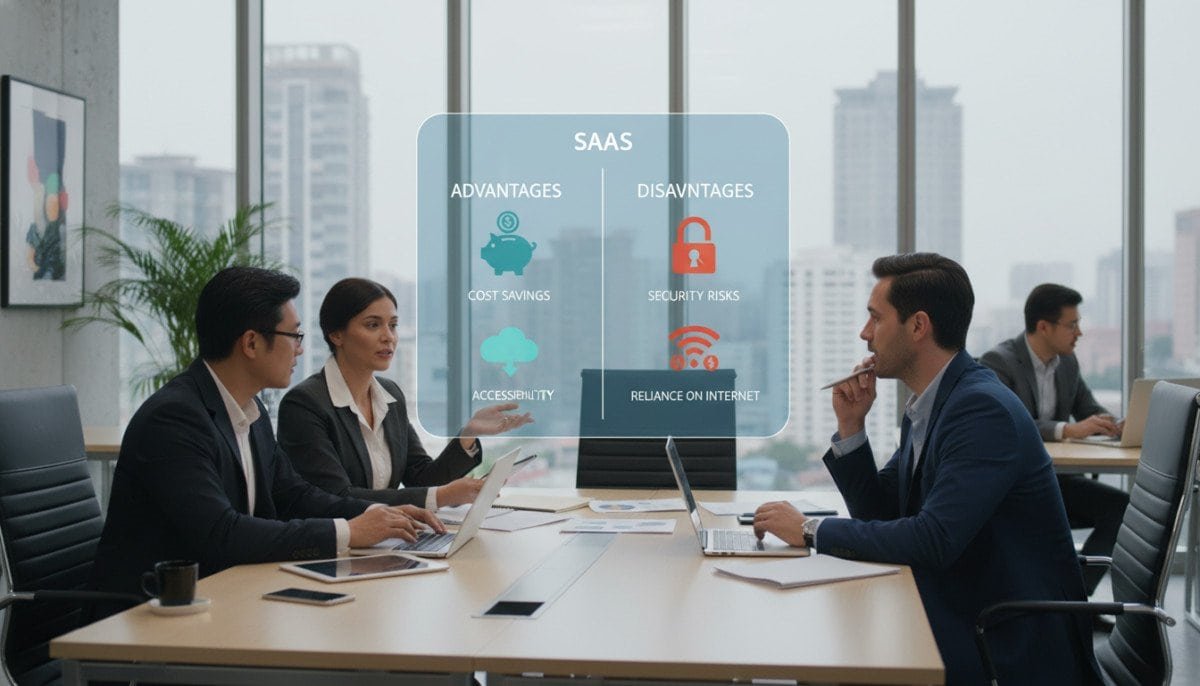
In the quest for operational efficiency, many businesses explore cloud-based solutions to enhance their productivity. We analyze the critical saas advantages and disadvantages to help your business determine if this model aligns with your specific operational requirements.
Our assessment covers how these services can drive growth while simultaneously presenting challenges. These challenges require careful planning and strategic oversight from management.
Every business must weigh the benefits of reduced upfront costs against the potential risks associated with relying on third-party providers for critical data. We explore how these services impact your internal workflows, ensuring that you understand the trade-offs between convenience and total system control.
By examining these factors, we provide the clarity needed to navigate the complexities of modern cloud adoption for your growing business.
The Benefits of Adopting SaaS Solutions
The shift to cloud-based solutions has opened new doors for efficiency in the workplace. One of the primary benefits of these services is the ability to access software from anywhere. This flexibility significantly boosts employee productivity levels.
Moreover, the predictable monthly cost structure allows startups to manage their budgets effectively. Without large, upfront capital expenditures for software, businesses can allocate resources more strategically.
These solutions also enable global reach. Teams can collaborate seamlessly across different time zones using a reliable internet connection. By offloading maintenance to the provider, companies can focus on their core objectives.
Finally, the scalability of these services ensures that as your company grows, you can easily adjust your subscription to match current operational needs.
Common Challenges with SaaS Solutions

Navigating the digital landscape can present unique challenges for businesses seeking efficiency. One major concern is security. When sensitive data is stored on third-party servers, strict adherence to data protection laws is essential. Misconfiguration from the supplier’s end can expose businesses to vulnerabilities, increasing the risk of data breaches.
Another challenge is performance. If the chosen provider’s data center is located far from your operations, noticeable latency may occur. This can lead to slower speeds, impacting overall productivity.
Integration issues can also arise when connecting external cloud platforms with existing in-house software. This may result in complex compatibility problems and data silos. Additionally, these solutions require a constant internet connection, meaning any network downtime can disrupt essential business tasks.
To mitigate these risks, we emphasize the importance of evaluating a vendor’s security measures. Understanding these common issues can help businesses make informed decisions about their cloud solutions.
Comparing SaaS with IaaS and PaaS
For businesses looking to optimize their operations, recognizing the differences among cloud service models is essential. We distinguish SaaS from IaaS, which provides the foundational virtual machines and storage needed for businesses to build their own custom infrastructure.
PaaS is another category of services that offers a specialized environment for developers. This allows them to create and deploy applications without managing the underlying hardware. While SaaS delivers finished software to end users, IaaS and PaaS cater to technical teams who require more control over the development stack.
Understanding these differences is crucial because each model serves a unique purpose in the broader ecosystem of cloud-based software and computing resources. Our comparison helps you identify whether you need a ready-to-use application or a platform that allows for deeper customization and infrastructure management.
Customization and Flexibility in SaaS Models

In the realm of digital solutions, customization is becoming increasingly vital for businesses. The ability to adapt software to meet specific needs can significantly enhance operational efficiency.
API integrations allow us to connect various software platforms. This connection creates a more cohesive and efficient digital ecosystem for our operations. While many services offer predefined features, advanced users can leverage APIs to build tailored workflows that meet unique business requirements.
Flexibility is a key advantage of these solutions. Many providers offer resources to help clients integrate their existing tools with new cloud platforms. However, we must be cautious. Improper API implementation can lead to security vulnerabilities, so understanding the integration process is essential.
By choosing the right solutions, we can bridge the gap between off-the-shelf software and the unique needs of our industry or department.
| Feature | Description | Benefit |
|---|---|---|
| API Integration | Connects various software platforms | Streamlines operations |
| Customization | Tailors workflows to specific needs | Increases efficiency |
| Flexibility | Resources for tool integration | Adapts to business changes |
Real-Life Examples of Popular SaaS Applications
In the current digital landscape, businesses leverage innovative applications to enhance their operations. Popular SaaS applications have become essential tools for various industries, each serving unique purposes.
For instance, Salesforce is a leading CRM platform that helps companies manage customer relationships effectively. Similarly, Zoom has emerged as a standard tool for virtual meetings and webinars, allowing teams to connect effortlessly.
Other notable applications include:
- Dropbox for cloud storage and file synchronization, ensuring easy access to important documents.
- Google Workspace provides a suite of productivity tools for document creation and email management.
- Slack facilitates structured communication between teams, enhancing collaboration.
- Trello for task management, Shopify for e-commerce, and Adobe Creative Cloud for design and media production.
These examples illustrate how diverse SaaS applications have become, covering everything from entertainment platforms like Netflix to complex enterprise-grade business software. To explore more about these services, check out Salesforce’s offerings.
Assessing Business Needs for SaaS Adoption

Understanding your unique business needs is crucial before selecting any new platform. Clearly defining these needs ensures that the software aligns with your strategic goals.
Next, we must analyze the trade-offs between in-house infrastructure and outsourced cloud services. This analysis is vital for determining your long-term IT budget and resource allocation.
We can assist you in evaluating whether your current team has the capacity to manage complex software. If not, you may require the support of a provider to fill that gap.
By assessing your specific needs, you can identify which features are essential and which are merely optional. This approach helps prevent unnecessary spending on software capabilities that go unused.
Ultimately, our goal is to ensure that your infrastructure decisions support your growth trajectory. This minimizes the risks associated with transitioning to a new cloud model.
Strategies to Overcome SaaS Limitations
To navigate the complexities of cloud services, we must adopt effective strategies. One significant concern is vendor lock-in, which occurs when businesses become too reliant on proprietary tools. This dependency can make it difficult and costly to migrate to a different provider.
Here are some strategies to mitigate these risks:
- Maintain a clear exit strategy: Regular data backups and portable file formats can ease transitions.
- Monitor service level agreements: Ensure that the vendor provides adequate uptime and support during critical periods.
- Choose providers with open API standards: This can prevent your company from becoming trapped in a proprietary ecosystem.
- Implement redundant internet connections: This helps you overcome dependency on a single network, ensuring that your services remain accessible during outages.
- Proactively manage vendor relationships: Enjoy the benefits of modern software while maintaining the flexibility to switch providers if necessary.
Our Approach to Making Informed SaaS Decisions
Informed decision-making in cloud services can pave the way for operational success. We focus on evaluating key factors that influence your choice of software providers. A thorough review of the provider’s security standards is essential to ensure compliance with industry regulations.
Reading the Service Level Agreement (SLA) is crucial. This document outlines performance expectations, support levels, and uptime guarantees for your software. Understanding these terms helps set realistic expectations for your services.
Additionally, assessing the provider’s track record for uptime is vital. Reliable services directly impact your business’s daily operations. We also guide you in evaluating the total cost of ownership, including subscription fees and potential add-ons.
By following these steps, you can confidently select a SaaS partner that aligns with your company’s long-term vision. For more information on ensuring your cloud services are secure, check out our guide on project management software security.
Wrapping Up Our SaaS Journey Together
As we conclude our exploration of cloud solutions, it’s essential to reflect on the journey we’ve taken together. We have examined key aspects of cloud-based software, from its historical evolution to the practical benefits and challenges it presents.
By understanding these services, your business is now better equipped to make strategic decisions that foster growth and productivity. Remember, while these solutions offer incredible flexibility, success depends on careful planning and a clear understanding of your unique needs.
We hope this guide has provided the clarity you need to navigate the complex world of cloud computing. Thank you for joining us on this journey, and we look forward to helping you continue to optimize your business through innovative technology solutions.
For more insights on choosing the right tools, check out our guide on analytics tools.