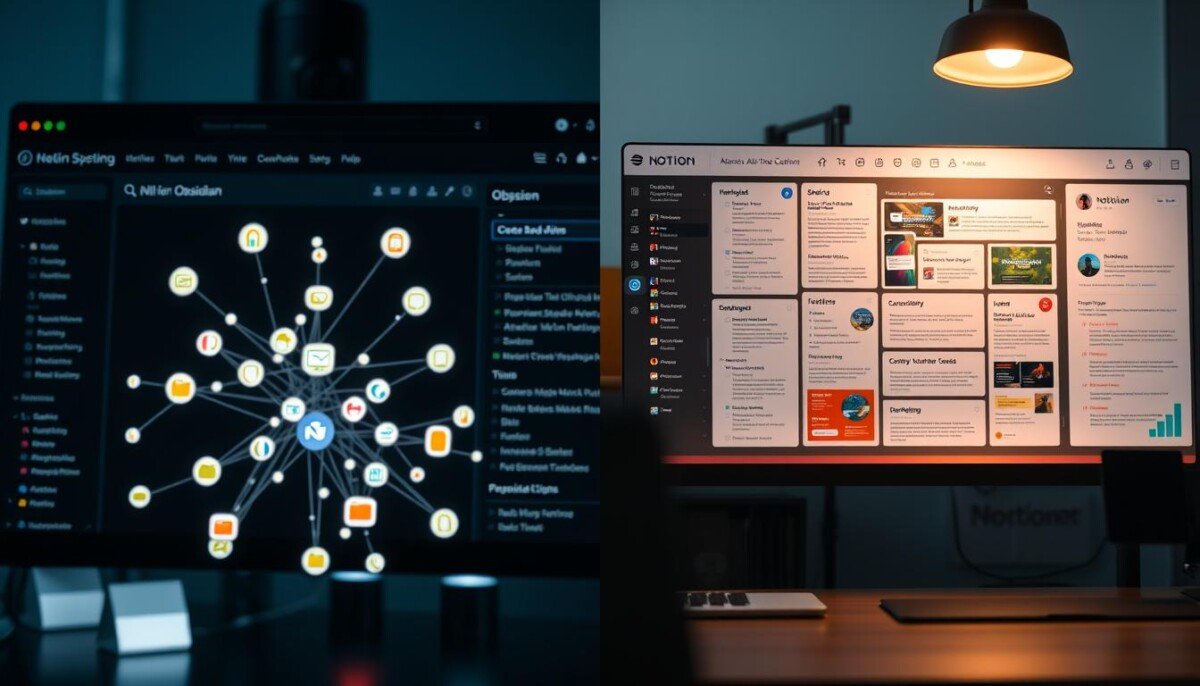
Ever wondered how top performers never lose a great idea? You can capture more of your thinking and turn it into clear action. This guide shows a simple path to organize your notes, projects, and knowledge so you spend less time hunting for what matters.
Tiago Forte popularized the framework in 2017 to help people tame the flood of digital information. With the right app and a clear system, your meeting notes, research, and documents become easy to find and use.
Start small. Pick one reliable app like Notion or a similar choice that fits your work. Capture quickly, tag smartly, and link notes to projects. This turns scattered thoughts into retrievable knowledge and clearer action steps.
Key Takeaways
- Building a simple capture habit saves time and reduces stress.
- Choose an app that matches how you work, not what’s trendy.
- Organize notes around projects and actions for fast retrieval.
- Tiago Forte’s framework helps turn information into usable knowledge.
- Start small and grow your system as your needs change.
Understanding the Second Brain Philosophy
Turn scattered ideas into a reliable external memory you can trust. Tiago Forte popularized this approach in 2017 to help people capture, organize, distill, and express knowledge more clearly.
The core idea treats your notes as a living repository. You update them as projects evolve and as new information appears.
Spend a little time each week on this system. That regular care makes your external memory far more useful than sporadic note-taking.
Every meeting and project creates useful insights. When you store those insights correctly, they become sources of future ideas and faster decisions.
- Capture quickly during a meeting or while researching.
- Organize notes so you can retrieve knowledge when needed.
- Distill key points to save time later.
| Focus | What to do | Benefit |
|---|---|---|
| Capture | Save note snippets and meeting highlights | Prevents lost ideas |
| Organize | Link notes to projects and tags | Speeds retrieval |
| Distill | Summarize key takeaways | Reduces search time |
| Express | Use notes to create deliverables | Turns information into value |
Essential Second Brain Method Tools for Modern Productivity
Prioritize apps that let you grab meeting notes and voice memos without breaking focus. That single habit keeps ideas from slipping away and saves time when you need to act.
Basic Notes Apps
Pick a simple note app for quick capture and clear retrieval. Use pages, tags, and short summaries so your knowledge is ready when projects demand it.
Look for:
- Fast capture for meeting notes, web clippings, and voice snippets.
- Good search and summaries for fast retrieval of information.
- Folders and links to map connections across projects and documents.
Task Management Apps
Choose a task app that links tasks to notes and keeps work moving. Modern options like Taskade combine notes, knowledge, and action in one workspace for teams.
Use an integrated setup to reduce context switching. For more productivity app picks, see this guide on productivity enhancement apps.
The Three Layers of an Effective Knowledge System
A practical knowledge system works on three clear layers that move ideas from capture to action.
Capture is where you snag quick notes during a meeting or while researching. Use short entries so nothing stalls. The goal is speed, not polish.
Organize is where PARA guides you: Projects, Areas, Resources, Archives. Place each note where it serves a project or can be found fast. This structure saves you time when you search for information.
Action turns stored knowledge into real work. Link notes to next steps in a project so ideas become deliverables. A living system like this keeps your knowledge active, not static.
- Capture fast so no insight is lost.
- Organize with PARA to make retrieval simple.
- Prioritize action to convert notes into results.
Identifying Your Personal Notetaking Archetype
Knowing how you naturally capture and connect ideas helps you pick the right setup fast. Decide which archetype matches your habits. That choice guides the app and structure you should use.
The Architect
Architects like clear structure and custom layouts. You prefer building pages, databases, and links that map to projects.
Best fit: an app that supports templates and deep customization, like Notion. This helps you turn notes into organized project pages.
The Gardener
Gardeners grow connections over time. You value organic links, tags, and evolving collections of ideas and research.
Best fit: an app that encourages backlinks and networked notes so your knowledge can spread naturally.
The Librarian
Librarians focus on retrieval and citation. You want fast search, clean metadata, and reliable archives for documents and meeting records.
Best fit: an app with powerful search and strong folder discipline to keep data and references ready for projects.
- Identifying your archetype saves time and prevents friction with your system.
- Match the app to how you work so notes become a usable memory for teams and projects.
- Explore options in this quick note-taking and organization guide to find the right match.
Why Capture is the Biggest Bottleneck
Capturing ideas fast is the single hinge that keeps your whole system useful.
If capture feels slow, you lose information before it reaches your work. That gap is the main bottleneck in a reliable second brain.
Tiago Forte argues that any workflow that forces you to stop work to save a note will fail. You need micro-captures that fit into your natural flow.
Make saving ideas and project details instant. Use quick-entry actions, voice clips, or a single hotkey to drop a note without breaking focus.
- Frictionless capture keeps momentum.
- Fast entry keeps knowledge from vanishing.
- Simple rules make the system reliable in real work.
| Problem | What slows capture | Benefit when fixed |
|---|---|---|
| Lost ideas | Too many steps to save a note | More usable knowledge |
| Interrupted flow | Switching apps or filling fields | Less time wasted |
| Empty archives | Low adoption by teams | Better retrieval for action |
| Stale projects | Notes not linked to project context | Faster progress on work |
Common Pitfalls When Selecting Your Digital Ecosystem
Relying on a single app often creates more friction than clarity. Expecting one product to solve every capture, project, and research need leads to slow adoption and lost ideas.
Split responsibilities across a small set of focused apps. Use one app for quick notes, another for project tracking, and a web clipper for research. This keeps each component fast and reliable.
Putting Too Many Expectations On One App
People spend too much time customizing a system and not enough time saving real data. That setup work delays action and drains time from projects.
Keep the setup minimal. Prioritize fast capture and clear linking between notes and project pages like Notion. Aim for a balance of capture, research, and project management.
- Don’t expect a perfect app; expect a clear workflow.
- Favor apps that let you capture quickly and move to action.
- Reassess your ecosystem every quarter to avoid bloat.
| Pitfall | What happens | Quick fix |
|---|---|---|
| One app solves all | Slow capture, abandoned system | Use separate apps for notes and projects |
| Over-configuring | More setup than use | Limit customizations to essentials |
| Poor linking | Notes float without context | Link notes to specific project pages |
| Tool overload | Wasted time switching apps | Keep a small, focused app list |
Evaluating AI-Powered Knowledge Management
AI can turn scattered notes into quick answers so you spend less time searching and more time doing. This matters when your system holds meeting notes, research, and project pages that must be reused.
Automatic summarization helps you get concise summaries from long documents and voice records. This speeds retrieval and cuts the time you spend reading raw data.
Notion AI and similar apps can answer questions, create summaries, and link ideas across your team’s documents. They surface connections between meeting notes and project pages so ideas become actionable.
- Benefits: faster retrieval, better summaries, fewer duplicates.
- Watch for: poor integration, inaccurate outputs, or added friction in daily work.
- Ask: does the AI respect your data, fit your workflow, and improve productivity?
Consider trialing an AI feature with a small project and measuring time saved on research and note retrieval. For options that tie AI to project flow, see a practical roundup of AI project management software.
The Role of Semantic Search in Retrieval
Modern embeddings let your system link project notes to distant research by meaning. This matters when you cannot recall exact words but need the right idea fast.
Semantic search uses high-dimensional embeddings — often 1536-dimensional HNSW — to match meaning, not exact text. That lets your second brain find related notes and data across projects.
Tools like Notion and other platforms use these embeddings to surface hidden connections. You get relevant information even when phrases differ between a meeting note and later research.
- Find notes by concept, not keywords.
- See connections across project pages and web research.
- Save time retrieving the right note and moving to action.
| Search Type | How it matches | Business benefit |
|---|---|---|
| Keyword search | Exact words and phrases | Fast for known terms, misses related ideas |
| Semantic search (1536 HNSW) | Meaning and context | Finds related notes, links research to projects |
| Hybrid search | Keyword + embeddings | Balanced recall and precision for team knowledge |
Balancing Structure and Flexibility in Your Notes

Find a balance so your notes stay useful without becoming a chore.
Using Tags for Organization
Tags give you fast, flexible connections across projects and ideas. Use a few consistent tags so you can find related notes across web clips, meeting notes, and research.
Tip: keep tag names short and shared across your team to reduce friction.
- Quick discovery: search tags to pull related data fast.
- Cross-project links: tags connect work without moving files.
- Low overhead: tagging is faster than deep filing during capture.
Implementing Folder Discipline
Folders add a clear hierarchy that helps with long-term projects and archived knowledge. Use folders for stable categories like active projects, reference, and archives.
Combine folders with links and tags so you get both order and discovery.
| Feature | Best for | Benefit |
|---|---|---|
| Tags | Cross-project discovery | Fast retrieval, flexible connections |
| Folders | Project and archive structure | Clear ownership, easier backups |
| Links | Contextual navigation | Keeps knowledge actionable |
Tools like Notion let you mix tags, folders, and links so your second brain adapts as work changes. Aim for enough structure to save time and enough flexibility to support discovery and action.
Integrating Task Management with Knowledge Storage
When tasks live beside project notes, work moves faster and stays aligned.
Link meeting notes to specific tasks so decisions become assigned action. That reduces follow-up emails and saves time for your team.
Modern apps let you attach documents, voice memos, and web clippings to a task or project page. Use one app for capture and another for deep reference, or choose a single solution like Notion when it fits your flow.
Set simple conventions: tag notes with a project, link a note to the task, and add clear next steps. This keeps information tied to work and makes your second brain actionable.
- Keep meeting notes and to-dos connected so nothing slips.
- Store voice clips and documents on the same project page.
- Use shared lists to align people and priorities quickly.
For picks that match different workflows, see this note-taking and organization guide to find the right mix for your team.
Leveraging Web Clippers and Read-Later Apps
Web clippers let you capture useful web pages fast so nothing valuable slips away. Use them to save articles, snippets, and highlights while you browse.
When you save content, tag it and send it to your primary notes app. Integrating a clipper with Notion or a similar app links research to projects. That connection turns raw data into usable knowledge.
Make it a habit: clip first, read later, and distill key ideas into short notes for action. This reduces search time and keeps your system current.
- Save articles and web fragments for later review.
- Integrate clips with your project pages so notes stay relevant.
- Tag and summarize clipped items to speed retrieval.
Over time, this flow builds a reliable knowledge base you can trust across projects. Use read-later apps for deep reading and clippers for quick capture to keep you focused and efficient with your time.
The Importance of Local Data Ownership

When sensitive files matter, local storage gives you clear ownership and fewer surprises.
Privacy matters when your notes, documents, and voice records hold client or company secrets.
Privacy Considerations for Sensitive Documents
Local data ownership ensures your documents stay under your control. Choose an app that offers local-first storage or strong encryption so your information is not shared without consent.
- Keep sensitive notes private: store them on devices or encrypted folders rather than public cloud buckets.
- Pick apps that respect ownership: verify export options, folder control, and offline access.
- Reduce legal risk: local storage limits third-party access and makes audits simpler.
- Protect research and project files: this keeps ideas and knowledge safe while you move to action.
For mixed setups, use a secure local copy for critical documents and a cloud copy for lightweight web capture. This balance saves time and preserves memory without sacrificing privacy.
Automating Workflows to Close the Knowledge-Action Gap
Automations link what you capture to the next step so ideas actually become work.
Set rules that turn meeting notes into tasks, summaries into project steps, and saved web pages into research lists. This keeps your note system active and reduces manual handoffs.
Use an app that supports triggers and actions. When a meeting note is tagged, create a task with a due date. When a summary is made, add it to the project page as a next step.
Why this matters: automation saves time and keeps knowledge useful. Your team spends less time copying information and more time doing the work that moves projects forward.
- Auto-create tasks from meeting notes to prevent follow-up gaps.
- Send clipped web research to a project page for later review.
- Generate short summaries and attach them to relevant pages for fast retrieval.
| Trigger | Action | Benefit | Recommended use |
|---|---|---|---|
| Tagged meeting note | Create task in project | Faster follow-up | Use for decisions needing owners |
| Web clip saved | Send to research list | Centralized references | Build reading lists for projects |
| Long document | Auto-generate summary | Quick retrieval | Attach summary to project page |
| Voice memo | Transcribe & link | Searchable data | Use for meeting records and ideas |
Try a small automation first. Measure time saved and see how your knowledge base shifts from archive to active partner. For practical integrations and AI second brain options, explore this AI second brain tools.
Avoiding Shiny-New-Toy Syndrome
Frequent app hopping creates gaps in your data and slows everyday work.
When you are building second brain systems, the urge to try every new product can fragment notes and delay results.
Stick with a reliable app long enough to master its features. Mastery turns scattered information into real knowledge you can use.
Give yourself time to learn search, tagging, and linking before you switch. Changing too soon wastes the most valuable resource: time.
- Pick one app and tune a simple system for your work.
- Resist feature-chasing that never reaches action.
- Only switch when a new tool clearly saves more time than learning it costs.
| Choice | What happens | When to act |
|---|---|---|
| Keep current app | Stable data and faster retrieval | After mastering core features |
| Customize setup | Better fit for your projects | Limit to essentials only |
| Switch app | Risk of lost context | Only if ROI in time and data is clear |
For curated picks that help you build second, see the affiliate picks. Focus on building a system that supports knowledge and moves ideas to action.
Adapting Your System to Life Transitions

Big changes in work and home call for a quick review of how you capture and file ideas. Keep your notes focused on what serves current priorities.
When projects shift, move or archive old pages so the active project list stays clean. Link a clear next step on each page to turn stored ideas into action.
Tap your community for fresh approaches when you face new roles or big moves. Other people and your team can answer practical questions and share patterns that save time.
- Review folders and purge what no longer fits.
- Try a new app like Notion only if it clearly speeds your work.
- Ask the community and peers for examples before you overhaul the whole system.
Change is normal. A flexible system keeps your knowledge useful across jobs, meetings, and life stages. For recommended picks and workflows, see these productivity enhancement apps to help update your note setup.
Conclusion
Small, repeatable habits change how your knowledge serves real work. Commit to capture, tidy a few pages each week, and link notes to a clear next step for every project.
Building second brain practices from Tiago Forte help you turn scattered ideas into useful action. Use reliable apps like Notion and a minimal set of tools that match your workflow.
Focus on what moves work forward, not a perfect archive. If you want a concise review of the system and practical tips, see this short building a 2nd brain review.
Stay patient, adapt as projects change, and enjoy turning notes into work that matters.