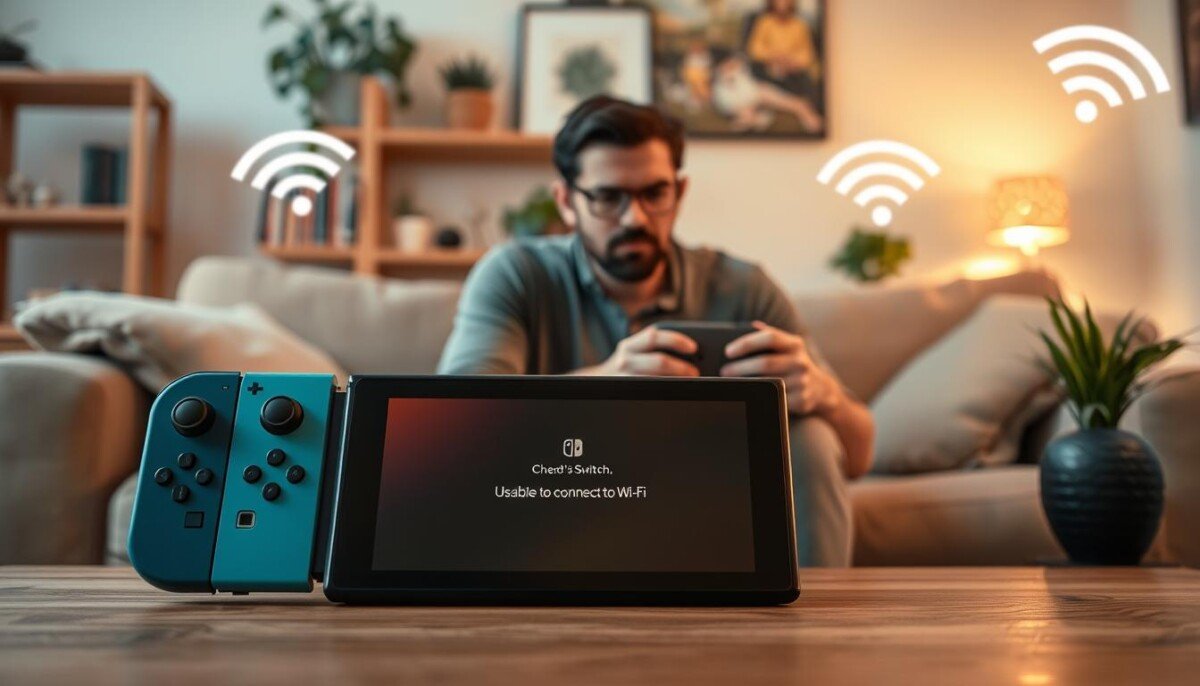
Have you ever been ready for a quick match and your console refuses to find your home network? That sudden loss of connection can derail a short break or a long session. This guide gives clear, practical steps to get you back online fast.
Start simple: remove the console from the dock and move it 3–4.5 meters closer to your router. Metal cabinets and nearby electronics can block the signal, so clear the path and test again.
If the system shows a MAC address of zeroes or fails to find your SSID, open Internet Settings and manually enter the network name and password. Check your router for SSID broadcast and set a compatible security type (WEP, WPA‑PSK (AES), or WPA2‑PSK (AES)).
If problems persist after these steps, try basic network troubleshooting and contact your ISP or network admin for wireless security key issues. For extra troubleshooting tips on a related device, see this quick network checklist.
Key Takeaways
- Move your console closer to the router and remove it from the dock.
- Check for interference from metal cabinets and other devices.
- Manually enter SSID and password in Internet Settings if the network is hidden.
- Ensure your router broadcasts SSID and uses a supported security type.
- Contact your ISP or network admin for persistent wireless key or router issues.
Initial Checks for Nintendo Switch Not Connecting to Wifi
Start with a quick proximity and signal check. Bring your console within 3 to 4.5 meters of the router. Move any metal cabinets or large electronics that might block the signal.
Verifying Signal Strength and Proximity
Power cycle your home network by unplugging the router for at least 30 seconds, then plug it back in. After the router restarts, hold the power button on the console for three seconds and choose restart from the menu.
Open Internet Settings and press the Y button to search for networks again. If the console still fails to find any access points at multiple locations, you may need to book a repair through the official website.
Checking for Service Outages
Confirm there are no wider service issues by checking the official operational status and maintenance page. Outages can prevent any device from getting an internet connection even when your router looks fine.
- Place the console within 3–4.5 meters of the router for best signal.
- Power cycle the router for 30 seconds to reset the home network.
- Restart the console (hold the power button for three seconds).
- Use the Y button in settings to find wireless networks after a router reboot.
- If networks still do not appear, verify the router security type is supported and review your network troubleshooting guide.
Optimizing Your Home Network and Router Settings
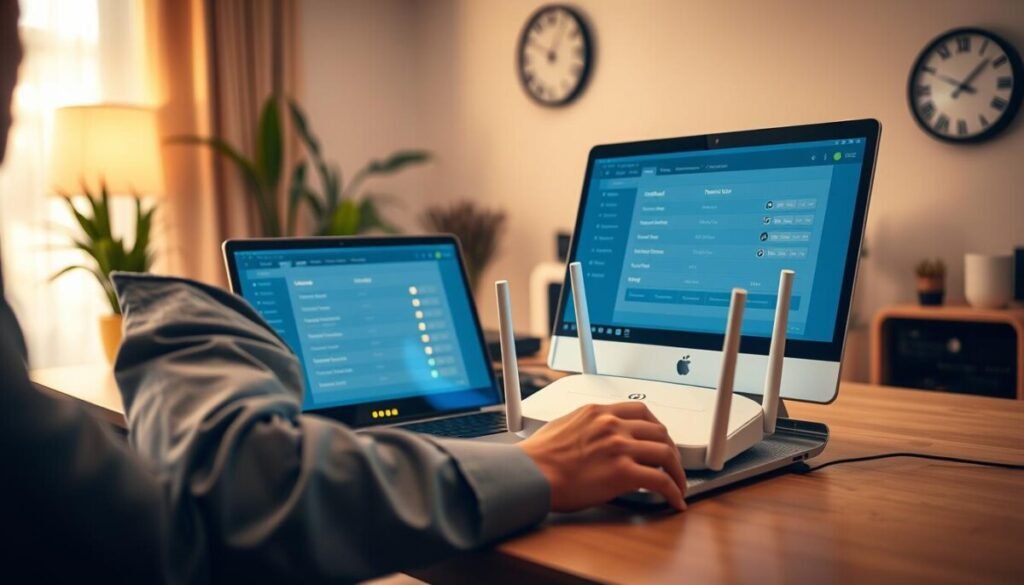
Tweak a few router options to give your console a cleaner, faster link to the internet. These changes help most home networks and keep gameplay smooth.
Configuring Security and Frequency Bands
Choose the right band: If your router supports both 2.4GHz and 5GHz, move the console to 5GHz for better speeds and less interference.
Set security properly: Open your router settings by entering its IP address in a web browser. Confirm the security type is set to WPA2‑AES for best compatibility with the system.
- Ensure SSID broadcast is enabled so the switch console can find networks during a search.
- Keep the router away from other electronics that cause signal interference.
- Update router firmware if issues persist, or reset to factory defaults as a last resort.
| Action | Why it helps | When to use |
|---|---|---|
| Switch to 5GHz | Faster speeds and less crowded band | For online play and streaming |
| Set WPA2‑AES | Best security and compatibility | During router setup or after firmware update |
| Enable SSID broadcast | Allows the console to find the network | If networks fail to appear in internet settings |
| Update firmware | Fixes bugs and improves performance | If you see repeated connection issues |
If you need a step-by-step checklist for deeper troubleshooting, see this network troubleshooting guide. It walks through router access, password checks, and other practical steps you can follow in minutes.
Adjusting Console Settings and Software Configurations
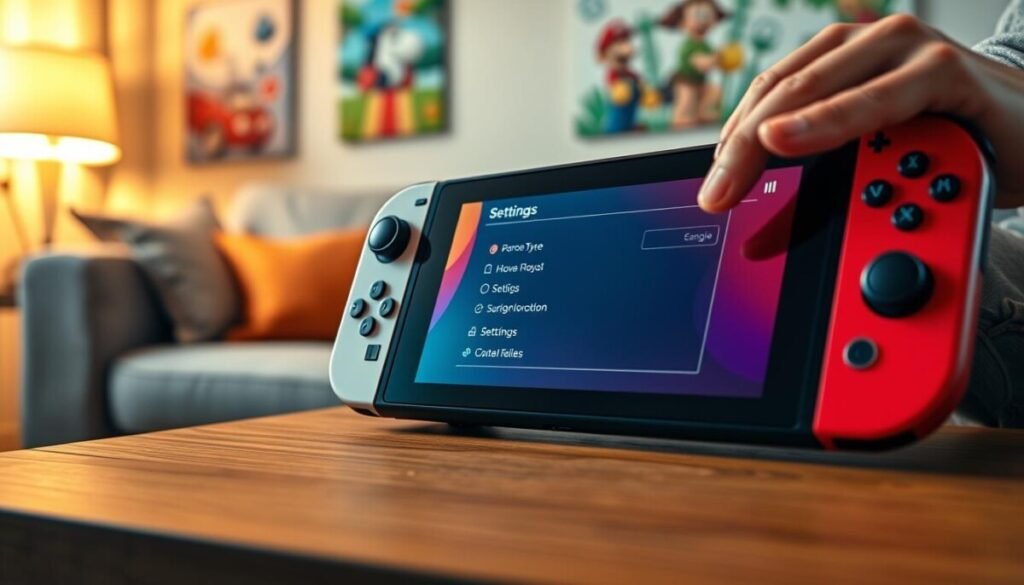
Begin in system settings and make sure airplane mode is turned off for wireless access. Airplane mode blocks all radios, so disabling it is the first step before any network troubleshooting.
Managing Airplane Mode and Network Profiles
Open Internet Settings and remove the saved profile for your router if a fresh connection is needed. Re-enter the network name and password to reset authentication data.
Clearing System Cache
Use System Settings → Formatting Options → Clear Cache to remove cookies and temporary data without deleting games. This often fixes persistent connection issues caused by corrupted system files.
Performing a Factory Reset
If problems persist, update system software first via System Settings → System Update. Then, back up user information and enter recovery mode by holding Volume Up + Volume Down while pressing the power button to perform a factory reset.
- Tip: Delete the current network profile and re-add your router if authentication still fails.
- Warning: Factory reset erases user information—back up before proceeding and ensure the console is not in the dock during this step.
- For official repair or detailed network-finding guidance, see the support article or use a broader troubleshooting checklist at this guide.
Conclusion
Finish with a quick checklist to confirm your router and console settings are aligned.
Check basics first: ensure your router is powered and broadcasting a visible SSID. Keep your switch console within range and re-run internet settings if the network fails to appear.
Update system software and reboot both the console and router to clear temporary glitches. If issues persist, contact your internet provider or the console maker for hardware-specific help.
For extra diagnostic steps and related device checklists, see this quick camera troubleshooting guide and our Fire TV network checklist. Keeping your settings and security current will keep your home gaming network ready for play.